
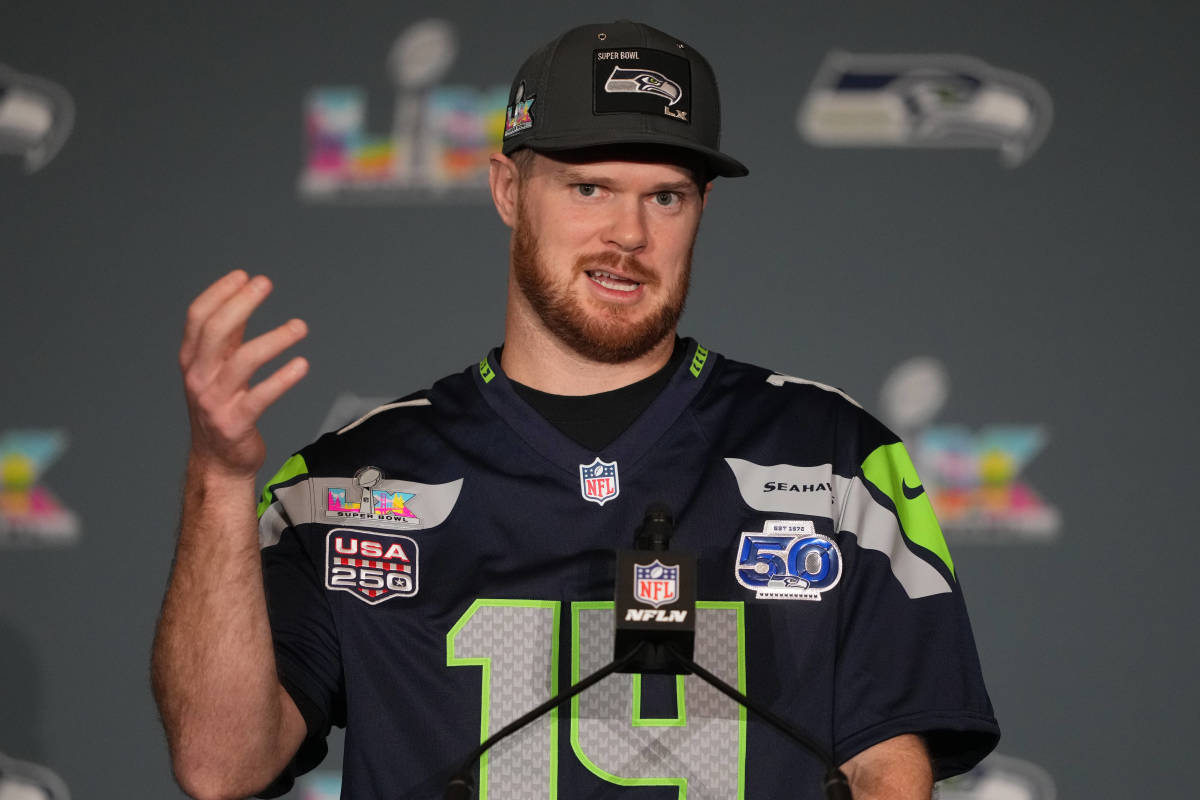
The Seattle Seahawks captured their second Lombardi Trophy Sunday night at Levi’s Stadium, defeating the New England Patriots in Super Bowl LX in California. Quarterback Sam Darnold was good enough in the game, completing 19 passes of his 38 attempts for 202 yards.
But his celebration comes with a bittersweet consequence because he’ll actually lose a significant amount of money, as California hosts this year’s big event. It is worth noting that Darnold signed a 3-year, $100,500,000 contract with the Seahawks on March 2025.
Advertisement
According to Sportico reporter Kurt Badenhausen, the Golden State’s notorious “jock tax” means Darnold will fork over more in taxes than he receives in his Super Bowl winner’s bonus.
“California has the highest income tax of any state, and the Super Bowl means 8 ‘duty days’ in CA. Taxes hit your annual comp,” Badenhausen posted. “Super Bowl winner bonus from NFL: $178K/player. Sam Darnold’s estimated CA taxes: $249K.”
Per this terrible math, Darnold receives $178,000 for winning the Super Bowl but owes California an estimated $249,000 in state income tax for his time in the state. It is a $71,000 net loss for helping the Seahawks to win the NFL final.
Advertisement

Seattle Seahawks quarterback Sam Darnold (14) celebrates with the Vince Lombardi trophy on the podium after defeating the New England Patriots in Super Bowl LX at Levi’s Stadium.Mark J. Rebilas-Imagn Images
(Mark J. Rebilas-Imagn Images)
Stanford economics professor Joshua Rauh later sarcastically criticized while breaking down how California’s “jock tax” rules apply in cases like this.
Rauh explained, “If his team wins, Darnold will receive $178k and pay $249k to California in taxes for his time here, losing $71k. If his team loses he gets $103k and still pays over $235k in taxes, losing $135k. I presume California is declaring victory, as his incentive to win is preserved.”
California has a special “jock tax” for athletes who don’t live in the state but play games there. The tax is based on the number of work days, called “duty days,” they spend in California. For Super Bowl LX in 2026, that adds up to eight duty days.
Advertisement
Because California has the highest top marginal income tax rate in the country — about 14.6% — players can end up with a big tax bill. This includes the state’s 13.3% income tax plus a 1.3% disability insurance tax, which applies to all wages starting in 2024.
Related: NFL Sends Sam Darnold Message After Seahawks’ Super Bowl Win
This story was originally published by Athlon Sports on Feb 9, 2026, where it first appeared in the NFL section. Add Athlon Sports as a Preferred Source by clicking here.