
Guojun has also been accused of explicitly aggressive behavior. In a suit that was settled early last year, Alejandro Diaz, a former evictions manager for Yudao Management, alleged that he was wrongfully terminated after raising concerns about Guojun’s dealings with tenants—which, in the course of one morning, involved Guojun attempting to kick down the door to one rental property, intimidating residents, and firing a Taser at a dog. After Diaz expressed his discomfort to Guojun, Guojun hit him in the arm, threw rocks at him, and, later, took what appeared to be an assault rifle from the trunk of his car and stared at him “in a threatening manner,” according to the complaint. Liu, the lawyer, said that any claims that his client engaged in threats or violence relied “on unverifiable hearsay,” including from disgruntled employees, and that when Guojun drinks Moutai it is “responsibly and on occasion.”
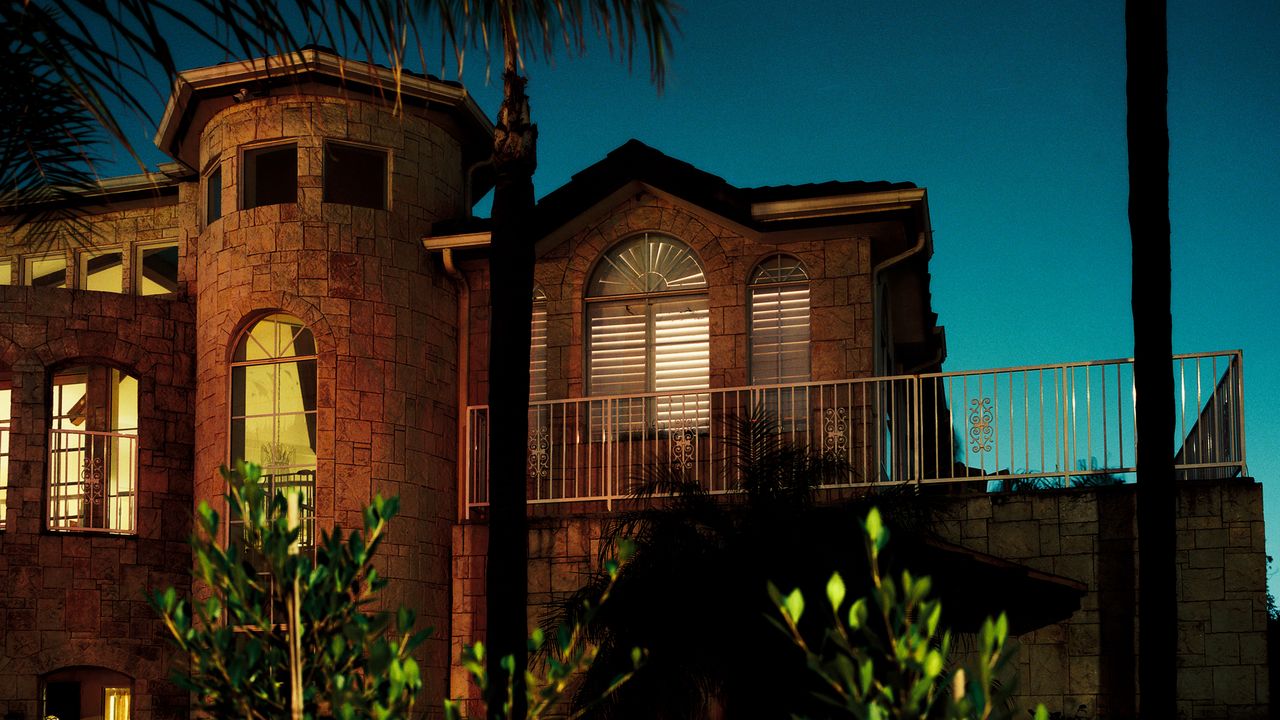
I soon got an even clearer sense of where Guojun’s fearsome reputation—and, perhaps, his cash flow—might be coming from. Guojun, it turned out, was linked to an elusive criminal figure known as Haoren (Dragon) Ma. Last September, the city of El Monte filed a nuisance-abatement suit against Guojun, Ma, their respective associates, and holding companies tied to a sprawling group of office buildings known, in part, as Pacific Place. Guojun owned some of the buildings; in the summer of 2022, perhaps to make room for his growing family, he had moved his surrogacy and real-estate employees, including Powers, out of the mansion and into the office complex.
As it happened, Pacific Place also housed an illicit casino and an elaborate drug-manufacturing operation—both allegedly run by Ma. In a series of raids at the broader complex, from 2019 to 2024, the police seized plastic bundles of methamphetamine, twenty thousand vape cartridges, and hundreds of pounds of psilocybin mushrooms, along with a stolen Uzi-style gun, boxes of ammunition, and counterfeit cash. Guojun was not accused of manufacturing drugs, but according to the complaint he and his associates “formed and dissolved entities after each enforcement action to conceal ownership, frustrate enforcement, and continue Ma’s unlawful gambling and narcotics operations.” (Ma could not be reached for comment.)
When I asked Liu about his client’s involvement with these schemes, he said that Guojun had “never obstructed law enforcement” and that any financial dealings were “routine landlord-tenant matters.” Others in Guojun’s orbit were more alarmed. A former business associate told me that she wanted to speak anonymously, because she feared for her life—and she believed that Silvia did, too. “If she had enough money,” the associate said, “she would have run.”
Last fall, while walking past the gate of the Arcadia mansion, I saw Silvia and Guojun fighting outside their front door. After I introduced myself, they continued shouting at each other in Mandarin, as if I weren’t there. Guojun, who was dressed in crisp black pants and a salmon-colored button-up shirt, didn’t look at me as he climbed into a black Mercedes S.U.V. When I asked Silvia if it was true that they simply wanted a large family, she sighed. She was dressed in flared yoga pants, an oversized black T-shirt printed with cartoon kittens, and beige plastic slides. “My attorney says I can’t say anything,” she repeated in response to my questions. “Thank you for understanding.” Then she got into a white Tesla and sped off.
3. The Children
On Wednesday, May 7th, two weeks before a caseworker told Kayla Elliott about an injured baby, police pulled up to the Arcadia home. Earlier that day, they had received a call from Children’s Hospital Los Angeles, where the infant, a two-month-old named Walter, had been admitted with severe bleeding behind his eyes and inside his brain. Silvia had told the doctors he’d fallen off a bed, but his symptoms, which included vomiting and seizures, did not appear to be consistent with her explanation.