
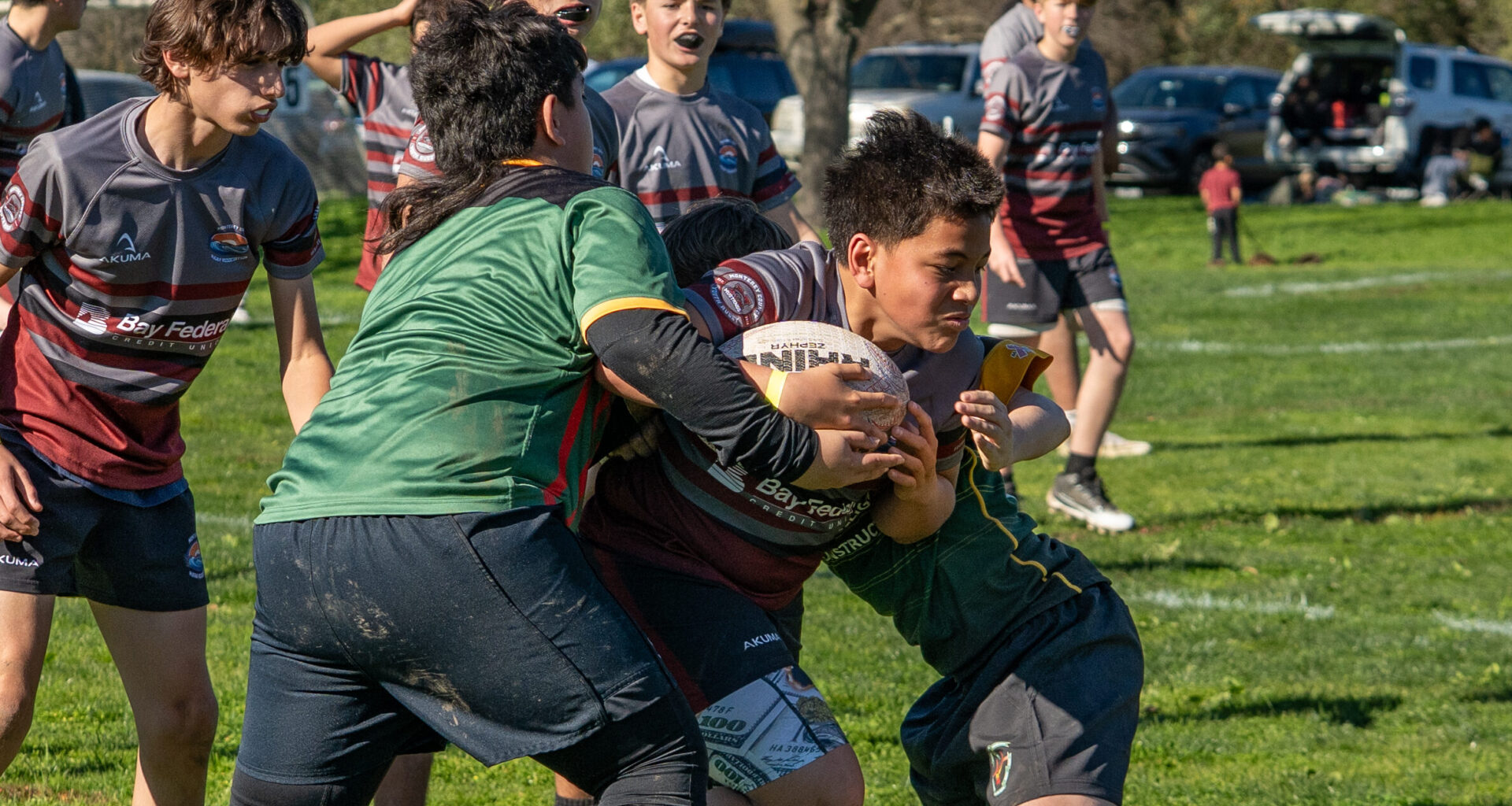
The Abridged version:
Parents across the Sacramento region balance safety innovations with injury risk as they talk to their kids who want to compete in contact sports like football, rugby, wrestling and even soccer.
Youth tackle football participation rates are down across the nation as more evidence emerges about head injury risks, but dozens of Sacramento region teams continue to compete with children as young as 6.
California lawmakers look to regulate youth contact sports to lessen injury risk, as some parents believe there could be an even bigger risk in not competing.
Families of young American footballers across Northern California have the Seattle Seahawks to thank for a tackling technique designed to help kids stay safer on the field.
The team’s Hawk Tackling method is among the safety measures entering living room conversations as parents navigate the risk-versus-joy decisions with young boys and girls who want to compete in contact sports like football, rugby, wrestling and even soccer.
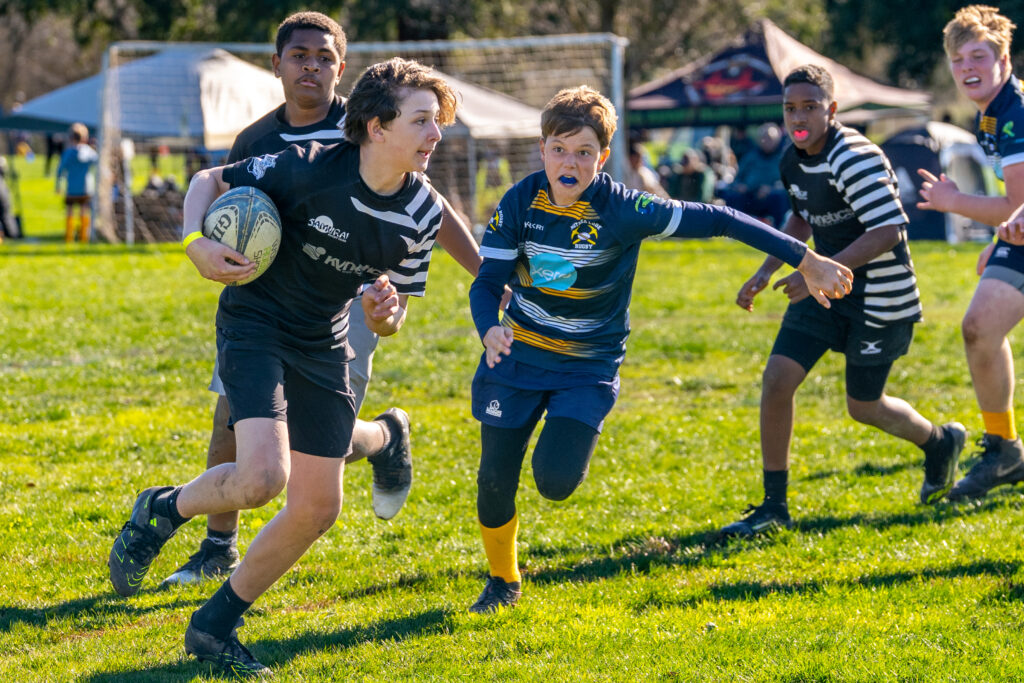 Athletes compete in a youth rugby tournament at Cherry Island Sports Complex in Rio Linda on Jan. 24, 2026. (Cameron Clark)
Participation in youth tackle football (ages 13-17) declined 7% across America from 2019 to 2024, according to research from the Aspen Institute’s Project Play initiative. Still, from Sacramento to Stockton, Lincoln to Lindhurst, Roseville to Rancho Cordova, the Sierra Athletic Conference comprises more than 80 local youth tackle football teams, with players ranging from age 6 to 14.
Those family living room conversations about dangerous youth sports are still happening — now informed by player safety innovations like the Hawk Tackle, but countered by sobering medical research.
“As a parent, there’s always going to be that worry about our children,” said Matt Faraone, vice commissioner of USA Football and the dad of a seventh grader who has been playing youth tackle football for more than five years. “We have to juggle how much we worry with how restrictive we’re going to be on what makes them happy, right?”
Coaches complete safety training
USA Football requires all adult coaches to complete safety training, including instruction on safe tackling techniques.
“It’s our job to try to show parents and teach parents, have them come out and be around football in preseason formats where we are going through skills and drills and training, so they get more comfortable,” Faraone said.
Also known as “roll tackling” or “rugby tackling,” Hawk tackling teaches players to lead with their shoulders rather than their heads, and it started gaining traction after the Seahawks produced an educational video more than 10 years ago in response to growing concerns about long-term brain injuries for football players.
The emergence of Hawk tackling is just one example of the sorts of solutions coming not just from professional sports, but also private enterprise producing protective gear and even politics, as families try to balance the desire for their kids to play and the potential perils that may come as a result.
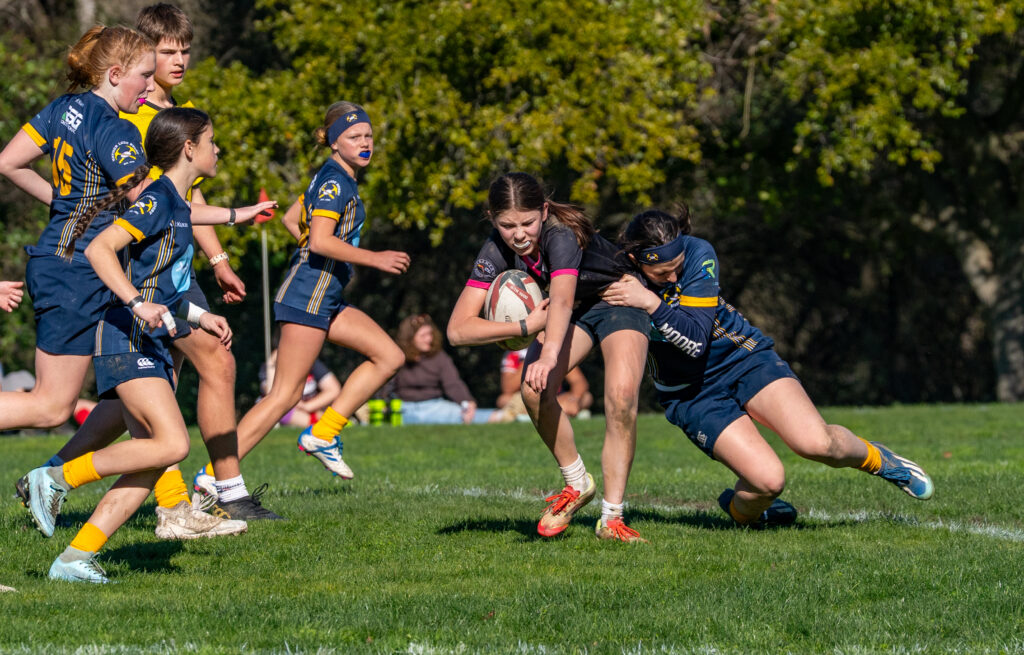 Athletes compete in a youth rugby tournament at Cherry Island Sports Complex in Rio Linda on Jan. 24, 2026. (Cameron Clark)
Omalu’s head trauma warnings sparked awareness
Warnings about permanent head trauma from contact sports spiked because of the work of renowned brain specialist Dr. Bennett Omalu, including his 2018 book, “Brain Damage in Contact Sports, What Parents Should Know Before Letting Their Children Play.”
“If a child begins to play American football at the age of 5 and plays through high school, by the time he turns 18 he will have received thousands of blows to the head,” Omalu wrote. “There is no question that at this time, the child’s brain must have suffered some type of damage to a certain degree, with or without CTE.”
Sign Up for the Morning Newsletter
The Abridged morning newsletter lands in your inbox every weekday morning with the latest news from the Sacramento region.
Omalu, who still practices in Sacramento and Stockton, was the first doctor to identify CTE — short for chronic traumatic encephalopathy — in 2002. A 2015 film called “Concussion,” starring Will Smith as Omalu, featured his work. CTE is a degenerative brain disease commonly found in athletes after repetitive knocks to the head, and it can only be diagnosed after death once the brain tissue has been examined.
While Omalu’s book for parents came just a few years after the Seahawks popularized the Hawk tackle, the National Institutes of Health published an article just a few months ago, highlighting even more new research that suggests repetitive head impacts cause brain changes in young athletes earlier than previously thought.
Youth soccer, rugby also risky
“You can get a concussion doing anything,” said local mom Melanie Jones, whose 13-year-old daughter plays both soccer and rugby — a young athlete who, according to Jones, has experienced two concussions, both while playing soccer. “She’s our team’s only goalie.”
Along with hundreds of kids aged 8 and under through middle school, Jones’ daughter recently participated in Rugby NorCal’s kickoff tournament at Cherry Island Sports Complex in Rio Linda. Players and referees alike have been getting used to a new rule, enacted last year by the sport’s governing body USA Rugby, that lowers the height on the body for a legal tackle from below the shoulders to below the sternum.
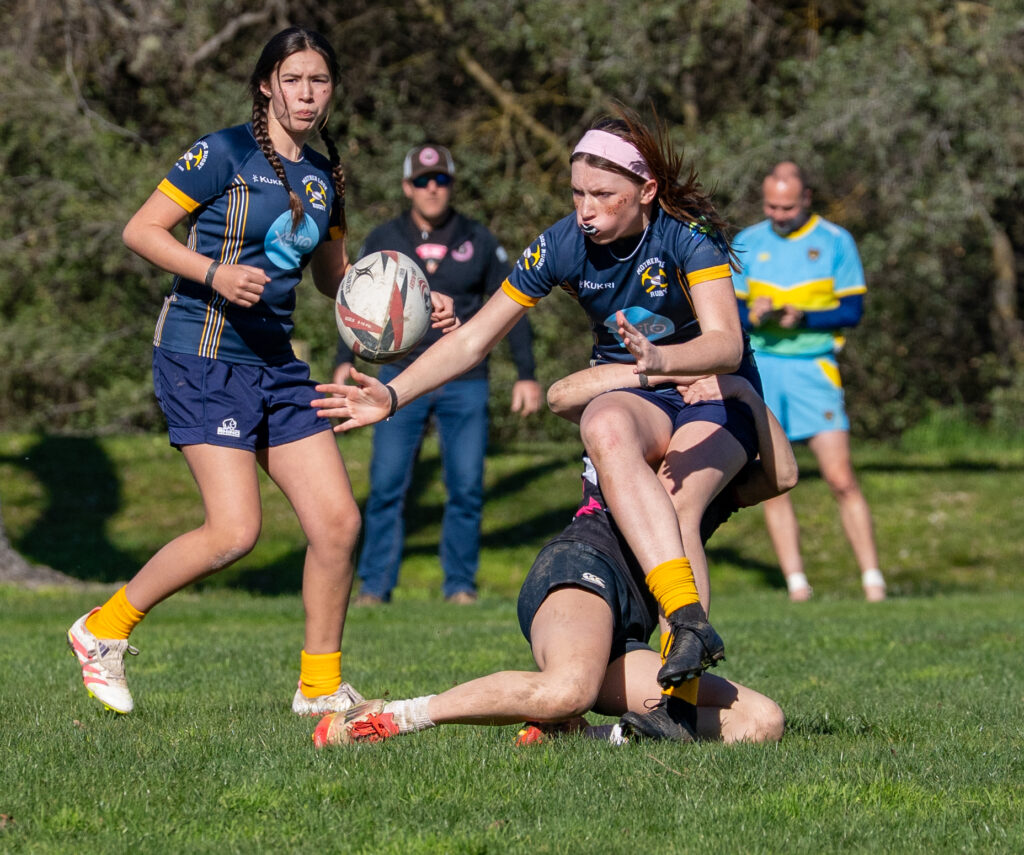 Athletes compete in a youth rugby tournament at Cherry Island Sports Complex in Rio Linda on Jan. 24, 2026. (Cameron Clark)
Even with the new rule in place, Jones pointed out that her daughter now wears a Q-Collar, a device that aims to reduce the severity of brain injury if an athlete takes a blow to the head.
The Q-Collar got clearance from the Food and Drug Administration in 2021, even though the agency acknowledged the data does not demonstrate that the device prevents concussion or serious head injury.
Lawmakers weigh in
The safety of young athletes has also been the subject of recent political conversation in California. Just two years ago, then-Assemblyman (now Sacramento Mayor) Kevin McCarty halted progress on his proposed legislation to ban tackle football for kids younger than 12 because of concerns over CTE. Gov. Gavin Newsom, at the time, indicated he would veto the bill, recognizing that families want to be able to choose which sports their kids can play.
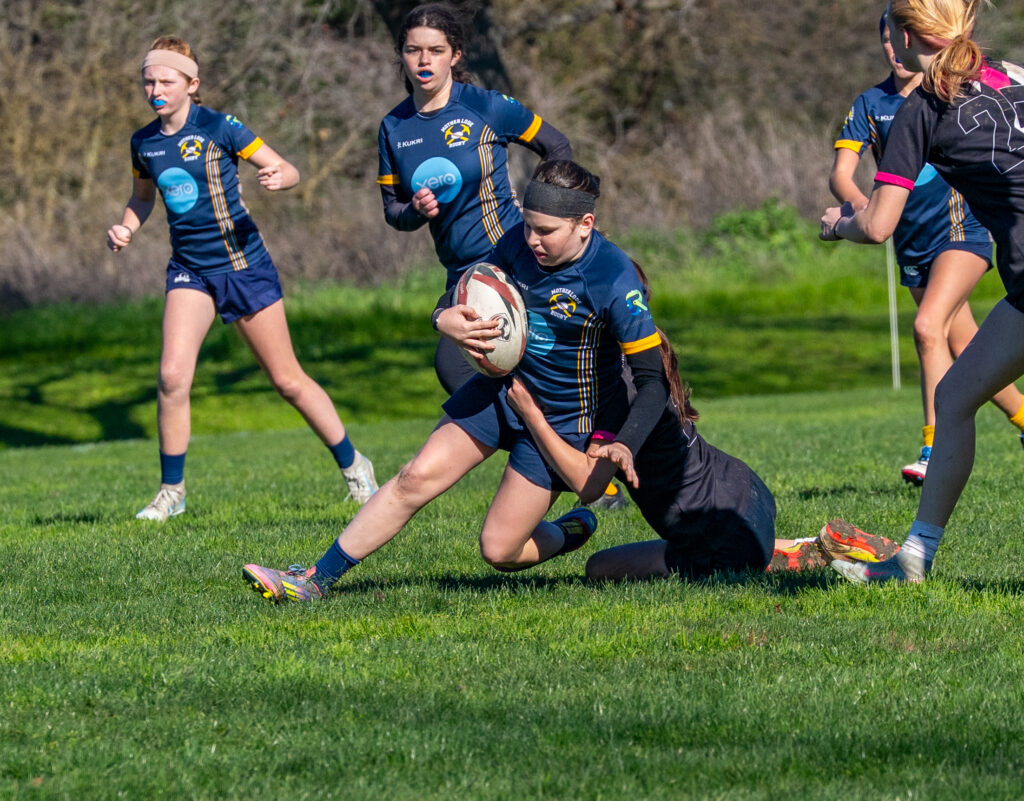 Athletes compete in a youth rugby tournament at Cherry Island Sports Complex in Rio Linda on Jan. 24, 2026. (Cameron Clark)
At an informational hearing before lawmakers in 2023, California mother Jan Franklin shared a powerful story about the loss of her only child, Jason, who took his own life in 2018. Jason, she said, started playing tackle football at age 11 and didn’t stop until after he graduated college in 2016, after which she says he wasn’t the same. After the Franklins donated their son’s brain to research, they learned he had stage 2 CTE, which progresses through four stages.
“If I knew then what I know now, I would never — never — have let my son play tackle football,” Franklin said tearfully. “We can’t bring Jason back, but there are millions more Jasons out there playing football and not being properly warned how fragile the human brain is.”
There’s now a new bill making its way through the Capitol that aims to strike a balance between safety and the freedom of families to focus on football. Assembly Member Avelino Valencia introduced Assembly Bill 708 last year. If passed, it would prevent youth football organizations from prohibiting the use of padded helmets like the Guardian Caps some NFL players now wear.
“Youth football leagues need legal certainty that soft-shelled add-ons are allowed in California,” Valencia, an Anaheim Democrat, said in a written statement. “As a former player and coach, this issue is personal to me. Research shows that repeated head impacts lead to dangerous health outcomes, and it must be addressed.”
The bill is currently pending in the Senate Appropriations Committee.
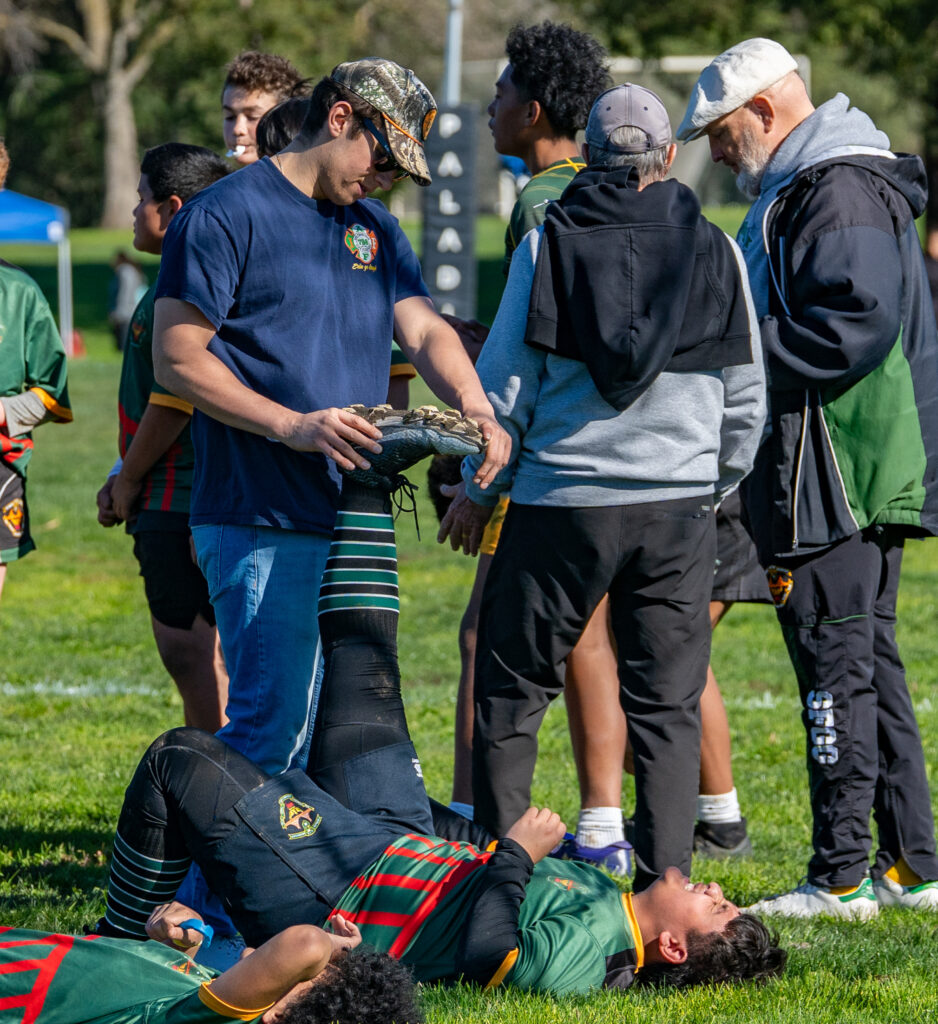 A coach stretches out an athlete during the youth rugby tournament at Cherry Island Sports Complex in Rio Linda on Jan. 24, 2026. (Cameron Clark)
Is the alternative riskier?
El Dorado Hills football dad Josh Carpenter — whose 13-year-old son plays tackle football, flag football and rugby — says it’s important that his kids participate in a lot of physical activity. Without sports, he notes, some will turn to activities that could be far riskier to their brains in his opinion: screens.
“My bigger safety concern is them not playing sports,” he said. “If they’re not into sports, then they’ll fall into doomscrolling and let the Internet soothe them.”
“Being sedentary and afraid to go and play any sport is a detriment to children,” added Faraone. “For me, there’s so much more that sports — especially football — teaches as far as life skills that is so much more valuable, that I don’t want (my son) to miss out on just because there might be this slight chance he has this concussion and an even smaller chance that later on in life he might get CTE.”
Omalu does not think contact sports like football should be banned. Instead, he argues, there should be stronger regulation.
“Football and other unhealthy contact sports must evolve with society,” he writes. “Using a human head to attempt to stop or change the direction of an object traveling at a relatively high speed does not in any way make sense in the 21st century.”
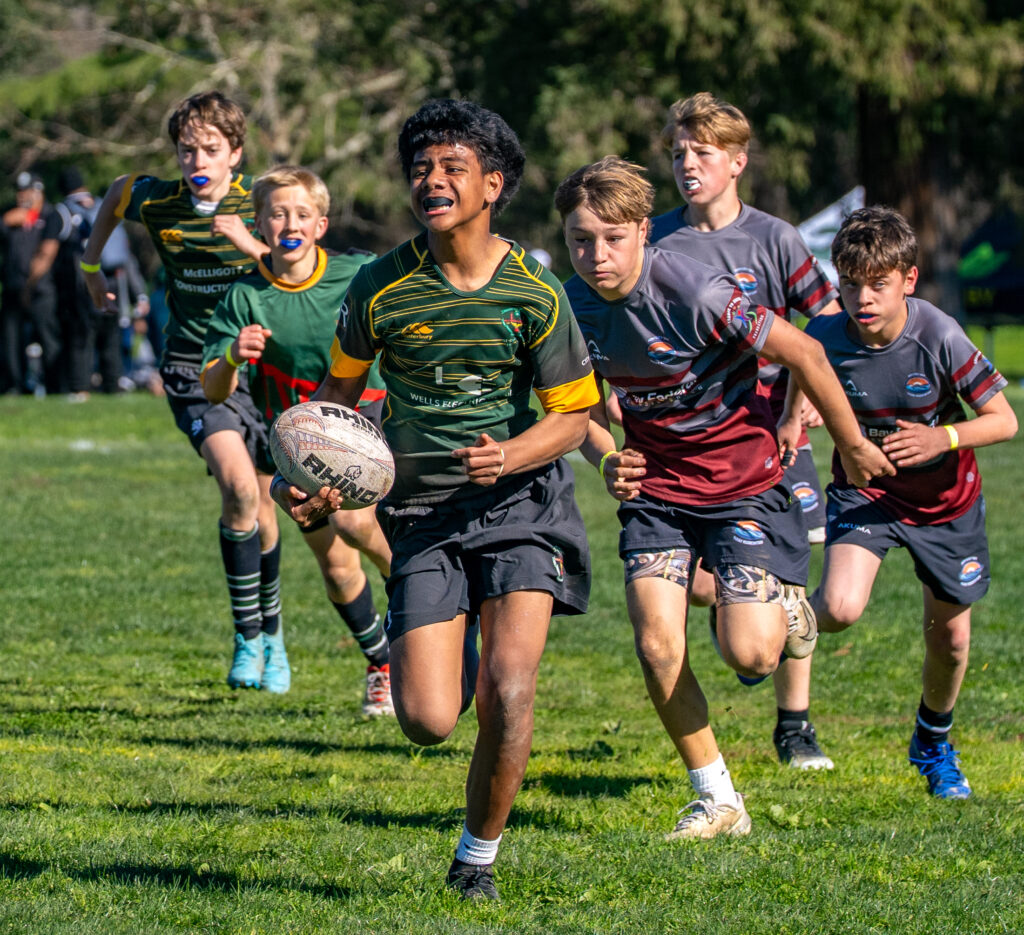 Athletes compete in a youth rugby tournament at Cherry Island Sports Complex in Rio Linda on Jan. 24, 2026. (Cameron Clark)
Carolyn Becker is a regular contributor covering youth sports for Abridged in her feature Beyond the Bleachers. She’s lived in Northern California most of her life and worked in journalism and communication in Sacramento for more than 25 years. She and her husband are raising two boys, both of whom play competitive baseball.