
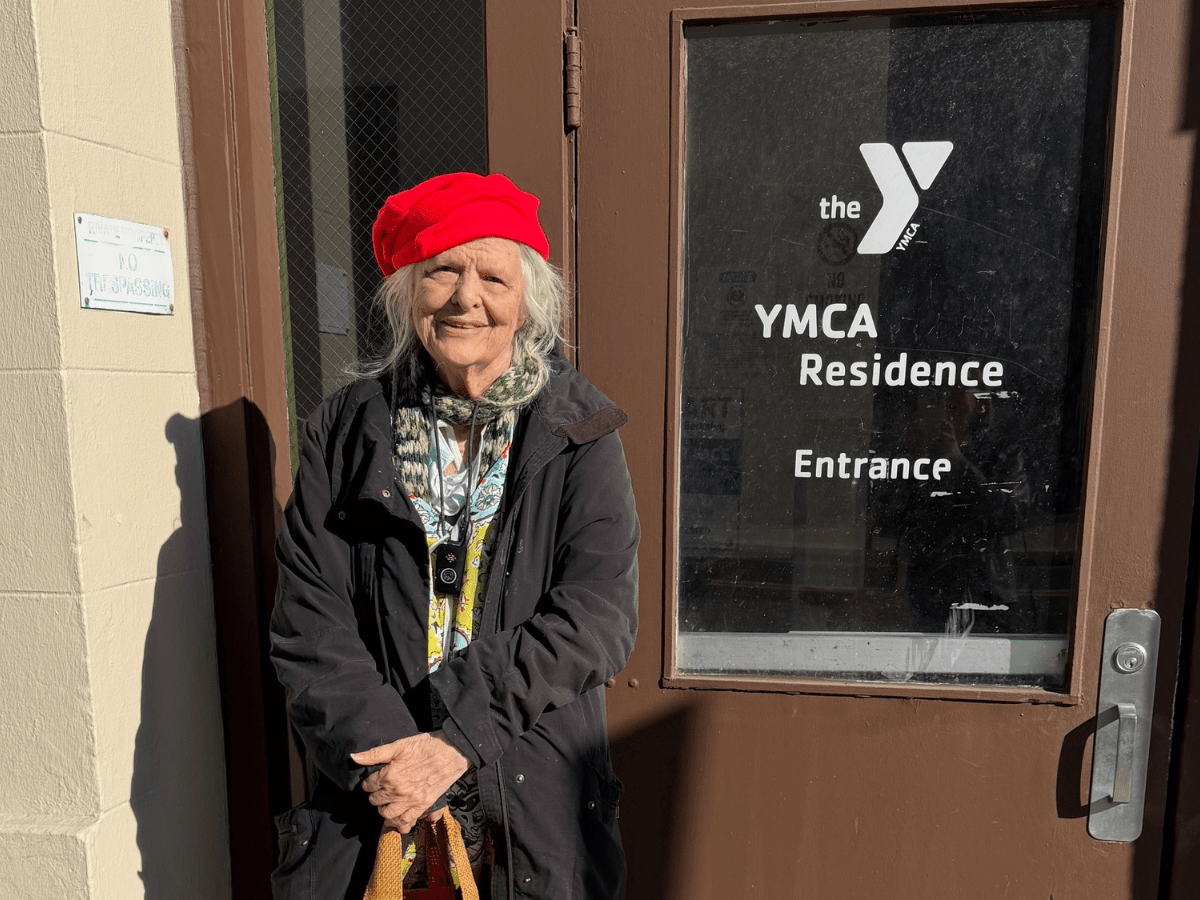
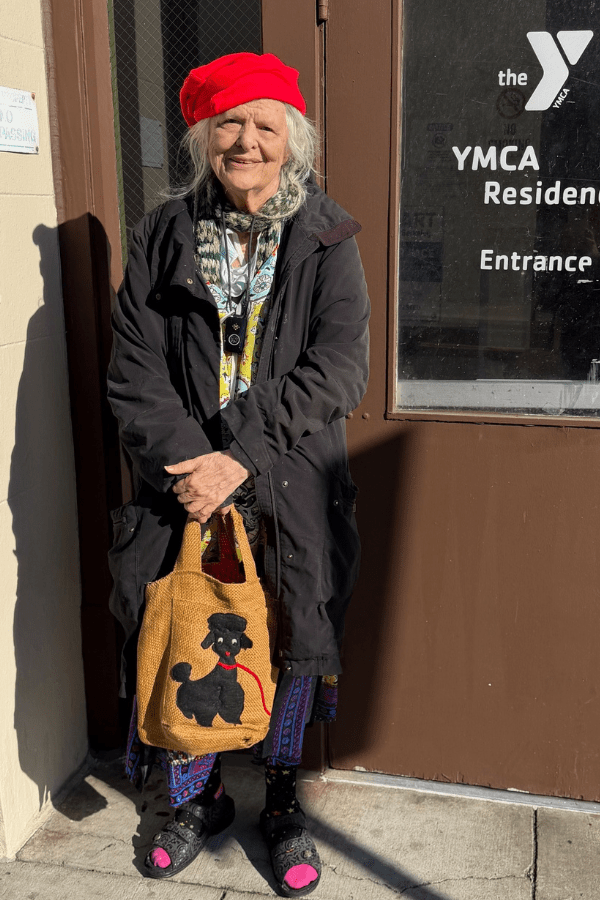
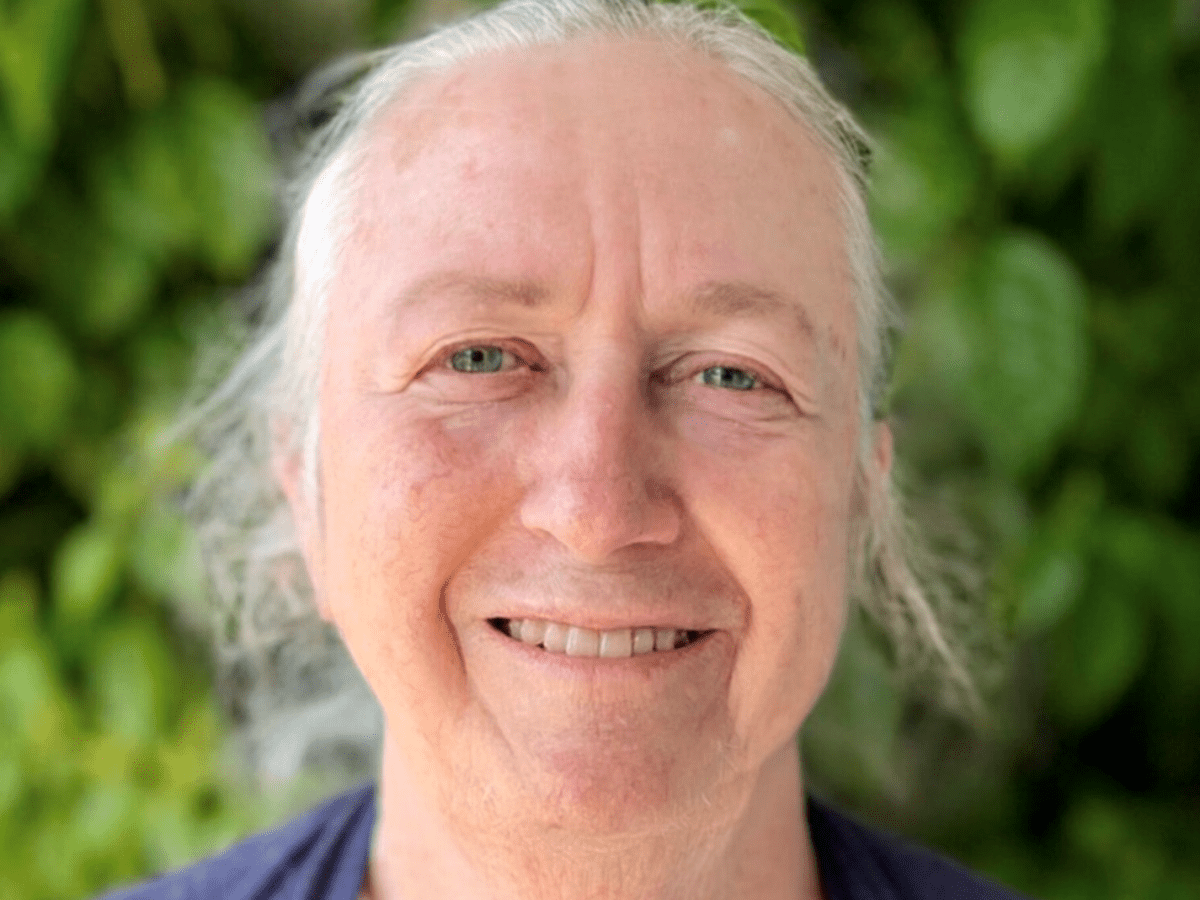
 Laura X — who stood on stage with Martin Luther King, Jr. during the March on Washington and built a feminist history archive purchased by 300 libraries in 14 countries — lives in a small room at the YMCA Hotel in downtown Berkeley, relying on friends and supporters to help pay her $1,200 per month rent. Credit: Frances Dinkelspiel for Berkeleyside
For more than 50 years, Laura X’s house in north Berkeley with a sweeping bay view was a hub for social protest movements.
In the 1960s, after protesting for the Free Speech Movement and marching through the streets of Berkeley in support of women’s liberation, Laura started accumulating pamphlets, manifestos, posters and newspapers from the early days of feminism. The collection became so voluminous it morphed into the Women’s History Research Center, with more than a million pieces of paper. Now microfilm of those archives is spread in libraries around the world.
In 1978, Laura began crusading to make marital rape, then only outlawed in five states, a crime. Galvanized by the trial in Oregon of John Rideout, who was charged but acquitted of raping his wife, Greta, Laura created the The National Clearing House on Marital and Date Rape. She successfully lobbied to get California to criminalize spousal rape in 1979, and then spent the next 15 years helping to coordinate 45 other state campaigns. By 1993, all 50 states had outlawed it.
Those were busy times for Laura, who was born Laura Rand Orthwein, Jr. in 1940 to a wealthy and prominent family in St. Louis. The phone rang constantly at her house near the Berkeley Rose Garden, where she had four phone lines, 14 phone stations, and volunteers flowing in and out regularly (including one who may have been an FBI informant). Books and boxes of archival material were stashed everywhere. She traveled around the country to protest and make speeches. She appeared on a 60 Minutes spinoff and the Phil Donahue show.
“Her devotion to the cause of women and women’s rights knew no bounds,” Phyllis Mandel, who was so close to Laura in those days she considered her “part of my family,” wrote in an email. “She was an unstoppable force.”
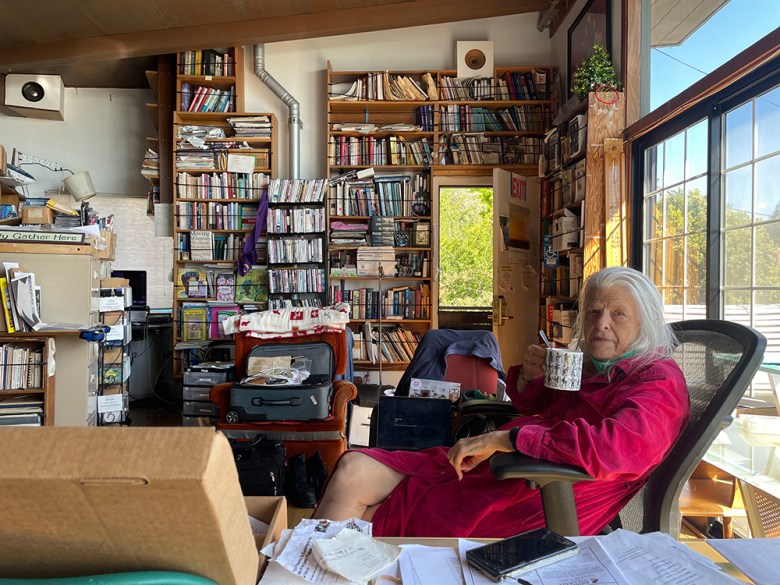 Laura X, at her house on Oak Street in the Berkeley Hills, in 2023. Credit: Lincoln Cushing
These days Laura, now 85, lives at the YMCA Hotel in downtown Berkeley, in a room so small she nicknamed it her “nun’s cell.” The narrow space, with just a bed, desk and small chair, is constricted by dressers and boxes stacked on top of another. Protest and movement posters adorn the walls. Laura shares the communal kitchen and bathroom with the other long-term residents, and scrapes by on $228 in monthly social security payments.
Laura’s life took a sudden turn about three to four years ago, when she lost her Berkeley home after falling victim to one of the largest Ponzi schemes in recent decades and making a number of poor financial decisions. Laura, who has received numerous inheritances in her life, has long been inclined to give money away to causes she believes in rather than saving for her twilight years. Her friends, some of them equally prominent in the social protests movements of the 1960s and ’70s, have launched various fundraising campaigns to bring in funds for Laura to live on.
“This is an urgent appeal for monthly donations to help pay for living expenses for a woman who is the living embodiment of the ‘Second Wave’ of feminism in the late 1960s,” reads one campaign on Give Butter. It was signed by Ti-Grace Atkinson, Bettina Aptheker, Alix Kates Shulman — all feminist icons — and others. “Laura X was also a pivotal activist in the anti-nuclear, peace, and civil rights movements.”
Despite her reduced circumstances and the health issues that come with aging, Laura is as politically active and cheerful as ever. On Jan. 18, she attended a showing of a documentary about the Free Speech Movement. Afterwards, she told the crowd how she had been one of the hundreds of students occupying Sproul Hall in 1964 but left at 3 a.m. — before police arrested 800 protesters — to contact sympathetic faculty, reach out to lawyers and arrange for bail. She maintains an enormous mailing list and sends out numerous newsletters (she says 128) to inform and galvanize people. She regularly attends Berkeley City Council and Zoning Adjustments Board meetings. And she still urges people to protest.
“That’s me, she who pipes up,” said Laura.
Laura’s work is now receiving a new spurt of institutional recognition. The Oral History Center of UC Berkeley’s Bancroft Library just published her oral history. It was part of the 150 Years of Women at UC Berkeley Project, which documents and celebrates the contribution of women to Cal. And Laura is a major character in a new book, “Without Consent: A Landmark Trial and the Decades-Long Struggle to Make Spousal Rape a Crime,” by Sarah Weinman.
A daughter of the St. Louis elite, she was crowned ‘Veiled Prophet Queen’ by a secretive whites-only club. Then she became a radical.
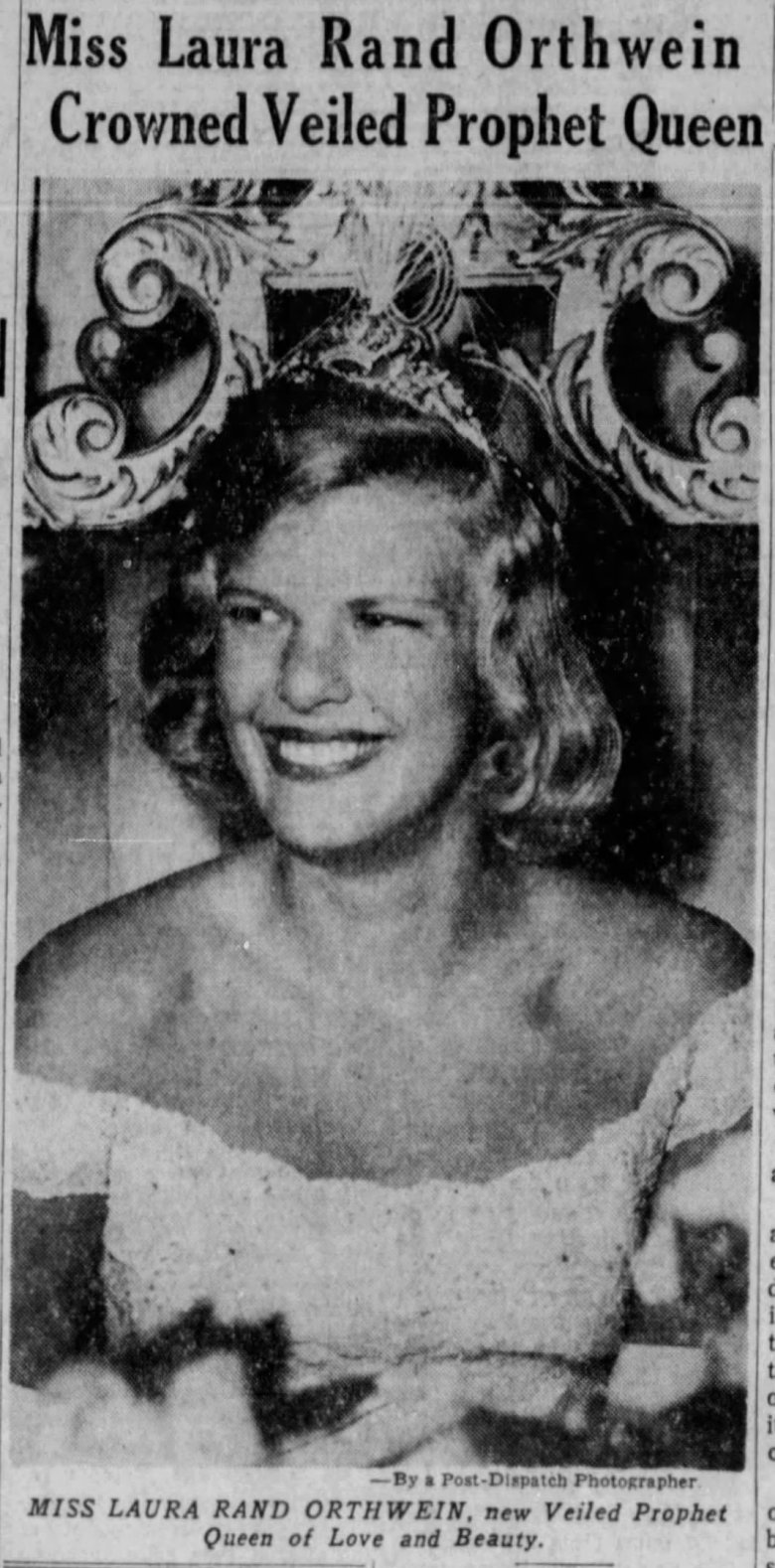 Her photo appeared on the front page of the Oct. 7, 1959, St. Louis Post-Dispatch. Credit: Newspapers.com
Laura’s upbringing offered few hints that she would grow up to be a radical feminist and social movement warrior. She was born into wealth and privilege. Her father was a top executive at McDonnell Douglas, the aviation and space company. Her mother, after whom Laura is named, was an heiress to the country’s largest shoe manufacturing company, International Shoe Company. The family lived in a gracious, gated mansion in St. Louis and Laura attended the private all-girls Mary Institute, founded in 1859. Her philanthropic family donated millions to the St. Louis Symphony Orchestra, Yale Medical School, St. Louis Zoo, Missouri Botanical Gardens and elsewhere. Her parents’ foundation, now worth more than $100 million, continues to support St. Louis institutions.
Laura started to chafe against the upper class world she was raised in when she was 12 and declared herself a socialist when she was 15, according to her oral history.
During Laura’s sophomore year at Vassar, where she co-founded a chapter of the Committee for a Sane Nuclear Policy, she was elected the “Veiled Prophet Queen of Love and Beauty” by the secretive all-male, whites-only Veiled Prophet Organization of St. Louis, founded in 1878 by wealthy St. Louis men and Confederate veterans. Her mother had served as queen in 1938 and it was considered a mark of honor. An anonymous prophet, wearing a pointy hat with a jeweled veil over his face, anointed a crowned Laura and 1,800 social elites celebrated her inauguration at a formal ball at the Chase Hotel.
“I was tortured into being glamorous,” said Laura. “I was a bookworm who was forced to be the queen of the whole city.”
The appointment meant Laura had to leave Vassar for a year to attend charity events. Since she found queen position “repugnant,” she tried to subvert its conventions by mostly visiting nonprofits rather than attending luncheons and charity events.
“She was very pretty and vivacious as a young woman,” said Sheila Humphreys, who has known Laura since they were young. They both attended Mary Institute and rode the school bus daily together. Now they both live in Berkeley, where Humphreys served for 40 years as the director of diversity at UC Berkeley’s Department of Electrical Engineering and Computer Sciences. “The Veiled Prophet Queen was chosen based on the stature of her father. Laura was the top debutante of the year and in 1959 the Queen was still asked to drop out of college to attend to various ceremonial engagements locally. That is what radicalized her in my opinion.”
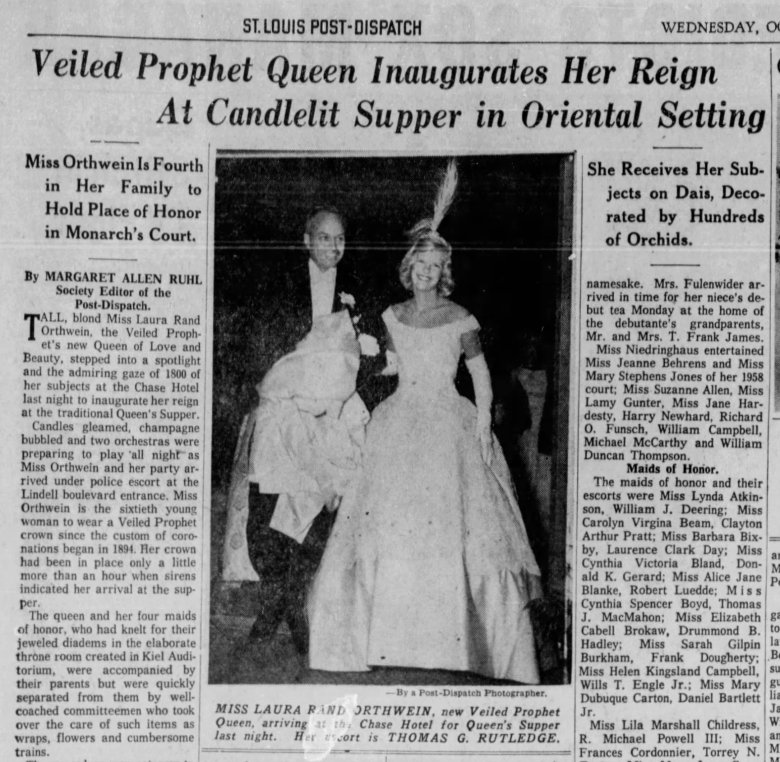 A story in the Oct. 7, 1959, St. Louis Post-Dispatch. Credit: Newspapers.com
When Laura returned to Vassar, she took an anthropology class from John Murra, who became her mentor and lover. When his teaching contract ended, Laura left Vassar and moved to New York City with him. She started working for CORE, the Congress of Racial Equality, picketed a bakery that refused to hire Blacks or Jews and taught students in Harlem, eventually working as a Head Start teacher in Puerto Rico for two years. She immersed herself in the coffee house scene, and was at Gerde’s Folk City the first time Bob Dylan performed, she said. She hung out with luminaries like Lenny Bruce and James Baldwin (and dated his brother, David).
After attending the March on Washington, where she stood on the stage with Martin Luther King, Jr., Laura moved to Berkeley in the fall of 1963 to attend UC Berkeley. By then, she had shed her birth name, Laura Rand Orthwein Jr., and had legally taken the name Laura Shaw Murra. Shaw was in honor of George Bernard Shaw, her favorite playwright, and Murra was in honor of her lover, who died in 2006. Laura still refers to him as her “significant other for 45 years.”
She gave International Women’s Day a kickstart and helped Ruth Bader Ginsburg research gender discrimination
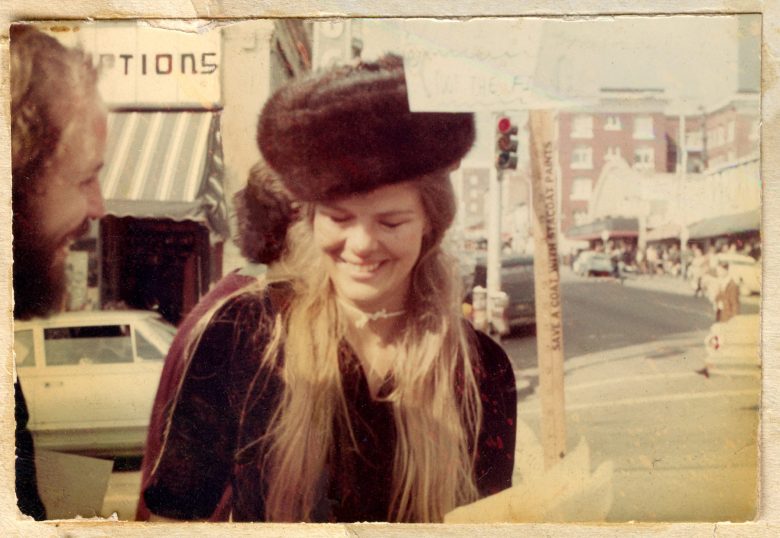 Laura X at an International Women’s Day demonstration in Berkeley on March 8, 1969. Credit: Margaret Hurn. Courtesy: Lincoln Cushing
In 1969, Laura changed her name (though not legally) to Laura X. She had called into Bill Mandel’s KPFA radio show on the Soviet Union and announced she would no longer use a last name because it reflected how women traditionally had been regarded as the property of their fathers and husbands and had their history erased.
After the Free Speech Movement, Laura left Berkeley and spent time in the Soviet Union, where she studied women, childcare, and childrearing practices. When she returned to UC Berkeley, she was reminded that women were still regarded as secondary to men. At a February 1969 gathering for the sociology department, she was speaking to a professor who was considering offering a class on women’s history. A male professor overheard their conversation and made a derogatory comment about the dearth of material on women. “Oh, don’t bother, there’s not enough about women to fill a quarter course,” he said, according to Laura’s oral history.
His comment infuriated Laura and she vowed to put together a list of 1,000 women who had made an impact on history.
“I was so stupefied about how rude he was and ignorant, and oh, so I got into my most famous feminist rage,” she recounted in her oral history. “I called everybody I knew, and I called libraries, and I did all sorts of things, and managed in three days to come up with a thousand names that nobody but me had ever heard of, which was very strange. Mostly the people I called told me Betsy Ross, Eleanor Roosevelt, and maybe Abigail Adams, Martha Washington, very obvious people. But my list, my Herstory Synopsis, as I called it, had women in art and in politics and science and every field of endeavor. It’s a great list.”
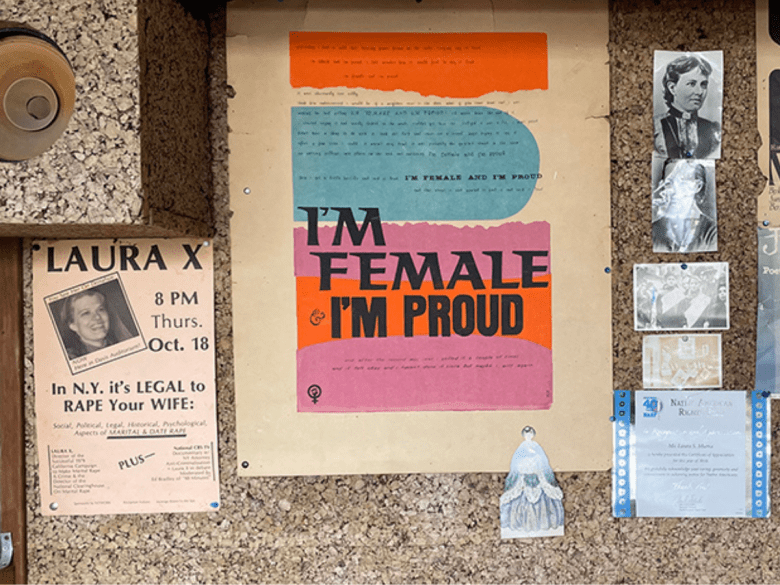 Laura spent over 15 years helping coordinate campaigns to criminalize spousal rape in 46 states. Courtesy: Laura X
Laura had consulted closely with Bill Mandel on the making of the list and his daughter, Phyllis, brought it to the attention of the Berkeley Women’s Liberation Group. Laura suggested that the group celebrate International Women’s Day, which had not been honored in the U.S. since 1947 because of the Cold War. On March 8, 1969, around 50 women marched throughout Berkeley. It kickstarted widespread recognition of International Women’s Day.
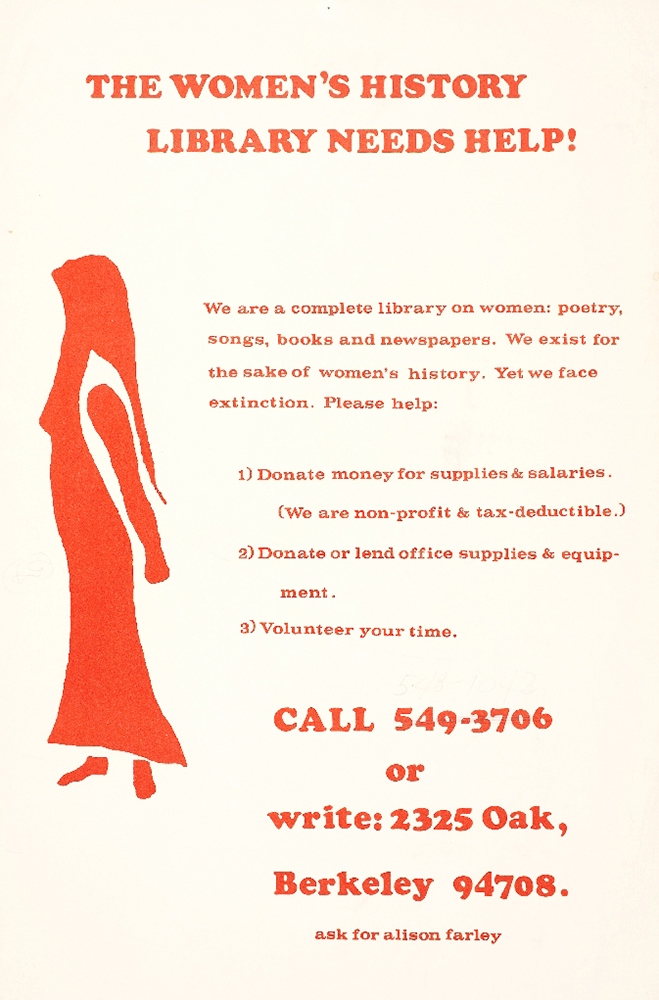 An early flyer soliciting contributions for Laura’s archive. Courtesy: Laura X
“She was fearless,” said Judy Gumbo, an original member of the Yippies and author of the memoir “Yippie Girl: Exploits in Protest and Defeating the FBI.” If you ask “‘what are you going to do with your desire to make the world a better place,’ she was fearless in getting it done. She was dedicated to making the world and Berkeley a better place for women.”
After compiling the Herstory list, Laura and her colleagues created a songbook of women’s music and a book on women in film. She started a feminist newspaper. By then, the Women’s History Research Center, headquartered in Laura’s house and staffed by volunteers, was taking off and was soon recognized as an important archive.
“The fact that she was an early adopter of finding feminist newspapers and making those accessible to libraries was a smart move,” said Lincoln Cushing, an independent archivist and historian who helped Laura catalog some of her archival material. “She helped to conserve and preserve all these runs of feminist newspapers that were crucial.”
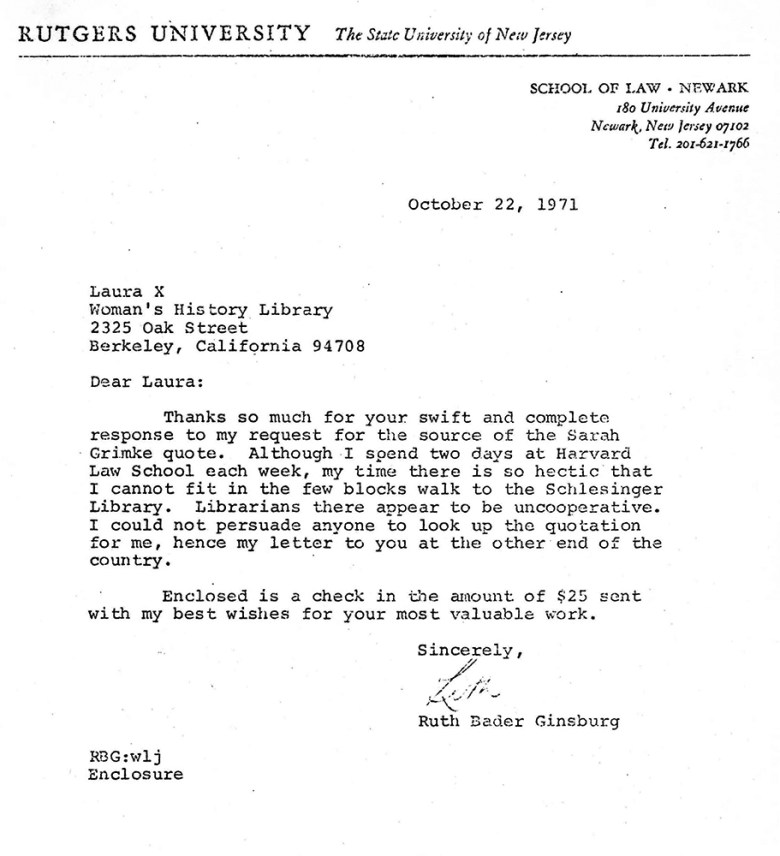
Even future Supreme Court Justice Ruth Bader Ginsburg used the archive.
In 1971, Ginsburg was a professor at the law school at Rutgers University. She had been asked to teach a seminar on women in the law, which sparked her interest in gender discrimination issues. But there was not a lot of information. Ginsburg reached out to Laura X for help, later sending her a note of gratitude along with a $25 check.
Now living in poverty, she relies on friends and supporters
By 1974, Laura X was wrapping up the work on the Women’s History Research Center. She and her volunteers had microfilmed a million pages of documents from 40 countries. Laura rented a former dental office at 14th and Franklin streets in Oakland and 114 people worked for months capturing the documents on film. The Herstory collection was 90 reels long. Other collections included the 14-reel Women and Health/Mental Health collection and the 40-reel Women and the Law series. Over the years, 300 libraries in 14 countries had purchased copies.
The archive had become too expensive to maintain. Laura distributed its physical contents to the University of Wyoming, Northwestern University and elsewhere. The women’s history archive at the Schlesinger Library, part of Harvard University’s Radcliffe Institute for Advanced Study, also has some of its holdings.
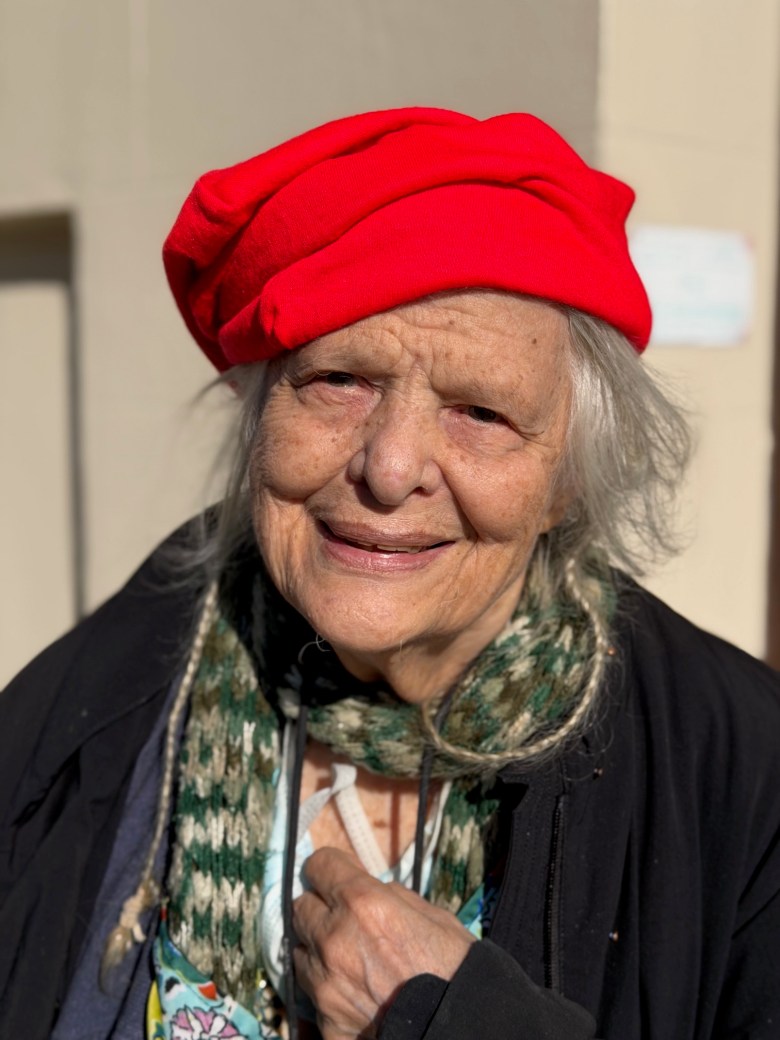 Laura X outside the YMCA Hotel. Credit: Frances Dinkelspiel
Laura still has 250 boxes of archival material, mostly correspondence between her and leaders of various social movements, in boxes in St. Louis. She flies there regularly to sort them, until recently relying on banked airline miles.
Funding her interests has long been a challenge for Laura, and plays a role in her current circumstances. Over the course of her 85 years, she has received a number of inheritances as well as regular payments from her family, according to published records and recollections from Laura and some of her friends. Laura did not live profligately, but she prioritized funding her archives and movement activities over saving, she said. When she inherited a trust from her grandmother in 2014, she said she set aside a third for living expenses, a third for investment, and a third for charity.
Laura lost a significant amount of money after she invested about $250,000 with GPB Cold Storage, a subsidiary of GPB Capital Holdings, an investment fund that promised 8% annual returns. In February 2024, the Securities and Exchange Commission charged the owner and CEO of the fund, David Gentile, with “running a Ponzi-like scheme” by collecting $1.6 billion from about 17,000 people and using new infusions of cash to pay off incoming investors.
Gentile and his partners were convicted in May 2025, sentenced to seven years in prison, and ordered to pay $15.5 million in restitution. But in November, 12 days after Gentile entered prison, President Donald Trump commuted his sentence, thereby eliminating Gentile’s responsibility to pay any money to his former investors.
Laura received a portion of her investment back through a civil lawsuit, but the scam led to her losing her house on Oak Street in the Berkeley Hills. Even though she had purchased the house in 1970, she had not paid off her mortgage. She stopped paying it and the bank put a notice on her door that the property would be put up for auction. Before that happened, Laura sold the home herself. She moved out in 2023.
Her descent from wealth to poverty has shocked her friends.
“She asked me to pick her up from the airport and take her to her house, which she still lived in,” said Phyillis Mandel. “She had no money or food, which horrified me, so I took her to buy food.”
Friends donated enough of their hotel points to enable her to live in a downtown Berkeley hotel for a few months. She could not find public housing, so she has been living in the YMCA for more than a year. She pays $1,180 a month in rent.
“I’m going to rave about the YMCA,” Laura said. “I love the people and the staff. Who knew I was going to be happy, but I am.”
Laura has gotten about $40,000 in donations from friends and supporters but she needs ongoing donations to pay her living expenses. The constant need for funds — one reason she agreed to speak to Berkeleyside for this story, she said, was to draw attention to her plight — grates on some of her friends and benefactors, who say she has been blessed with money but has not handled it well.
But none doubt Laura’s contributions to history.
“As far as I am concerned and without a shadow of a doubt, she is a giant in the world of women’s history and I thank her from the bottom of my heart for it,” Mandel said.
Related stories
January 13, 2026Jan. 14, 2026, 8:35 a.m.
December 24, 2025Dec. 24, 2025, 5:18 p.m.
Remembering Marsha Hudson, whose literary salon inspired UC Berkeley’s women’s studies program
February 4, 2026Feb. 4, 2026, 3:12 p.m.
We know that most readers don’t get to the end of the article. But you did! To support our in-depth, rock-solid reporting, please consider making a donation to our nonprofit newsroom today. We rely on our readers — particularly the ones who read the whole story!
“*” indicates required fields