
Plans to build a golf course and a large housing development near the eastern edge of the Palos Verdes Hills were first floated in 1958. The area just north of the Palos Verdes Reservoir had become a part of Rolling Hills Estates when that city incorporated in 1957.
The roughly 30 acres of hillside land adjoined the Jack Kramer Tennis Club. The tennis club was originally slated to be a part of the golf course complex, until former pro Kramer entered the picture and developed the racket sports center as a separate facility. It opened in 1962.
Palos Verdes Peninsula developer Omer K. Tingle owned about half the land to be used for the course. He had always planned to build a full-size, 18-hole course in the area, but the pathway to that goal turned out to be lengthy and circuitous.
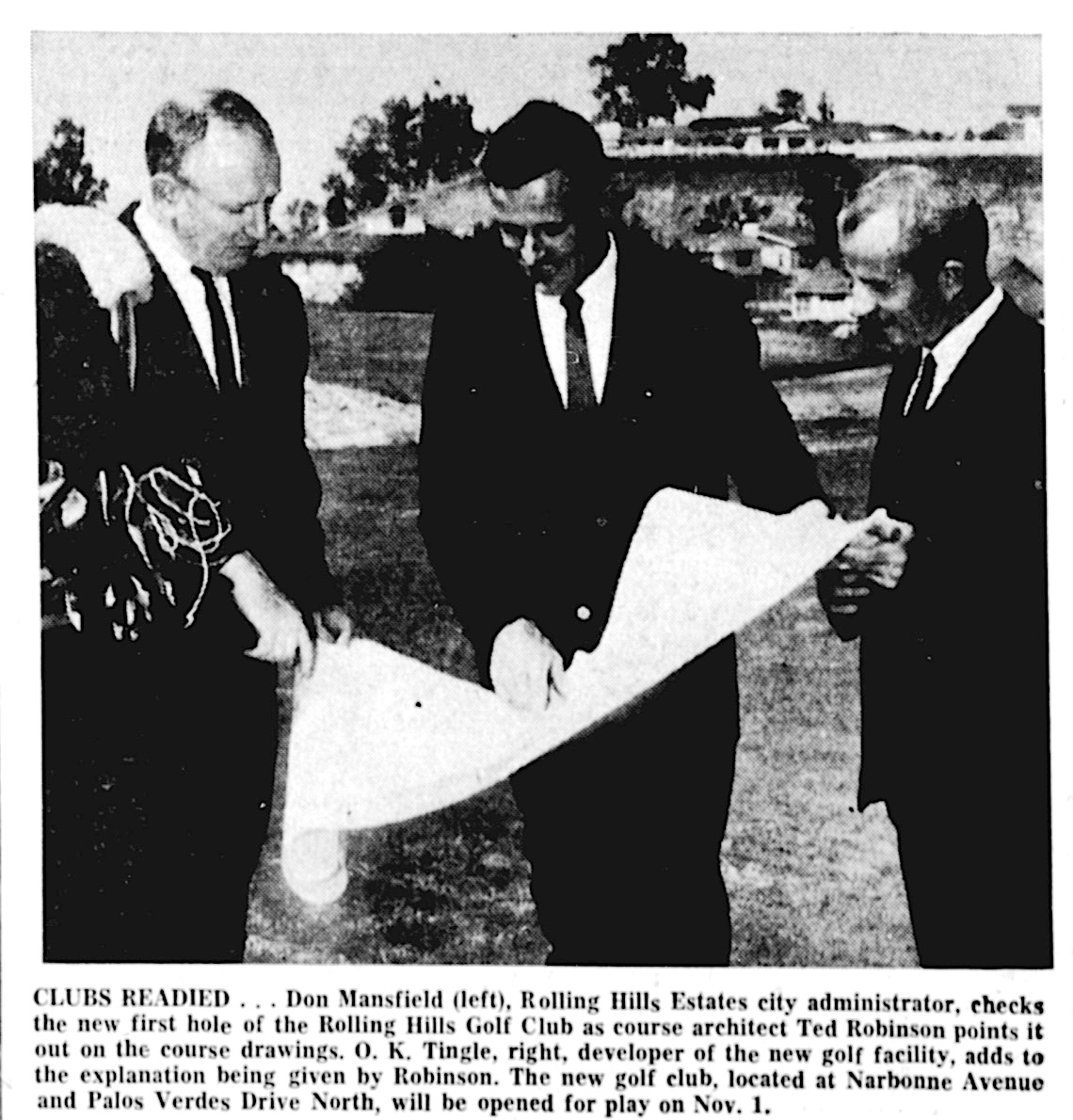
Don Mansfield (left), Rolling Hills Estates city administrator, check the new first hole of the Rolling Hills Golf Club as course architect Ted Robinson points it out on the the course drawings. O.K. Tingle (right), developer of the new golf facility, adds to the explanation given by Robinson. The new golf club, located at Narbonne Avenue and Palos Verdes Drive North, will be opened for play on Nov. 1. Torrance Herald, Aug. 8, 1963, Page 25. (Torrance Historical Newspaper and Directories Archive database, Torrance Public Library)
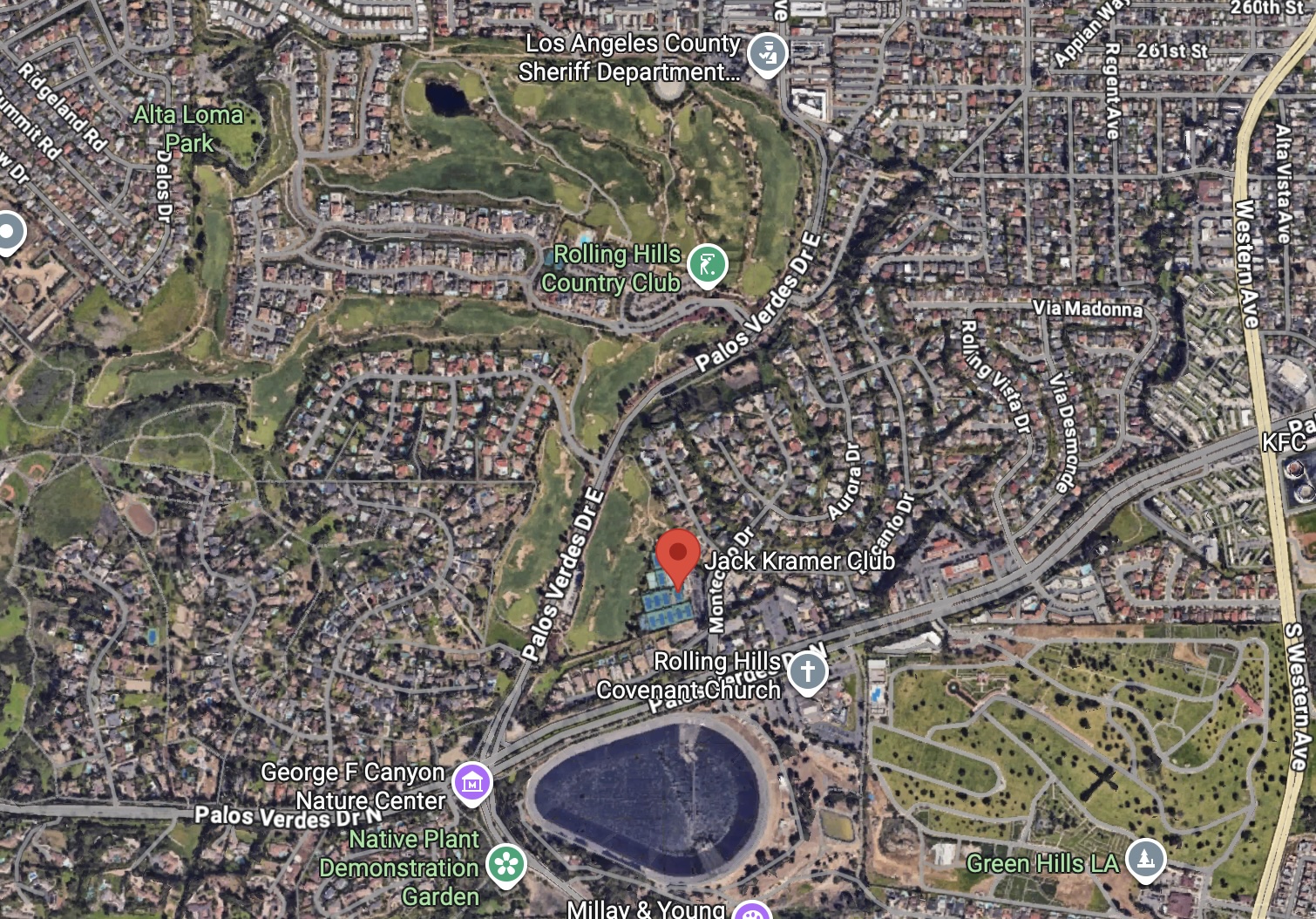
Rolling Hills Country Club, upper center labeled in green, lies on the eastern edge of Rolling Hills Estates. 2026 image. (Google Earth)
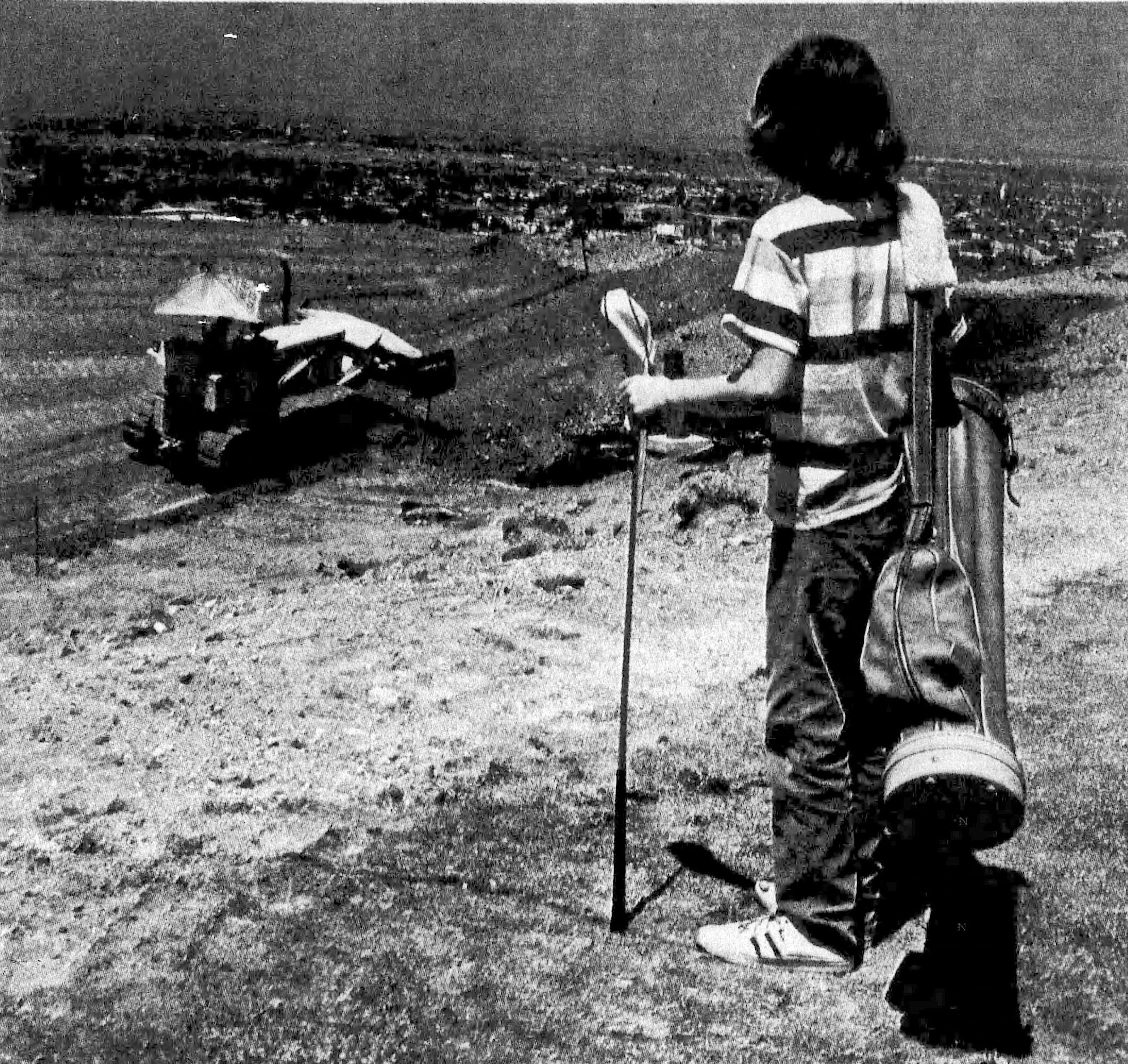
An unidentified young golfer looks out at new course construction at Rolling Hills Country Club. Daily Breeze, July 11, 1972, Page 29. (Staff photographer Jack Wyman / Daily Breeze)
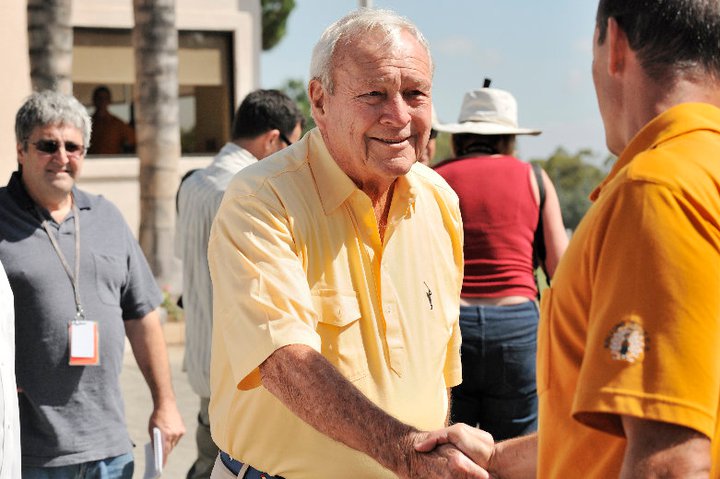
Arnold Palmer greets a fan at Rolling Hills Country Club on Oct. 3, 2009, as Daily Breeze reporter Josh Grossberg looks on, left. (Rolling Hills Country Club Facebook page)
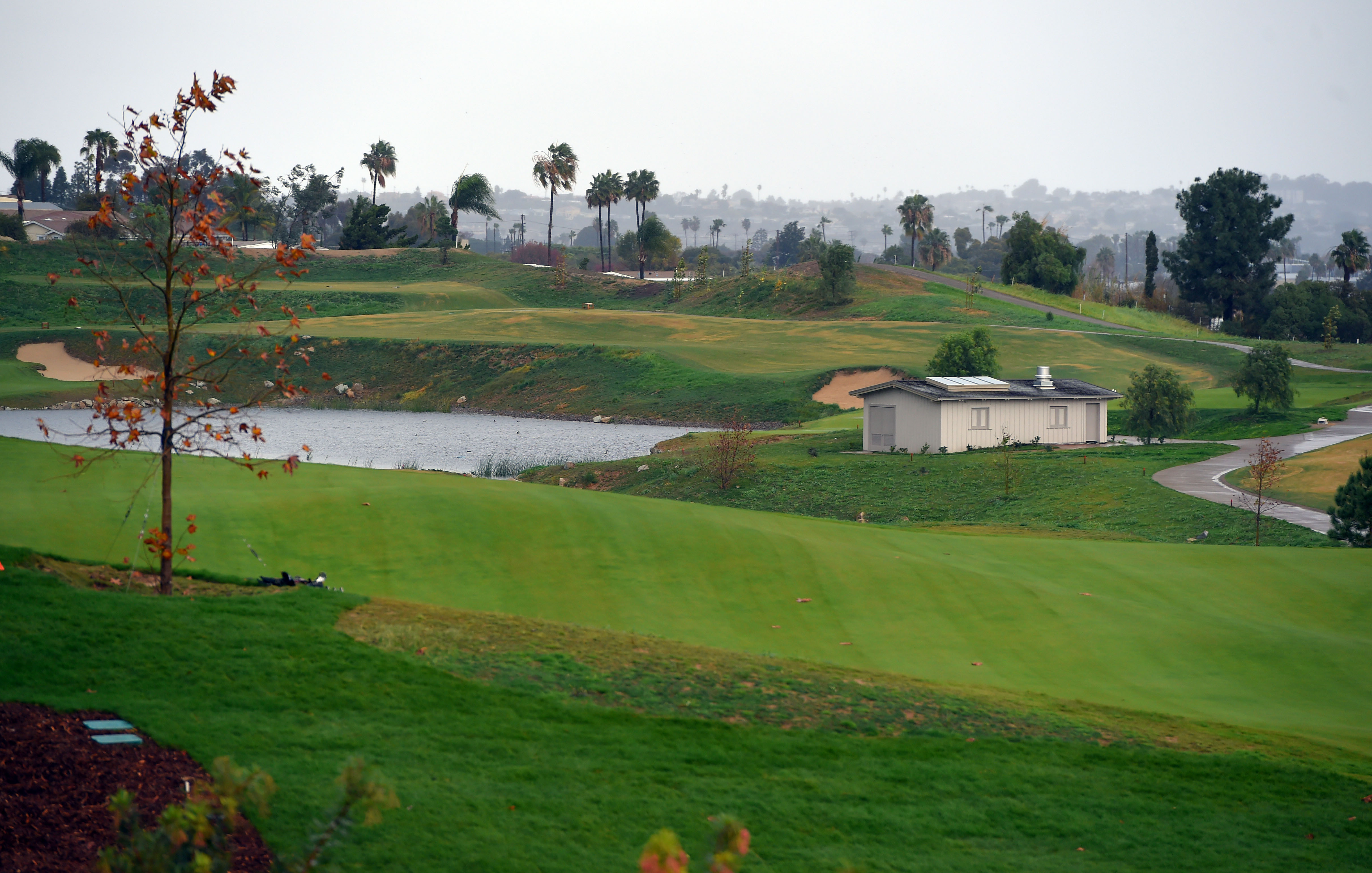
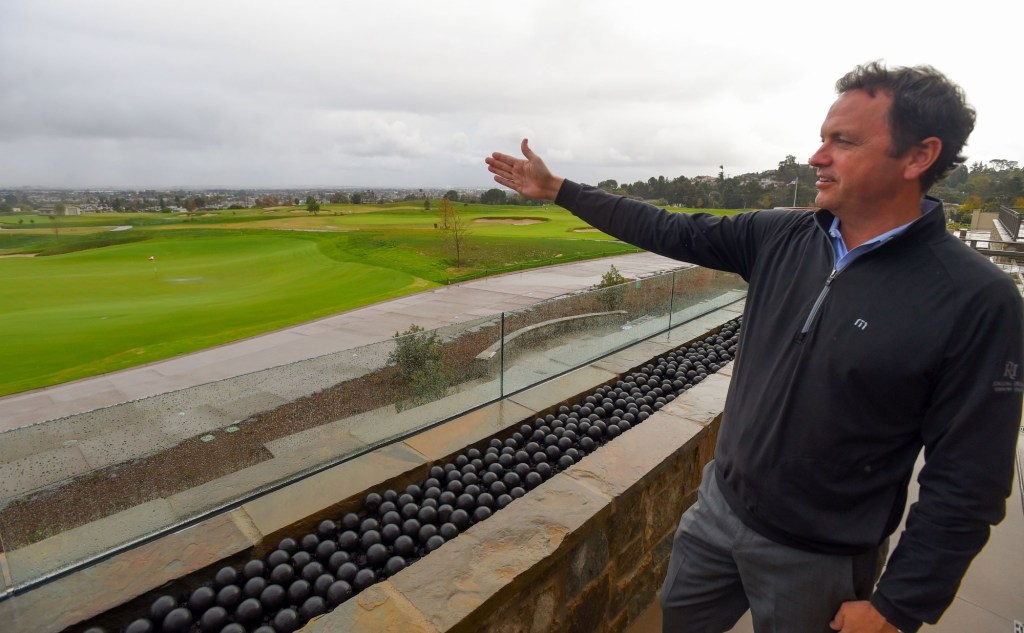
The new Rolling Hills Country Club in Rolling Hills Estates. Jan 9, 2018. (Photo by Scott Varley, Daily Breeze/SCNG)
Show Caption
1 of 5
Don Mansfield (left), Rolling Hills Estates city administrator, check the new first hole of the Rolling Hills Golf Club as course architect Ted Robinson points it out on the the course drawings. O.K. Tingle (right), developer of the new golf facility, adds to the explanation given by Robinson. The new golf club, located at Narbonne Avenue and Palos Verdes Drive North, will be opened for play on Nov. 1. Torrance Herald, Aug. 8, 1963, Page 25. (Torrance Historical Newspaper and Directories Archive database, Torrance Public Library)
To start with, Tingle needed more land, some of which was taken up by the owners of the nearby Chandler’s Palos Verdes Sand & Gravel Co. quarry.
In 1962, he made a land swap deal with fellow developer and landowner George Chacksfield to acquire enough room to build the course. Chacksfield wanted to build his Rolling Hills Country Club Estates homes with golf course views there.
Tingle started by hiring Peninsula resident Ted Robinson to design a smaller nine-hole executive course. At the time, Robinson was just beginning his long and successful career as a golf course architect, during which he designed more than 150 courses worldwide.
Grading the land began in April 1963. The Rolling Hills Golf Club, as it was initially named, opened for play on Nov. 9, 1963. It was a par 29, with seven smaller par 3 holes and two longer par 4 holes.
From this first iteration forward, the club was always intended to be private, drawing its members from the Peninsula. The small course was successful from the first, and planning for a larger one soon began.
In July 1965, Tingle announced that his architect Robinson had completed plans for the next phase of the Rolling Hills course. After signing a long-term lease for additional land from the Chandler’s quarry owners, construction was ready to begin on a new 18-hole layout across the way from the original nine-hole executive course.
This iteration of the course would be the most creative in the club’s history. Nicknamed the “double nine,” it featured 18 full-length holes. The twist: it only had nine fairways. Once golfers had played the front nine holes, they would turn around and play the final nine holes using the same fairways in reverse.
It took four years, but the new course was opened for play on Oct. 9, 1969. Fears that players would be hitting golf balls into each other while sharing the same fairway from opposite ends proved to be unfounded.
Still, the “double nine” arrangement was strictly an interim step toward the end goal of creating a full 18-hole course. In November 1971, a plan to build the long-desired regulation 18-hole course was approved by the club’s board of directors.
This design, again crafted by Ted Robinson, would add nine new holes in place of the old executive course in addition to replacing the “double nine” layout. It also included new amenities such as an expanded clubhouse, new practice tees and a swimming pool. It opened on March 1, 1973.
The layout and facilities served members of the private club well for nearly three decades. Then, in the year 2000, the Chandler family announced it was shutting down its quarry operation for good, and planned to sell all its land holdings in the area, including the land it had leased to the Rolling Hills Country Club.
This led to a long series of negotiations between RHCC, the Chandler estate and various civic and regulatory agencies. Under the terms of a deal struck between the two parties in 2008, RHCC would build a whole new golf course incorporating the former quarry site, and developer John Laing would erect a substantial number of new homes.
Enthusiasm spiked when it was learned that the firm run by legendary golfer Arnold Palmer would design the new course. Unfortunately, the 2008 recession crushed the plans for Laing’s new housing development and stalled what had become known as the Chandler Ranch plan.
Palmer showed optimism when he visited the site in October 2009, but ultimately, his firm did not participate in the Chandler Ranch project. (He died on Sept. 25, 2016.)
The Chandler Ranch project and its new golf course plan eventually recovered from the ill effects of the economic downturn and began regaining momentum in 2011. In 2014, RHCC hired architect David McLay Kidd to design the new course.
The course was closed in early 2015, and construction began that August. The closure lasted for just over three years. It finally reopened with gala ceremonies on Jan. 13, 2018.
The $75 million,160-acre development included an 18-hole, 7,090-yard golf course, a huge 75,000-square-foot clubhouse, exercise facilities and pool, and more than $400 million in new homes. It remains a private club.
Sources: “Carrying Out a Big Dig at Rolling Hills Country Club,” by Adam Lawrence, Golf Course Architecture website, Feb. 13, 2018. Daily Breeze archives. Los Angeles Times archives. Palos Verdes Peninsula News archives. Rolling Hills Country Club website. The Southern California Golf Guide, by Daniel Wexler, MTIII Golf Media, El Segundo, 2017.