
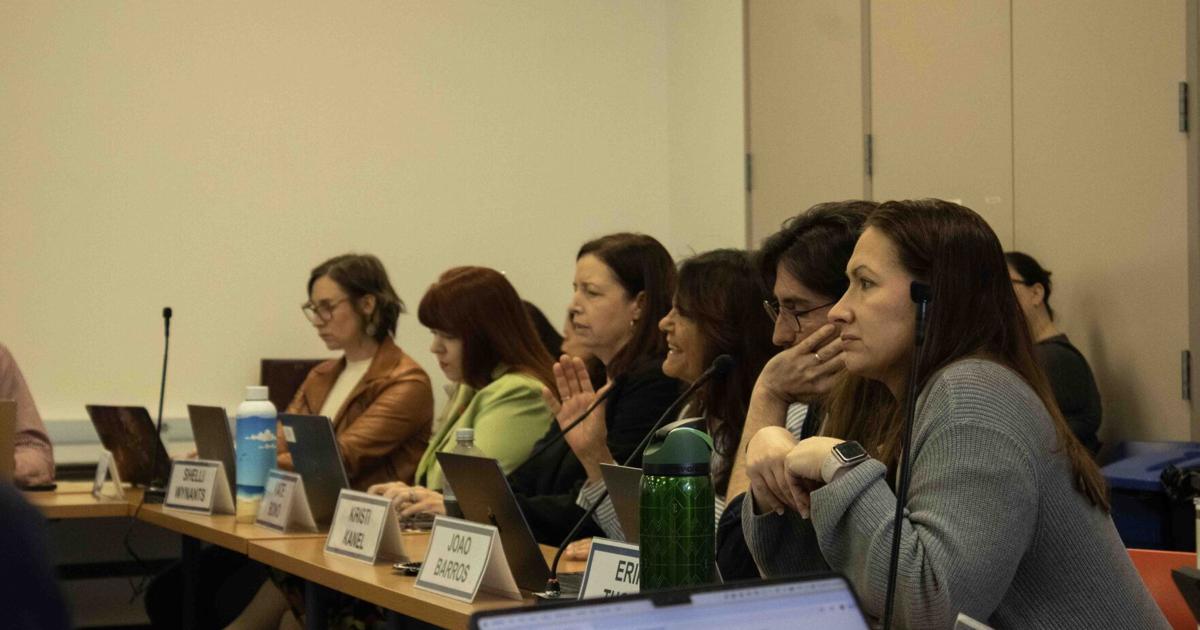
Cal State Fullerton’s Academic Senate discussed an observed decrease in student enrollment in general education classes on Thursday and its effects on faculty members and students.
CSUF faculty discussed concerns surrounding enrollment numbers in general education courses being lower than expected. The departments that were affected by this include Human Communications, English and Math. Faculty members had their classes canceled because not enough students enrolled in their courses.
The CSU system saw 471,451 students enrolled in courses during the Fall 2025 semester — a 2% increase since 2024, the largest year-over-year gain in a decade. This marks the second consecutive year of enrollment gains following two years of post-pandemic declines, according to the CSU.
At the meeting, the faculty addressed their concerns about those who were affected in their department and wanted a solution to prevent professors’ classes from being canceled.
“This fall, we had a record freshman enrollment, so I guess I’m just wondering how it is possible with a record freshman enrollment to get to the spring and have unfilled GE sections,” said Jon Bruschke, department chair of the Human Communications department .
Assistant Vice President for Institutional Effectiveness and Planning, Su Swarat, addressed the concerns.
According to Swarat, the number of students enrolling in general education courses is determined by students’ Math and English readiness, as well as deliberation with department chairs and advisor recommendations.
Faculty members plan future courses based on those projection numbers that are then used to open courses each semester for students.
Students’ intellectual levels range based on their English and math readiness upon entering college. Students may need to retake courses if their proficiency levels haven’t advanced.
While the number of students passing general education courses is estimated for faculty budget planning, this data is not entirely precise, allowing flexibility in budget and leaving room for proactive adjustments to academic general education courses.
Swarat expressed that students rushing to take their general educational courses plays a role in overall success. Students may be influenced by their peers to take GE courses all at once, contrary to their advisors’ recommendations. The outcome of this creates an uneven record of enrollment for these classes.
To avoid further confusion for students, it was addressed that advisors and faculty members, who play a crucial role in guiding students, have to coordinate with one another on the importance of spreading out general educational classes in a timely manner.
Bruschke spoke to the importance of addressing these issues, as to create stability for faculty and prevent their persistence of these problems on campus.
“We’re having this conversation because this semester is markedly worse than it’s been at any point since before the pandemic. All I want us to reflect on is the very real human cost on the instructors who are supposed to be teaching these classes, keep some classes open because you don’t know what your budget will be,” Bruschke said. “Means real people lose their jobs, lose their health insurance, lose their employment.”