
In 2025, the Program Awarded Millions in Grants, Conducted Hundreds of Enforcement Operations, and Provided Extensive Regulatory Support for Cannabis Cultivators
The California Department of Fish and Wildlife supported a wide array of activities in 2025 to help reduce and address environmental impacts associated with cannabis cultivation in California—including awarding millions of dollars in grants, investigating and documenting hundreds of environmental violations, and making hundreds of compliance visits to cannabis cultivation sites.
CDFW has long been a leader in understanding the impacts of cannabis cultivation on the environment and now has one of the largest and most unique cannabis-focused programs in the nation. It covers dozens of distinct business functions related to cultivator permitting, cannabis tax-funded grants, environmental monitoring, land stewardship, site restoration and law enforcement—all to benefit California’s fish and wildlife habitats and biodiversity, and all supported by funds California voters approved when they voted to legalize recreational cannabis.
Highlights for 2025
CDFW’s Cannabis Restoration Grant Program awarded 20 grants and had more than $29.6 million in encumbered funding in 2025 for partnerships and projects that improve the health of California ecosystems affected by cannabis cultivation.
CDFW Cannabis Program regulatory teams made 344 compliance site visits and completed 251 compliance desk reviews in 2025 to help ensure cannabis cultivators are avoiding and reducing impacts on natural resources and adhering to the terms of their lake and streambed alteration agreements or related documentation needed for cannabis licensing.
CDFW teams took steps to prevent or address cannabis-related impacts on CDFW-managed lands—the more than 1.1 million acres of land CDFW manages across the state. CDFW teams conducted more than 200 inspections on these lands and had 15 projects either in planning phases or actively being implemented in 2025 that involved cannabis tax funds. This work will help ensure CDFW-managed lands are not negatively affected by cannabis. For example, projects may focus on fencing repair and construction, surveying lands, managing public access to limit trespass, cleanup, habitat improvements and restoration, and monitoring.
Officers with CDFW’s Cannabis Enforcement Program led the service of 569 search warrants—and participated in the service of 470 additional warrants—in 2025. Some were as part of collaborative enforcement activities, such as Unified Cannabis Enforcement Taskforce operations. In law enforcement operations where CDFW was the primary agency, officers seized 129,096 pounds of processed cannabis, 878,478 cannabis plants and 159 firearms. An additional 152,694 pounds of processed cannabis, 814,138 cannabis plants and 135 firearms were seized in operations where CDFW officers provided assistance to other agencies.
CDFW environmental scientists supporting Cannabis Program enforcement and compliance work documented 2,150 environmental impacts across 27 California counties in 2025. These impacts were at either licensed or illicit cannabis cultivation sites and were related to activities in violation of Fish and Game Code or activities causing other environmental damage impacting natural resources.
“Our work is guided by a vision of a California where the cannabis cultivation industry coexists with healthy ecosystems and resilient watersheds,” said CDFW Cannabis Program Director Amelia Wright. “Like other farming activities, cannabis cultivation can affect the environment. That’s why it’s so important for the state and cannabis cultivators to work together to avoid and reduce any impacts on fish and wildlife, and for the state to take action when illegal cultivation threatens our environment.”
Activities at illicit cannabis cultivation sites often pose threats to California’s natural resources. For example, CDFW personnel documented the following at illicit cannabis grow sites in 2025:
Thousands of pounds of trash and infrastructure, such as framing, plastic sheeting, tarps, above-ground pools, poly pipe, camping supplies (tents, camp chairs, cots and bedding), propane tanks and other supplies used in makeshift kitchens, household chemicals such as laundry and dish detergent, and human waste.
Fertilizers, rodenticides and pesticides—including toxic banned pesticides, such as carbofuran and methamidophos.
Water diversions and native vegetation cleared in habitats that support vulnerable species, such as California’s iconic western Joshua tree, foothill yellow-legged frog, Coho and Chinook salmon, and steelhead.
Poached animals, such as deer, turkey vultures and rattlesnakes.
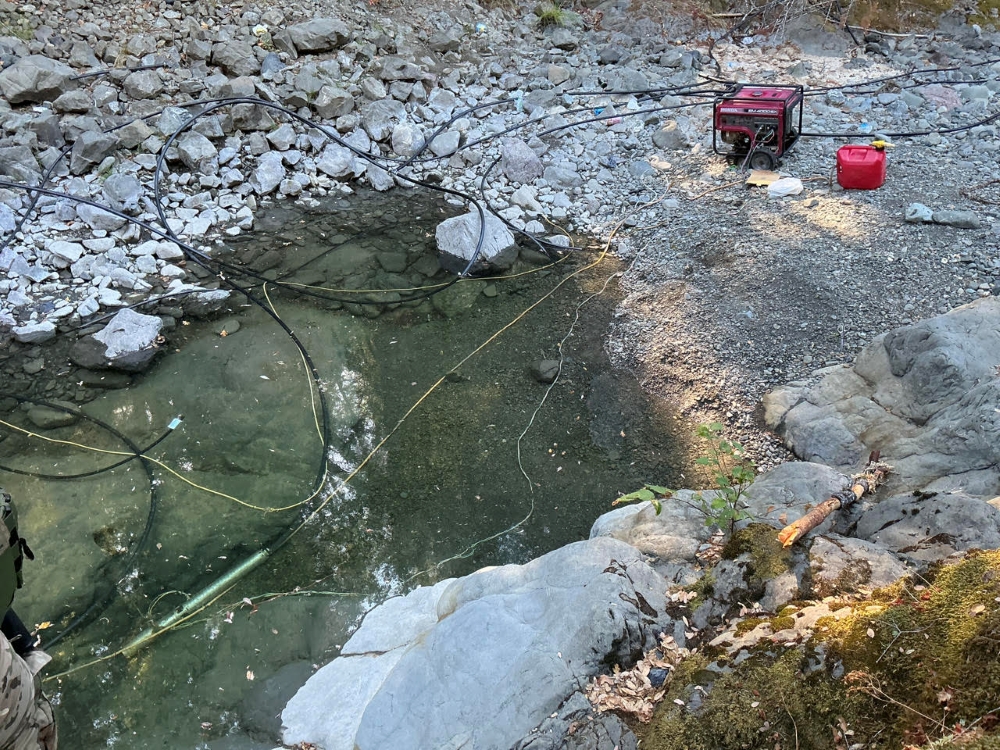
CDFW teams take steps whenever possible to improve conditions for California fish and wildlife where they find these types of impacts on public lands. For example, CDFW teams removed 6,600 pounds of trash and more than 25,000 feet of poly pipe from illicit cannabis cultivation sites on public lands in 2025. They also dismantled nine illegal dams on public lands, where water resources were being diverted for illicit cannabis cultivation.
“Illegal cannabis cultivation poses real threats to California’s environment and public safety,” said Chief Nathaniel Arnold, CDFW Deputy Director and Chief of the Law Enforcement Division. “California’s biodiversity is unmatched, and protecting it requires addressing cultivation activity that damages habitat, diverts water, and creates serious public safety risks. This work protects both our natural resources and the communities around them.”
To learn more about CDFW’s Cannabis Program and its role at the nexus of cannabis cultivation and the environment, visit Wildlife.ca.gov/Cannabis.
CDFW Cannabis Program Resources
For cultivators: CDFW’s role in cannabis involves issuing lake or streambed alteration (LSA) documentation for cultivators seeking licensing. We encourage licensed cannabis cultivators to review their documentation periodically to ensure it is up to date, and that we have the best contact information for them, particularly before beginning the process to renew their license with the Department of Cannabis Control (DCC). View the LSA Documentation for DCC section of CDFW’s Cannabis Cultivation Permitting page for more information.
For nonprofits, tribes and public agencies: Learn more about cannabis-tax-funded grants available through CDFW’s Cannabis Restoration Grant Program to improve the health of our state for future generations and for our fish and wildlife.
For the public: Learn how to recognize illegal cannabis cultivation on public lands and share tips with our law enforcement teams by viewing the fact sheet “Report Illegal Cannabis Grows on Public Lands.”
###
Photo caption: During a CDFW-led cannabis enforcement operation in Mendocino County in September 2025, environmental scientists documented dozens of Fish and Game Code violations impacting fish, wildlife and their habitats. Some were related to surface water diversions, like this one on an isolated pool in the channel of a creek. At the time of the operation, this pool was the sole source of water for more than 4,200 illicit cannabis plants. CDFW scientists documented both foothill yellow-legged frogs and winter steelhead in the pool, with the steelhead at risk of mortality from both the suction of active pumps and the potential dewatering of the pool. CDFW photo.
Media Contact:
Sarah Sol, CDFW Office of Communications, Education and Outreach, (916) 207-7891