
BERKELEY, Calif.—A team of researchers who partnered with government regulators to design and rigorously evaluate the world’s first particulate matter emissions market has won the UC Berkeley Haas Sustainable Business Research Prize for 2025-2026.
The winning paper, “Can Pollution Markets Work in Developing Countries? Experimental Evidence from India,” authored by Michael Greenstone of the University of Chicago; Rohini Pande and Nicholas Ryan of Yale University; and Anant Sudarshan of the University of Warwick, was awarded $10,000 as the top prize from the award’s total $20,000 pool. (Read a summary of the paper here.)
The biannual UC Berkeley Haas Sustainable Business Research Prize is administered by the Berkeley Haas Center for Responsible Business (CRB) and was established with the generous support of Allan Spivack, MBA 79, to bridge the gap between academia and practice by recognizing research that offers promising, real-world solutions for advancing sustainable business.
The winning paper evaluates a randomized controlled trial conducted in partnership with the Gujarat Pollution Control Board that tested a cap-and-trade system for particulate matter emissions in Surat, India. The researchers found that the emissions market reduced pollution by 20% to 30% while lowering abatement costs by 11%, providing rare experimental evidence that market-based environmental regulation can succeed even in low- and middle-income countries with constrained regulatory capacity.
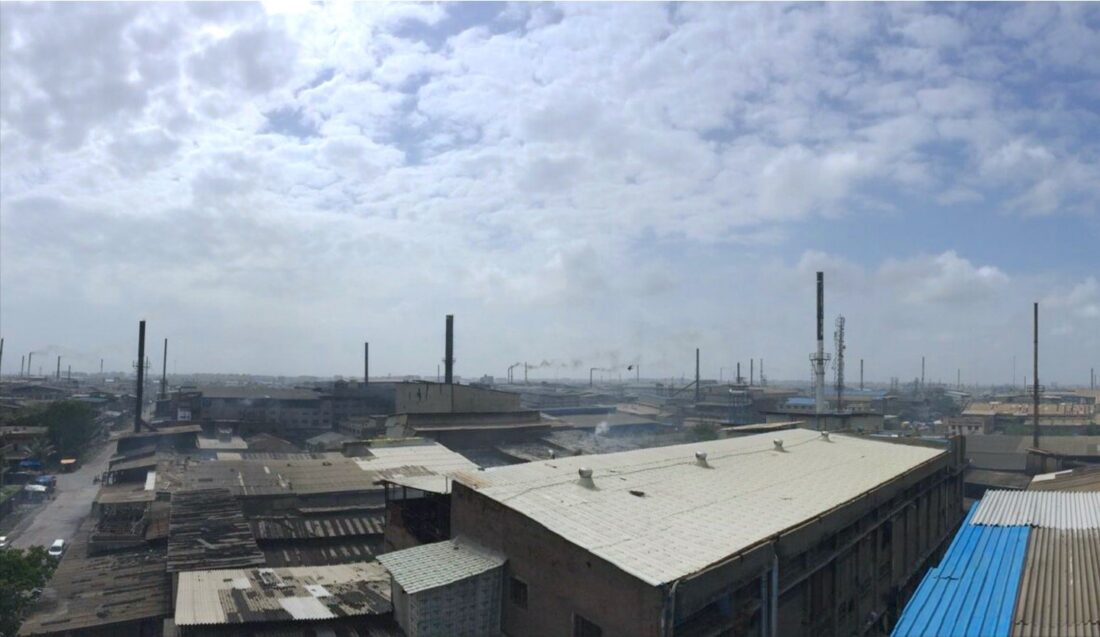 A view of Surat, India (Photo courtesy of the Energy Policy Institute at the University of Chicago)
Greenstone said he and his co-authors are honored by the recognition and hope the research will encourage further experimentation and policy innovation.
“This research demonstrates that the world’s first emissions market for particulates air pollution was a win-win-win in Gujarat, India—it increased compliance with the law, reduced pollution and decreased industry’s compliance costs,” said Greenstone, the director of the Energy Policy Institute at the University of Chicago. “We have launched the Emissions Market Accelerator, which is helping governments across the Global South launch their own pollution markets, revealing how research can be used to improve the world.”
The paper was selected from a competitive field of 100 paper nominations from around the world.
“This research demonstrates that the world’s first emissions market for particulates air pollution was a win-win-win in Gujarat, India—it increased compliance with the law, reduced pollution and decreased industry’s compliance costs.”
Michael Greenstone, director of the Energy Policy Institute, University of Chicago
Academic and practitioner judges
Selection for the prize is conducted through two committees to ensure both academic rigor and real-world relevance. The Academic Selection Committee is composed of UC Berkeley Haas faculty, while the Practitioner Selection Committee includes members of the Berkeley Haas Center for Responsible Business Student Advisory Board, including UC Berkeley Haas MBA students.
Professor Jonathan Weigel, an award-winning political economist, served on the Academic Selection Committee.
“This paper stands out for its combination of rigorous experimental design and engagement in real-world policy implementation,” Weigel said. “It provides rare experimental evidence that emissions markets can reduce pollution while lowering costs, even in contexts where such approaches are often assumed to be infeasible.”
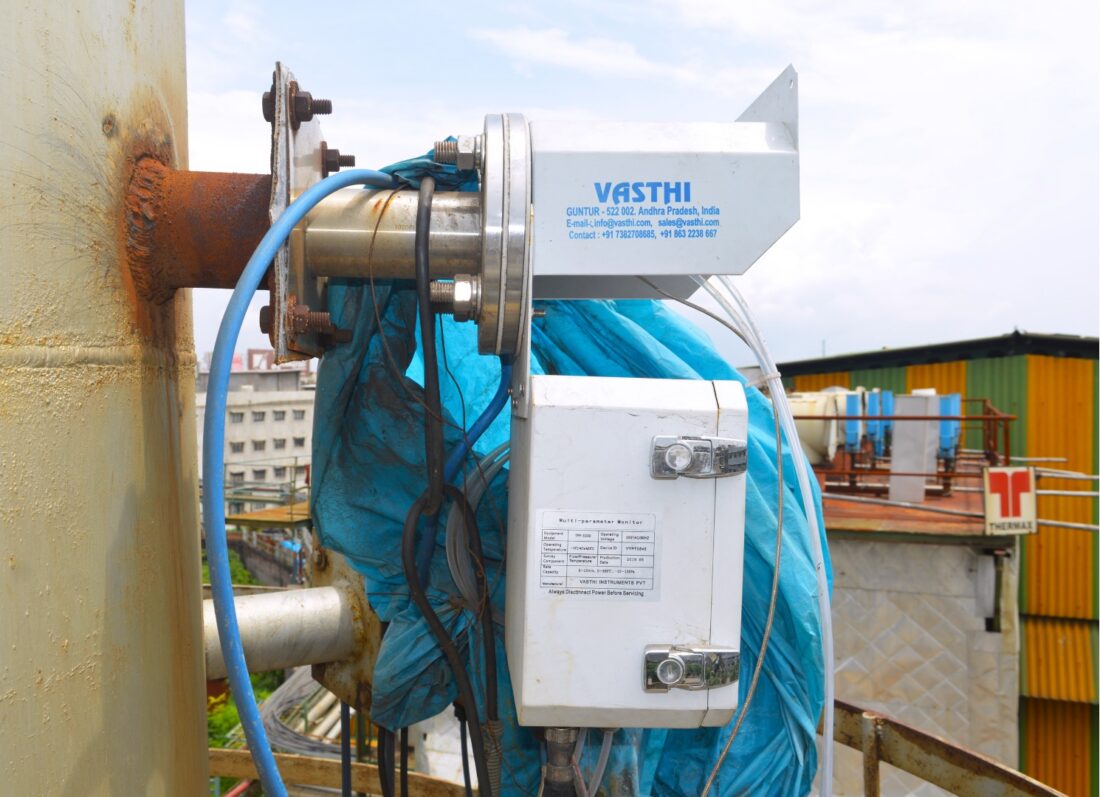 A Continuous Emissions Monitoring System (CEMS) used to track air pollution (Photo courtesy of the Energy Policy Institute at the University of Chicago)
Missy Martin, MBA 26, a member of the Practitioner Selection Committee and the Center for Responsible Business Student Advisory Board, emphasized the paper’s applied relevance.
“From a practitioner perspective, this research stood out because it speaks directly to the real constraints decision-makers face. It shows that sustainability solutions can be both ambitious and practical, delivering cleaner air while reducing costs,” Martin said.
The paper also illustrates how environmental policy can reduce harmful pollution without constraining economic activity. In India, nearly the entire population of 1.4 billion people breathes air that exceeds World Health Organization standards for particulate matter, often by a factor of ten or more. By shifting from episodic inspections to continuous emissions monitoring and market-based compliance, the Surat program achieved near-universal compliance and substantial pollution reductions. A benefit-cost analysis suggests that scaling the program would generate mortality benefits exceeding costs by at least twenty-five times. Following the pilot’s success, regulators expanded the market to additional plants and later launched a similar program in Ahmedabad.
Runners-up focused on Indian solar power market; corporate social responsibility
The judging committees also identified two runner-up papers.
“Holding Up Green Energy: Counterparty Risk in the Indian Solar Power Market,” also authored by Nicholas Ryan of Yale, was awarded first runner-up and received $7,000.
“Federated Corporate Social Responsibility: Constraining the Responsible Corporation,” authored by Matthew Caulfield of Fordham University and Andrew Lynn of Villanova University, was awarded second runner-up and received $3,000.
“This prize reflects the Haas School’s commitment to research that informs practicing leaders. It recognizes work that combines rigorous analysis with clear real-world relevance and equips leaders to address complex and urgent sustainability challenges.”
Dean Jenny Chatman, UC Berkeley Haas
UC Berkeley Haas Dean Jenny Chatman said the prize demonstrates the Haas School’s commitment to sustainability as a core pillar of its mission.
“This prize reflects the Haas School’s commitment to research that informs practicing leaders,” Chatman said. “It recognizes work that combines rigorous analysis with clear real-world relevance and equips leaders to address complex and urgent sustainability challenges.”