
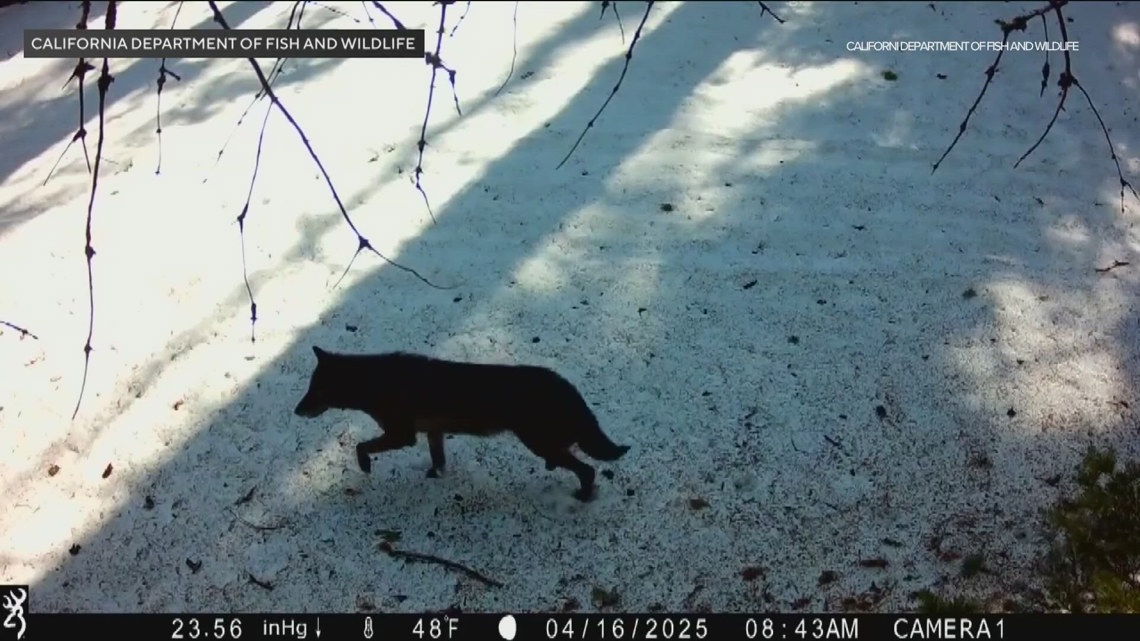
The female wolf, identified by her tracking collar number as BEY03F, traveled nearly 400 miles from Northern California in search of a mate.
SAN DIEGO — A gray wolf has been sighted in Los Angeles County near Lancaster, marking the first documented presence of the species in Southern California in more than 100 years, the California Department of Fish and Wildlife reported this week.
The female wolf, identified by her tracking collar number as BEY03F, traveled nearly 400 miles from Northern California in search of a mate, according to Jacob Keeton with the California Wolf Center in Julian.
“It is exciting because wolves are part of our California heritage. They were here before we were a state,” Keeton said.
The wolf was born in Northern California into the Beyem Seyo pack three years ago and began dispersing about a year ago during breeding season.
“So, it’s highly likely about a year ago this time she left the pack, and she headed south,” Keeton said.
Her journey took her through Central California, where she encountered the Yowlumni pack near Sequoia National Forest in Tulare County.
“Until she ran into the Yowlumni pack, which is in- current county, think of Sequoia National Forest. Some reports will say she joined the Yowlumni pack,” Keeton said.
The wolf eventually moved on from the Yowlumni pack and was fitted with a tracking device before continuing her southbound journey to the mountains near Santa Clarita.
All wolves currently in California descended from Rocky Mountain wolf populations that were reintroduced in the 1990s.
“So, all the wolves that are coming back into California today are from those Rocky Mountain releases back in the 90s,” Keeton said.
The sighting demonstrates the success of wolf restoration efforts.
“The wolves are coming back on their own. They are saying hey this looks like an area in California we like; it looks like a good place for us to live and reproduce. It’s really exciting,” Keeton said.
With no male wolves currently in Southern California, the female is expected to return north by mid-spring.