
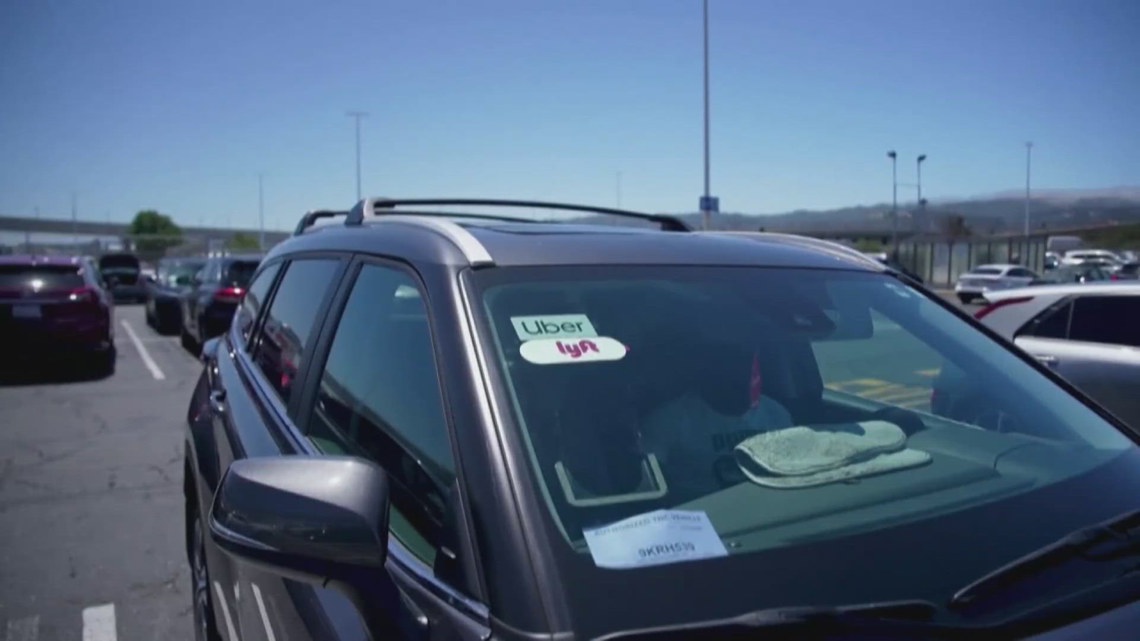
The Uber-backed campaign includes a $1 million statewide Super Bowl advertisement funded by the rideshare company and a group called “A More Affordable California.”
SACRAMENTO, Calif. — A new California ballot initiative backed by Uber is drawing attention after airing a Super Bowl ad and igniting a political fight with trial lawyers and consumer advocacy groups across the state.
The measure, called “Preventing Accident Victims from Self-Dealing Attorneys Act,” is already contentious and is expected to become more expensive and political as well-funded groups line up on both sides, said legislative analyst Chris Micheli.
The Uber-backed campaign includes a $1 million statewide Super Bowl advertisement funded by the rideshare company and a group called “A More Affordable California.” The ad criticizes trial lawyers, saying, “the billboard lawyers make millions, while Californians are left broke and broken.”
The proposed initiative would change state law by capping attorney fees at 25% in car accident cases.
“Their proposal essentially is to limit attorney’s fees,” Micheli said.
Supporters say the change would help accident victims and reduce costs for consumers. Nathan Click, a spokesperson for the campaign, said in a statement that capping attorney fees, banning kickbacks, ending inflated medical billing, and adding whistleblower protections would protect auto-accident victims while also lowering costs.
Opposition groups are backing three competing ballot measures aimed at countering Uber’s proposal — the People’s Right to Contract With Counsel of Choice Act, the Sexual Assault Against Rideshare Passengers and Drivers Prevention and Accountability Act, and the Rideshare Public Accountability Act. Those efforts are being led by the Alliance Against Corporate Abuse, with Consumer Attorneys of California behind the campaign.
One opposition ad accuses Uber of “ trying to stop car crash victims from holding them accountable.”
Alex Stack, a spokesperson for the Alliance Against Corporate Abuse, said Uber’s proposal would make it harder for people to sue the company.
“Essentially, it makes it harder for people to take Uber to court if they get assaulted or if they get into an accident,” Stack said.
Consumer Watchdog, a coalition member of the opposition campaign, said the fee cap could prevent victims from getting legal representation or covering medical costs.
“Medical costs and attorneys fees all come out of 25% of the award,” said Jamie Court, the group’s president. “And therefore, you’re not going to get an attorney to take the case, and you’re probably not going to get your medical bills because the insurance company is not going to want to pay you.”
The opposition campaign also purchased Super Bowl airtime, though its ad — which focused on holding Uber accountable for reported sexual assault cases — aired in Sacramento and Fresno. The group said the ad was pulled from the San Diego media market, though it was not immediately clear why.
“It is very important that we do not let Uber’s ballot measure be the only one moving forward,” Stack said.
In response to the competing proposals, the Uber-backed campaign criticized what it described as “emergency” attorneys, saying, “It doesn’t surprise us that they are frantically trying to avoid accountability and continue their predatory practices.”
The clash pits powerful rideshare companies against influential trial lawyers, both of which have significant political clout and financial resources, Micheli said.
“Are both very strong, both in the Legislature, but also their pocketbooks are quite large,” he said.
Those dynamics help explain why the fight is moving directly to voters instead of being resolved through lawmakers.
“Have the voters vote on it because they don’t think there is a legislative deal to be had,” Micheli said.
Micheli also pointed to the $200 million battle spearheaded by rideshare companies six years ago on a ballot measure to designate their drivers as independent contractors, rather than employees. The measure, Proposition 22, was upheld by the California Supreme Court in 2024.
The Legislature, however, has continued to walk a fine line with both labor unions and rideshare companies. Just last year, the Legislature passed, and Governor Newsom signed into law, SB371, which lowered how much in insurance coverage companies had to provide for accidents, in exchange for drivers to unionize if they choose to do so.
When asked about the decision to appeal to voters directly, Alex Stack with the opposition suggested that doing so gives Uber and its supporters the ability to spend as much money as possible, rather than go through the legislative process.
Nathan Click with the Uber campaign stated, “For decades, trial attorneys have used millions in campaign cash to block common sense statewide reforms to crack down on this accident liability abuse. It doesn’t surprise us that they are frantically trying to avoid accountability and continue their predatory practices that hurt victims and consumers.”
He also noted this ballot measure is much broader than SB371 and would apply across auto accident categories.
Gov. Gavin Newsom has not taken a position on the measures, and a campaign spokesperson confirmed the governor has not weighed in.
So far, he has only publicly opposed an unrelated proposal known as the billionaire’s tax.
All four ballot measures are currently in the signature-gathering phase to qualify for the November ballot.
Watch more: Lawmakers raise transparency concerns after $537M high-speed rail settlement approved
ABC10: Watch, Download, Read