
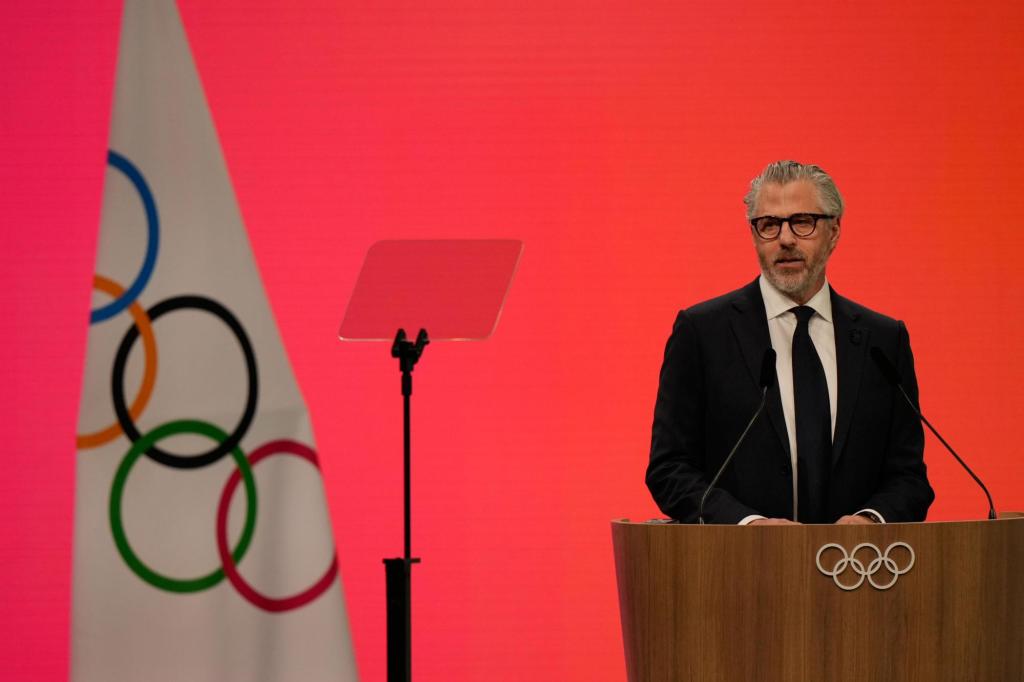
The 2028 Olympic Games won’t be just another sporting event. They reflect who we are as a host city. Our values, our competence, our culture and our credibility will be on full display. Billions of people around the world will watch. That’s why even the perception of controversy surrounding the LA28 leadership matters.
I don’t know Casey Wasserman personally. I respect what he’s built and the complexity of delivering an Olympic Games in a city as sprawling and politically combustible as Los Angeles. But I’ve spent decades doing crisis management for corporate CEOs, Hollywood talent and public figures whose reputations were under threat. I’ve seen how fast a distraction can swallow an institution if leadership treats optics as an annoyance.
And I’ve seen firsthand how symbolic moments reshape public trust. I managed the campaign to recall Judge Aaron Persky after a privileged Stanford athlete received what many Americans saw as a slap on the wrist for sexually assaulting an unconscious young woman at a frat party. The first removal of a California judge in 86 years wasn’t about vengeance. It was about sending a message: power and privilege cannot insulate someone from consequences. When the justice system protects the powerful at the expense of the vulnerable, faith collapses. This wasn’t about one criminal, one judge or one case. It was about holding the institution accountable. That accountability applies far beyond a courtroom.
Right now, LA28 is bigger than any one person.
The resurfaced Epstein-related emails tied to Wasserman may not establish legal wrongdoing. But the Olympics are not a court of law. The Games represent dignity, fairness and opportunity. The connection with people now synonymous with exploitation creates a reputational drag that won’t quietly disappear.
And Los Angeles, for all its brilliance, doesn’t need another punchline about its “reputation.” We have to get beyond the caricature of excess and scandal. The Olympics should showcase our best instincts — creativity, resilience, diversity and reinvention — not invite a running commentary about leadership optics.
Wasserman needs to step aside as Chair while remaining on the board and continuing to guide the Games operationally. This would not be an admission of guilt. It would be an act of strategic maturity. This isn’t about punishment, it’s about stewardship. It says to the world: the Games come first. Strong leaders understand that sometimes the most powerful move requires you to reposition yourself personally to protect what you’ve built. Don’t cling to titles.
This creates an opportunity to reset the spotlight in a way that strengthens LA28 rather than weakens it.
Los Angeles isn’t short on leaders who embody the spirit the Olympics are supposed to represent. This city has produced athletes and civic figures whose reputations are synonymous with integrity and achievement — people like Billie Jean King, Magic Johnson, Janet Evans or Allyson Felix — individuals who command instant respect from athletes, sponsors and the public alike. Elevating someone from that caliber of leadership wouldn’t destabilize the Games; it would strengthen them.
And yes, it may feel unfair in a world where powerful men often survive scandals that would end anyone else. Public trust in institutions has been eroded by years of watching leaders dodge consequences. But the Olympics are different. They are non-partisan and must be held to a higher standard. Credibility depends on showing the world that this institution understands right from wrong.
Every crisis I’ve managed tilts upward when leadership stopped arguing about whether optics were “fair” and started asking how to restore trust. Stop being defensive. Tell the truth and be humble. The Olympics are a once-in-a-generation gift to Los Angeles. They shouldn’t have to compete with a storyline that distracts from athletes, sponsors and civic pride.
Wasserman can fight the news cycle and hope it fades, or he can make a proactive move that demonstrates LA28 understands the stakes. Leaders are remembered less for the crises they face than for how they respond to them. Stepping aside as Chair to protect the Games wouldn’t diminish his role in bringing the Olympics to Los Angeles. It would cement it.
I was in Paris during the 2024 Olympics. It was magical. The city and the athletes put on a show the world will remember.
Los Angeles deserves nothing less.
John Shallman is an award-winning political media strategist and crisis manager. He is the national bestselling author of “Return from Siberia” and president of Shallman Communications, a Los Angeles-based public affairs firm.