
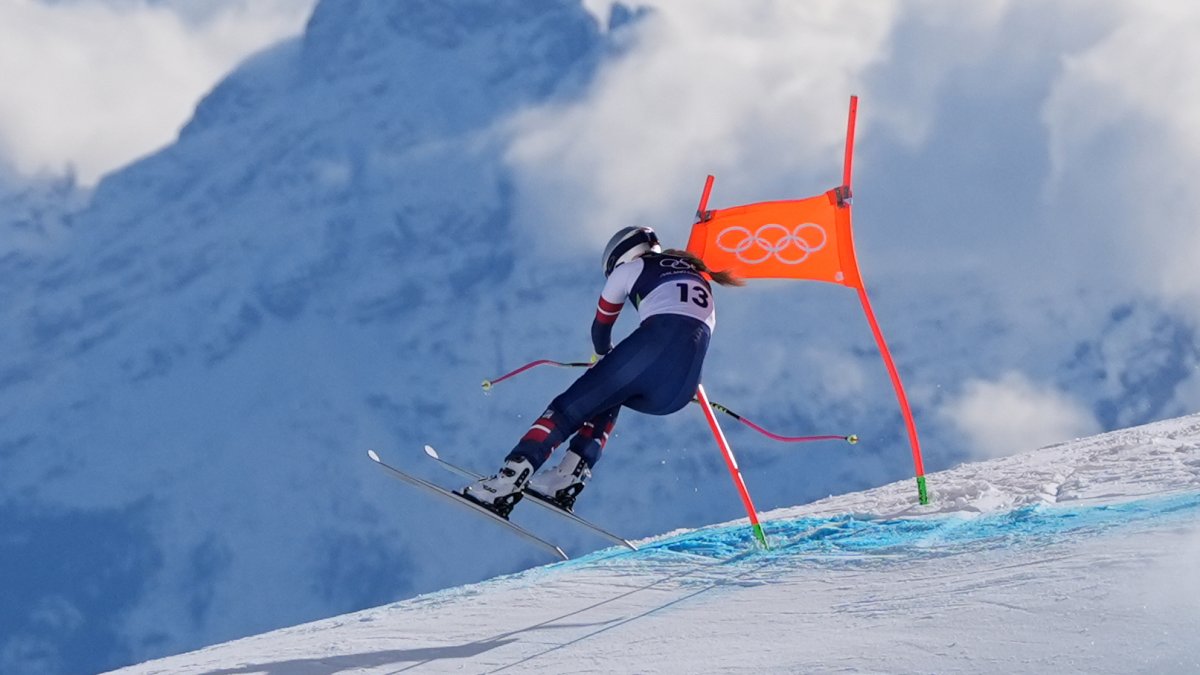
Lindsey Vonn, one of the most successful skiers in history, crashed just seconds into her run in the final of the Olympic downhill competition on Sunday in Italy. On Monday, she shared an update on her condition through social media.
“Unfortunately, I sustained a complex tibia fracture that is currently stable but will require multiple surgeries to fix properly,” Vonn said.
So, what exactly does that mean? A doctor explained the process — and it’s intensive.
“The most likely scenario would be an external fixator where we put, essentially, an erector set around the knee to stabilize a broken joint,” said Dr. Mark Schultzel, an orthopedic surgeon at Sharp Memorial Hospital in San Diego and a member of the U.S. Olympic team medical staff.
The fact Vonn says she’s going to need multiple procedures most likely means she’s going to be off her feet for a while.
“In terms of the recovery, an external fixator is really meant to temporize things until she can a definitive surgical fixation later on in time to allow her soft tissue to recover and her swelling to resolve to put things like plates on the inside of the bone,” Schultzel said. “That would leave her off of her leg for six to eight weeks, minimum.”
Photos provide a closer look at moments leading up to Lindsey Vonn’s crash during the Olympic downhill in Milan Cortina.
Vonn, 41, was attempting to become the oldest women’s skiing champion in Olympic history. After taking six years off from competition, she came back to make a run at the 2026 Milan Cortina Olympics, winning a pair of World Cup races along the way. Just one week before the Games began, Vonn crashed and suffered a torn ACL (which both she and Schultzel say did not contribute to this incident).
Recovering from an injury like this is difficult and time consuming. Vonn’s father told the Associated Press if it’s up to him, Vonn’s competitive career is over. From a medical standpoint, there’s a chance Vonn’s body could get back to a point that she can win races again.
The question is, would she try?
“I think it’s really hard to say,” Schultzel said. “I mean, don’t forget, she has a partial knee replacement on the other knee and is still skiing at 70-plus miles an hour. I think most able-bodied people would never get back on skis after that. But, she’s able to do it and, and has been able to win world records. Never count her out. She’s pretty incredible.”
There is a medical team that specifically takes care of the U.S. Ski and Snowboarding team, a volunteer group comprised of some of the best doctors in the country. In the Olympic spirit, physicians from other countries offer their expertise and assistance in extreme situations like this.
Healing her body is one thing. But it’s not the only thing that will likely need attention.
“Recovery is not just a physical thing. It’s really mental and emotional, so keeping track of that is going to be important for her recovery,” Schultzel said. “These athletes are very different than the rest of us. You take them away from the sport they love, and it’s a really hard pill to swallow. U.S. Athletics does a great job of, of having sports psychologists work with their athletes to make sure they’re taken care of from top to bottom.”