
by Richard Foss
In 1926, the YMCA opened a palatial facility in San Pedro with a grand lobby, gymnasium, and other amenities. It quickly became a favorite spot for military personnel from the nearby Navy base. The workers who constructed the building might have taken a lunch break at a new café that had just opened a few blocks away, called The Majestic. That eatery was operated by an Italian immigrant named Filippo Trani, but served beef stew, chili, and other American dishes that fit the palate of a Roaring ‘20s working community.
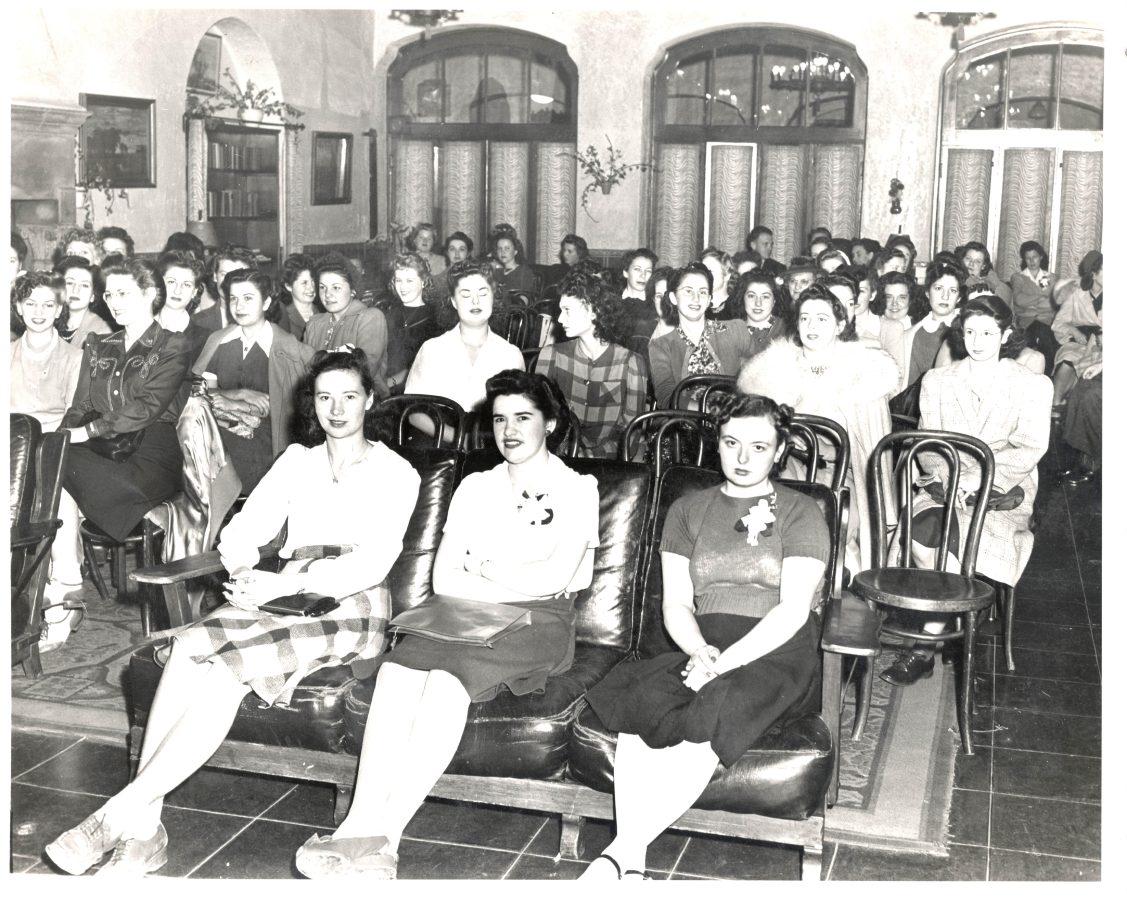 This photo from 1942 of a training session for Junior USO Hostesses was taken in what is now the dining room of The Majestic. Photo courtesy of San Pedro Bay Historical Society
The building that housed the YMCA had a long and interesting history, serving as a USO headquarters and bringing celebrities like Bob Hope and Lucille Ball to perform at nearby Fort McArthur. By the 1960s, the Mediterranean Revival building became a shabby transitional housing center, and it seemed that its glory days had ended. The Majestic Café continued serving until the founder’s death in 1978, and members of the Trani family opened other restaurants in the Harbor area.
It would seem unlikely for those two stories to converge after a century, but they did. Fourth-generation restaurateur Dustin Trani recently opened a fine dining restaurant called The Majestic in that former YMCA, a nod to his family’s local roots. Trani had dreamed of opening a restaurant that evoked the style of the Prohibition era for many years, but hadn’t found a location that had the historic feel. He had considered locations as far away as Downtown LA, but when the old building on Beacon Street became available, he knew he had found his spot.
“When I found that this space that was built the same year we opened, I was thrilled. My great-grandfather, grandfather, and my father all worked out here, and my mother learned to swim in the pool. The bones of this building are part of my family history.”
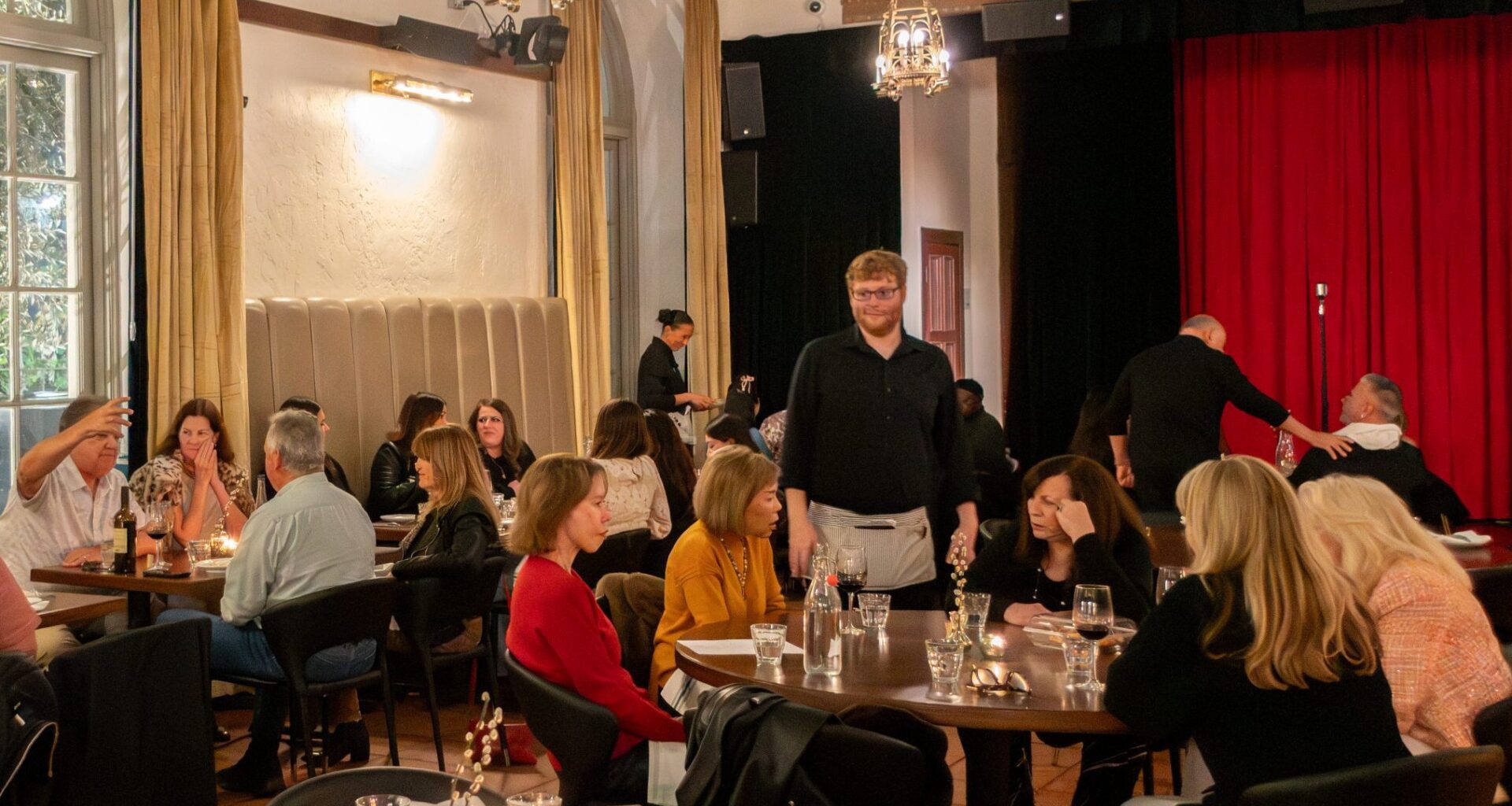
The renovation of the building, which is recognized as significant by the LA Conservancy, brought what is now the dining room to a level of elegance that it never had before. Candles burn in the grand fireplace, chandeliers light the space, and the red-curtained stage at one end of the room seems ready for a big band to strike up an Andrews Sisters tune. The menu at The Majestic isn’t as classic, instead offering Chef Trani’s own take on Italian-American standards.
Some of these incorporate very modern ideas – the fritto misto, for instance, comes with a drizzle of hot honey along with the squid ink aioli. I’m not a fan of hot honey, and if you aren’t either you can ask for it on the side, or for it to be omitted. The aioli was a better complement, the ink adding dramatic color and just a hint of seafood scent.
The navy bean soup, was traditional, probably the only item that might have been served in the original Majestic. The hint of chili might have raised eyebrows in 1925, but to a modern palate it is nicely balanced with the garlic and rich stock. The Waldorf salad that is also on the menu was also a popular item in the 1920s, and the version here has an innovation that makes it one of the best I’ve ever had. The1920’s version of this salad included lettuce, apple, celery, walnuts, and grapes. Trani substitutes endive for the celery. The delicate bitterness of the endive makes a much more interesting pairing for the modern palate. The version here also uses garlic mayonnaise rather than the standard version, and it is used in moderation so the vegetable, fruit, and nuts are all part of the culinary conversation.
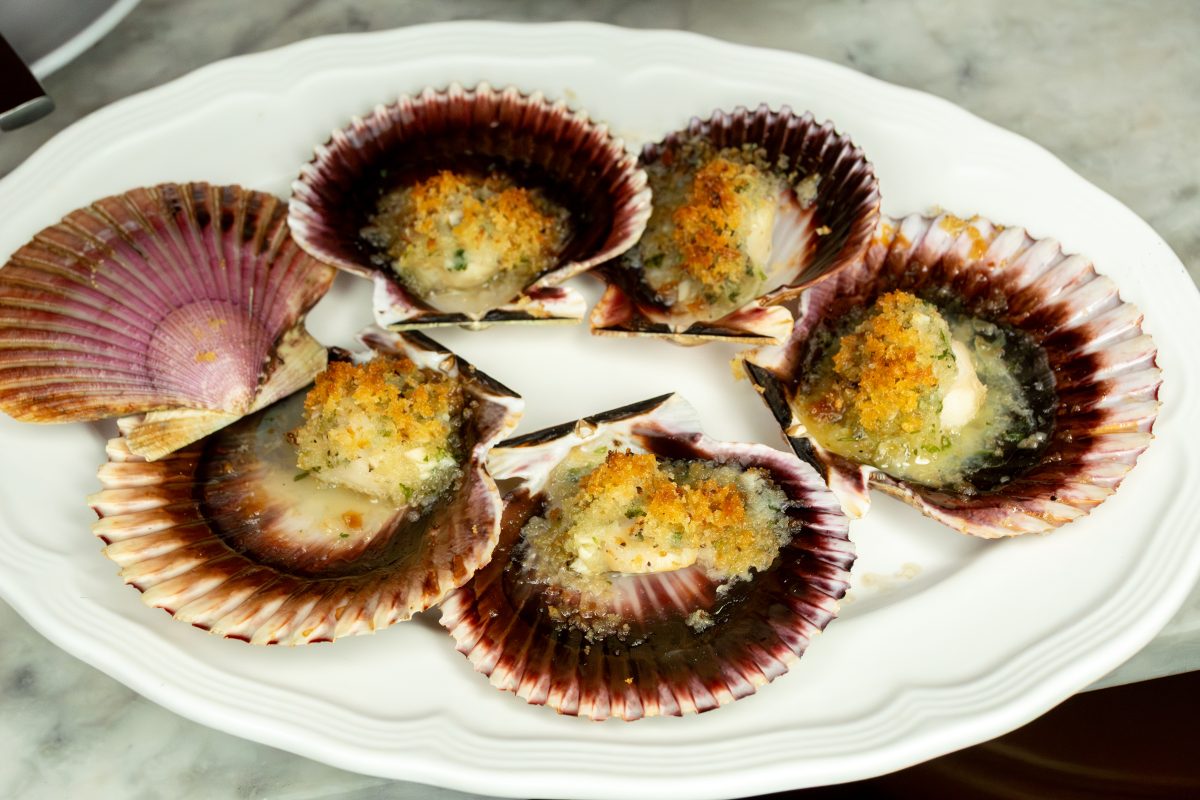 Scallops are brushed with garlic butter and served atop their shells, toasted with toasted breadcrumbs.
We also tried the baked bay scallops, which were served on their shells with garlic butter, herbs, and a breadcrumb crust crisped by the broiler. If you want to focus on the flavor of the shellfish, ask for the garlic butter on the side, because it obscures some of the delicate flavor.
One of the lasting culinary legacies of the ‘20s is the Caesar salad. The one here uses bread crumbs rather than croutons so there is some crispness in every bite. They also chop the lettuce very finely, which changes the mouth feel. The combination of those innovations makes it a different experience than usual even though they haven’t otherwise tinkered with the recipe.
Whatever you get as a starter, you should also order the focaccia with housemade ricotta. The bread is fluffy and flavorful with a delicate crust, and the ricotta has a decadent richness that puts it halfway between butter and cheese. We restrained ourselves from ordering a second round, because we had seen from orders delivered to neighboring tables that the portions were ample.
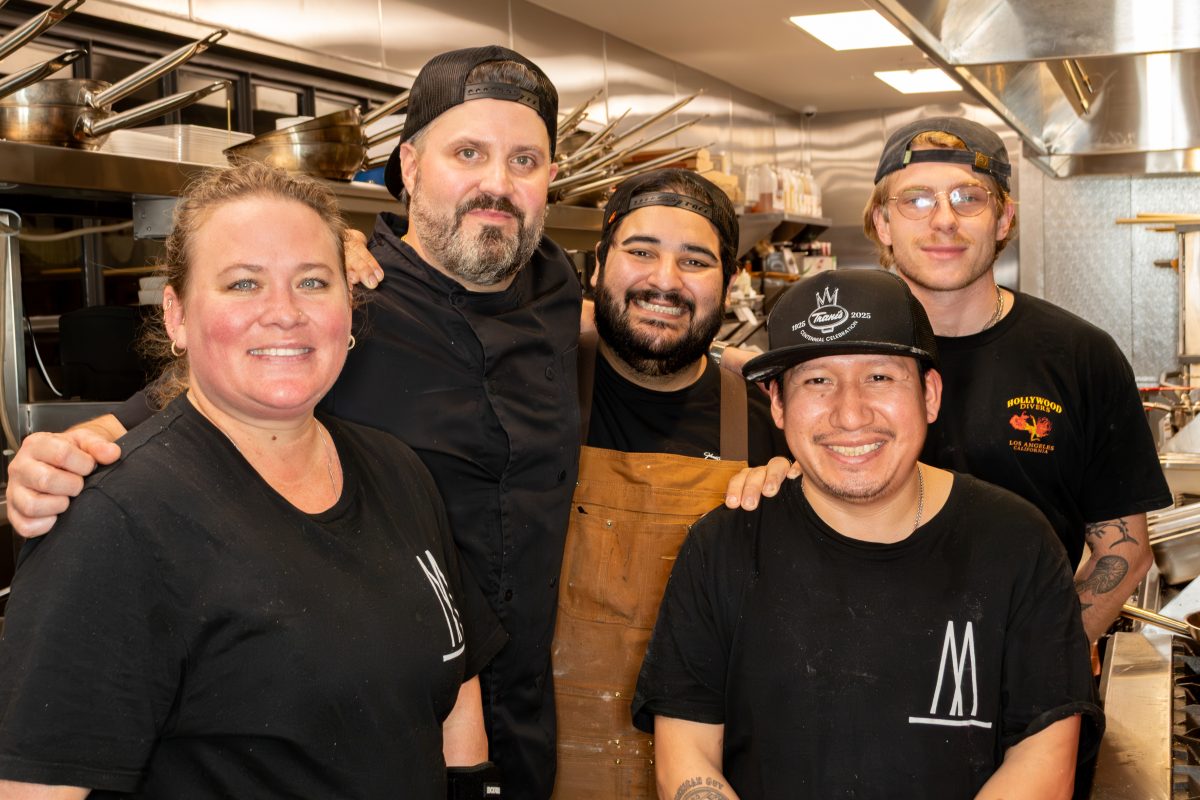 Co-owner and chef, Dustin Trani with the Majestic Supper Club crew.
The main course menu is short, and in two visits we were able to try most of the entrees. The linguine with large wild caught Mexican shrimp was a classic dish well-executed. The sauce was the mild, low-garlic style that was invented in America in the 1920s and popularized by a chef named Ettore Boiardi – and you already know how to pronounce that name, because when he started canning it in 1928, he spelled it Boy-ar-dee on the label. And before you decide that you will never order anything like this because you remember the bland, insipid stuff that was a quickie meal when you were a kid, remember that if you judged all culinary items by their convenience food version, your diet would be very limited indeed. The chef-made version based on lobster sauce is an entirely different experience, and a very enjoyable one.
Pasta lovers might also enjoy their rigatoni in a thick mushroom and veal stock that is so intensely flavored that it’s almost chocolatey. To my palate it evoked a mild Mexican mole sauce, but it was successful by any measure.
Another item rooted in Italian culture is the one listed as a “crispy pork chop,” which is actually a pork milanesa by another name. It’s also a schnitzel if you happen to be on the other side of the Italian-Swiss border, because breading and frying pork is a trans-national idea. The one here is a bone-in kurobuta chop that is vast and topped with dots of goat cheese, and roasted beets, with a garnish of pea sprouts and edible flowers. There was a drizzle of balsamic vinegar too, which I didn’t think was essential and would ask to be left off next time. Consider this and a pair of sides as a meal for two unless you’re starving. The sides we tried were onion rings, the standard item well-made, and Peruvian purple potatoes that were roasted in their skins and topped with miso butter and shiso. This variety of potato is starchy and not everyone likes that, but if you’re feeling like experimenting, give it a shot. They have a distinctive flavor that pairs nicely with the miso and minty shiso leaf.
The seasonal seafood entree was swordfish simply grilled and topped with onion sprouts and a bit of aged balsamic vinegar, an ingredient Chef Trani obviously likes a lot. It fits perfectly here, and I wouldn’t change a thing. I wouldn’t change a thing about the pizzas either, because they’re superb, probably the best in a town with many to choose from. The medium-thick crust is delicious, the cheese the right kind of stringy, the sauce moderately applied as it should be. We tried the Spanish anchovy with leeks and squash blossom and one topped with porchetta, roasted red pepper, prosciutto, and fennel. Trani makes his own porchetta, a labor-intensive process, and I wish it was available as a sandwich or entree by itself, because it’s a rare delicacy in local restaurants.
The Majestic has a short but well-chosen list of beers and wines and low-alcohol cocktails. They don’t have a liquor license, and though the family’s restaurant served booze illegally in the 1920’s, Dustin doesn’t want to be that faithful to the family legacy. I don’t generally like cocktails that try to replicate the classics on a base of soju or sake because they usually don’t work. Trani admitted that his bar staff tried to make a classic martini and couldn’t get it to his satisfaction. They wisely decided to make drinks that evoke classics while not trying to replicate them, and they were very successful. The Peary Mason, infused sake with pear syrup, lemon, and prosecco, was refreshing with a nice tart undertone, and the lemon and lime based Peel Good also hit the spot.
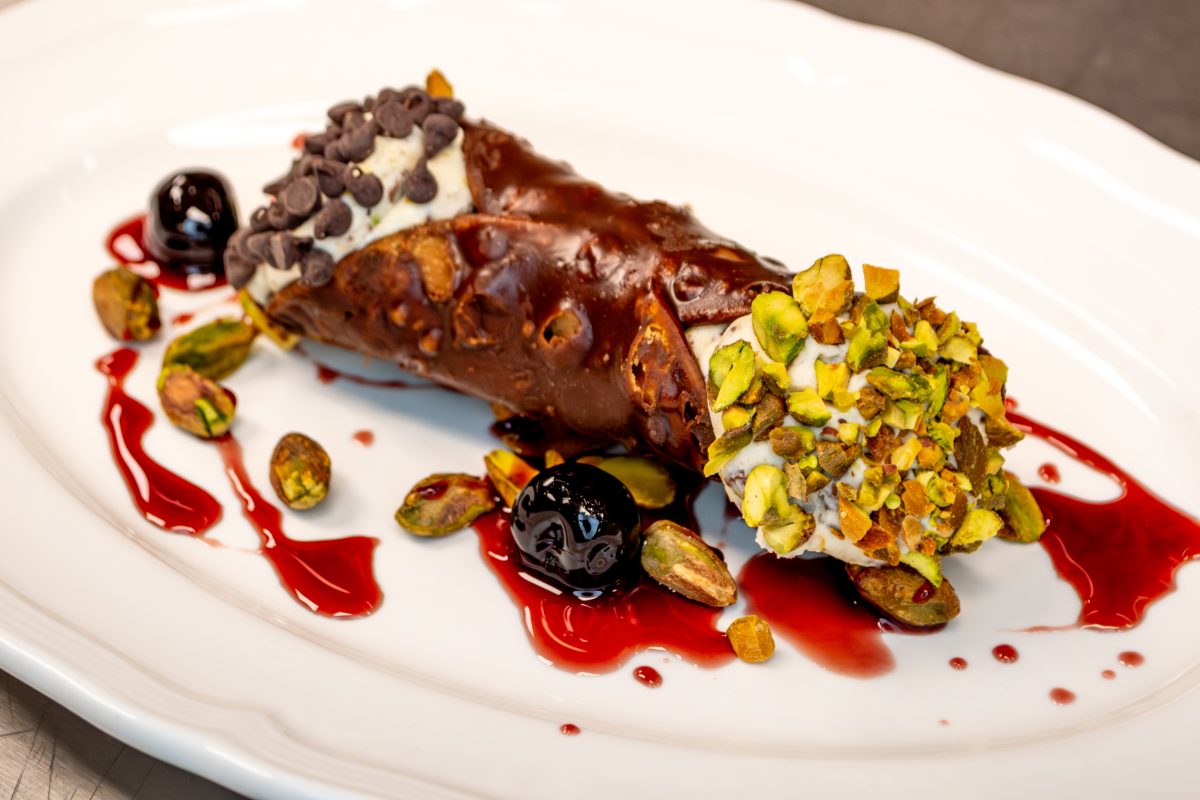 The Majestic’s upscale version of a cannoli is filled with sweet ricotta, the end dipped in pistachio and chocolate, and served over a berry coulis.
We only tried one dessert, the chocolate and pistachio cannoli, not from lack of interest in their other offerings but because we had over-ordered on both visits. This isn’t finger food because the chocolate sauce is used liberally, but the biscuit remained crisp and the flavors of sweet cheese, chocolate, and pistachio were a delightful finish.
The Majestic is open for morning coffee and pastries and will soon be serving grab and go lunches – though if you want to stay and enjoy them in house, you will be welcome to do so. I haven’t had that experience here but look forward to anything they do, because any operation that can bring elegance and creativity to a side street outside downtown might be able to do anything.
The Majestic is at 921 S. Beacon Street in San Pedro. Coffee and pastries 8 a.m. – noon, dinner 5 p.m. – close. Free valet parking, some vegetarian items, wine and beer available, reservations recommended. (310) 847-0018. Themajestic.la. Pen