
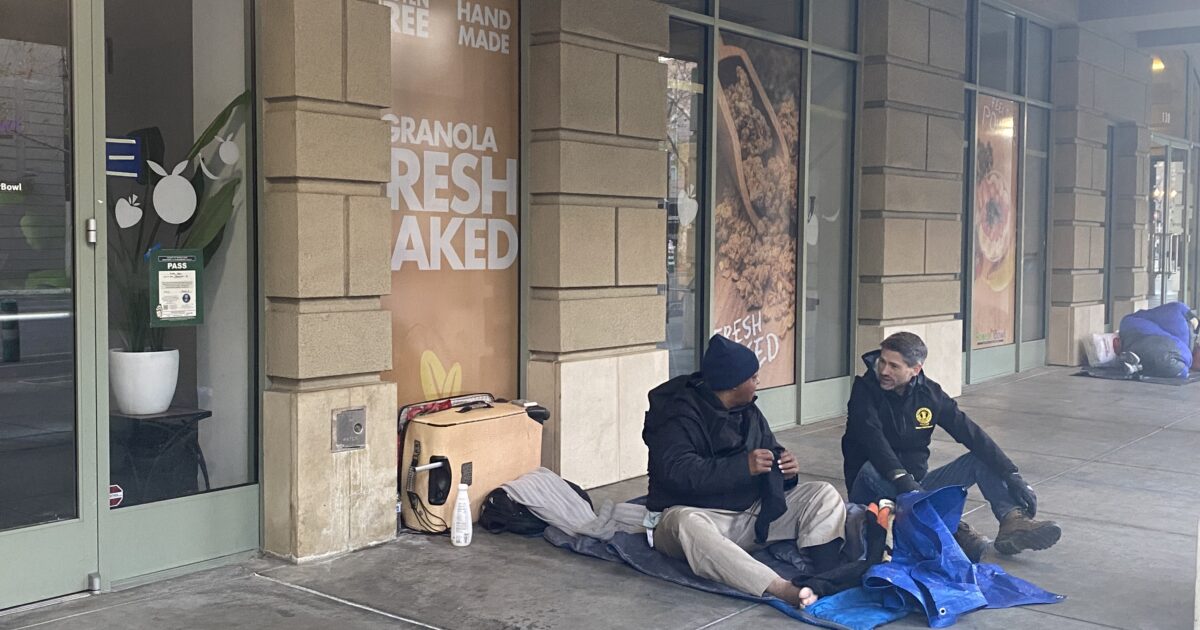
A pilot program to reconnect homeless people in San Jose to family outside the city had minimal effect in the past year.
Homeward Bound, proposed by Mayor Matt Mahan as another option to help get homeless people off the streets, reconnected 42 individuals to their support systems since it began last February. Out of the $200,000 set aside last year, the city has spent $31,500 on train and bus tickets and taxi and travel stipends for an average of $750 per person.
These individuals have been bused all over the country, including New York, Texas, Arizona, Indiana, Colorado and across the state. Northern California was the region with the largest number of relocations, at seven. Two people were sent to Southern California. North Carolina had the second largest number of relocations, with five people, followed by Texas with four.
The lack of follow-up after a homeless person gets bused out of San Jose has homeless advocates feeling skeptical about the effectiveness of the program.
“I’m worried about the people who go back to the cities where they are from and become homeless again,” Todd Langton, founder of Agape Silicon Valley, told San José Spotlight. “Follow-up is the key, and San Jose is notorious for no follow-up.”
Relocation is voluntary and given as an option alongside housing and supportive services. Outreach workers will make contact with family members before reuniting them, but once they leave the city, there is little expectation to continue managing their case, Housing Director Erik Soliván previously told San José Spotlight.
“How do we really know what the unhoused will really find on the other end. Will (outreach workers) really have vetted the other end?” homeless advocate Gail Osmer told San José Spotlight.
The Housing Department did not answer questions about how it verified if families were willing to take the homeless person in aside from an initial call.
San Jose designed the program comparable to San Francisco’s relocation programs, Soliván previously said. However, San Francisco’s relocation programs reconnect 37 people per month on average, according to city data — nearly the same amount of people San Jose has reconnected in one year. Since 2022, San Francisco has bused more than 1,500 people beyond the city.
About 83% of homeless people said they already lived in Santa Clara County before they became homeless, according to last year’s homeless census. San Jose has the largest homeless population in the county, with 6,503 people. About half are unsheltered.
Mahan said he wants to scale the program and push city workers to make more contact with homeless people and speed up reunifications.
“Homeward Bound is already helping people return home for about $750 per participant, but we must help more people without sacrificing the quality of reunification — unlike cities that simply hand out one-way bus tickets,” Mahan told San José Spotlight. “I fought to launch this program because reconnecting with family can be a turning point for people facing mental health and addiction challenges.”
San Francisco recently revamped its Journey Home relocation program after it was found that workers had stopped making calls to ensure there was a family member to receive the homeless people being relocated.
This month, San Francisco established 24/7 relocation assistance, which includes travel planning, helping obtain IDs and coordinating with families reuniting the homeless person. Homeless individuals will also be assessed for medical and mobility needs and will be supported for up to 90 days after they relocate.
“This is how it should be done. They’ve covered all the bases and then some,” Langton said. “It’s the tale of two cities. Why can’t we look to what San Francisco is doing, which is very efficient and humane? (San Jose’s approach is) very similar to the sweeps and abatements — they don’t care where the person goes.”
Contact Joyce Chu at [email protected] or @joyce_speaks on X.