
It was one of Oakland’s most violent years in decades. In 2022, the city was mired in a three-year spike in violent crime that coincided with the COVID-19 pandemic.
A handful of groups were behind an outsized portion of the violence.
One of them, according to the police, was the Ghost Town gang, a network of East Bay residents with deep ties to the Oakland neighborhood of the same name, located just southwest of the MacArthur Maze.
On Monday, a federal judge issued a prison sentence for the ninth and final defendant in the federal government’s case against the Ghost Town crew. Eight men and one woman received a combined 60 years in prison for a string of takeover robberies targeting jewelry shops and cannabis businesses. Some of the defendants are suspected of other robberies and shootings.
The men at the center of the robberies posed an outsized threat to public safety in Oakland, argued prosecutors. They were among the small number of people — roughly 0.03% of the city’s population, according to the Department of Violence Prevention — who were responsible for most gun violence in the city at the time.
Demarco Barnett, 36; Jakari Jenkins, 34; Danny Garcia, 41; Garland Rabon, 30; Aramiya Burrell, 35; Lester Garnett, 34; Darrin Hutchinson, 39; and Ricky Joseph, 37 each pleaded guilty to one count of conspiracy to commit robbery and varying counts of robbery. Keanna Smith-Stewart, 33, pleaded guilty to conspiracy for her role in planning the crimes and selling stolen goods.
The U.S. Attorney’s Violent Crime Strike Force prosecuted the case with the assistance of paralegal Yenni Weinberg. The FBI and the Oakland Police Department investigated the crimes. Police and FBI agents used license plate readers, cell phone location data, DNA, and other evidence to make the case.
“Ghost Town is a violent street gang based in Oakland that engages in shootings, murders, robberies, burglaries, and narcotics dealing,” prosecutors wrote in a court briefing. They cited cases involving other alleged Ghost Town gang members for murder, firearms assaults, and narcotics distribution over the past seven years.
This was hardly the first major law enforcement operation targeting members of the Ghost Town gang. Groups of mostly young men involved in violent crime have affiliated with one another under the moniker “Ghost Town” since at least the early 1990s.
The gang played a major role in spikes in gun violence in the mid-2000s and from 2010 to 2012. An OPD operation named “Ghostbusters” led to the arrest of 26 suspected gang members in 2010, after which an OPD deputy chief declared, “We’re never again going to let these Ghost Town gang members take the area back.”
Defense attorneys didn’t excuse the crimes, but noted childhood traumas and PTSD
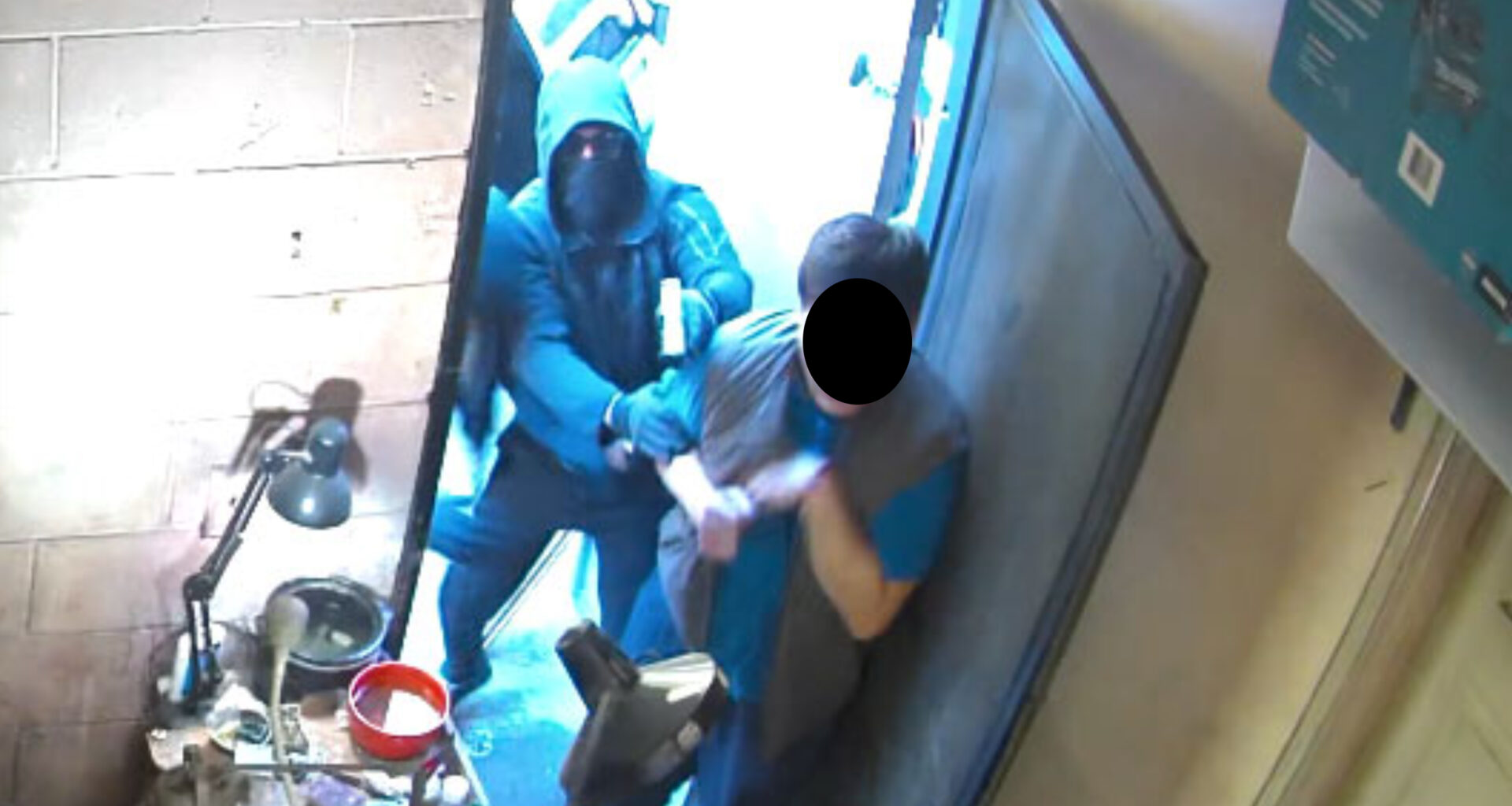
The string of robberies began on March 18, 2022, when four of the men broke into a San Francisco coin and stamp shop, zip-tied the owners’ hands behind their backs, and pistol-whipped one of them. They left with over $300,000 in jewelry, coins, and currency.
In August, the crew allegedly burglarized an Oakland cannabis dispensary, taking at least $100,000 in products.
On Nov. 12, five of the men were wearing masks when they stormed a jewelry shop in the city of San Pablo, holding one employee at gunpoint, raiding the cases and safe, stealing between $300,000 and $500,000 in gold and other items, and fleeing in Dodge Chargers with stolen plates.
Later that month, on Thanksgiving, three of the Ghost Town gang members allegedly broke into an Audi dealership in Oakland, making off with a safe that had $30,000 cash inside. Three days before, crew member Smith-Stewart had bought a car at the dealership, making a $9,500 down payment in cash. The car was later used in at least one robbery.
In December, six of the men broke into a West Oakland cannabis grower’s warehouse, hitting an employee over the head with the butt of a gun and demanding “budded weed” and money.
When Oakland police searched the home of Barnett because of his suspected involvement in the cannabis robberies in January 2023, they recovered jewelry from the San Pablo shop heist.
The men also showed off some of the stolen jewelry and cash in Instagram posts and YouTube videos. Federal prosecutors used the social media images as exhibits to prove their case.
 When police searched Demarco Barnett’s home in Oakland they recovered jewelry taken during the robbery of a San Pablo store. Credit: Screenshot from detention memorandum in US v. Barnett.
Ahead of Barnett’s sentencing, his attorney, Joanna Sheridan, asked the judge to consider a 72-month sentence, less than the possible maximum of 126.
“In the context of trauma and poverty, he made the regrettable choice of stealing to survive,” she wrote in a court memo. When he was a child, Barnett’s father was an alcoholic who terrorized the family. Studies have found relationships between childhood traumas and criminal behavior later in life.
“He remembers his father smashing his head against the wall of their apartment, giving his mother a black eye on Christmas Eve, stealing the kids’ Christmas presents, and letting his attack dogs loose on Demarco and his sister,” wrote Sheridan, who added that Barnett has been diagnosed with post-traumatic stress disorder.
“He is ashamed for his role in the violence of the charged robberies because he knows from firsthand experience what it is like to be a victim of violence,” argued Sheridan.
Barnett pleaded guilty to conspiracy and three counts of robbery last year and received the stiffest sentence among the nine defendants from Judge Araceli Martínez-Olguín: 114 months.
“*” indicates required fields