
The Los Angeles government has developed a bad habit of taking private property for the good of the public, and not paying for it.
This is a very old problem that the Fifth Amendment to the U.S. Constitution attempted to solve in 1791. “Nor shall private property be taken for public use, without just compensation,” it commands.
In Los Angeles, that and six dollars will buy you a cup of coffee.
Owners of rental housing properties under L.A.’s Rent Stabilization Ordinance effectively have their property “taken for public use” every time the law holds rent increases below cost increases or forbids evictions of non-paying tenants. And in 2023, a new “Just Cause Ordinance” imposed compliance burdens and costs on the owners of rented homes, condos and other properties even though they are not under the city’s rent control law.
This is a serious problem if you care about freedom, because property rights are fundamental to freedom, right up there with life and liberty. It’s a serious problem, but not a very sexy problem.
Until now.
The City of Los Angeles has “taken” Marilyn Monroe’s house in Brentwood, reducing its monetary value to zero without paying the owners any compensation at all.
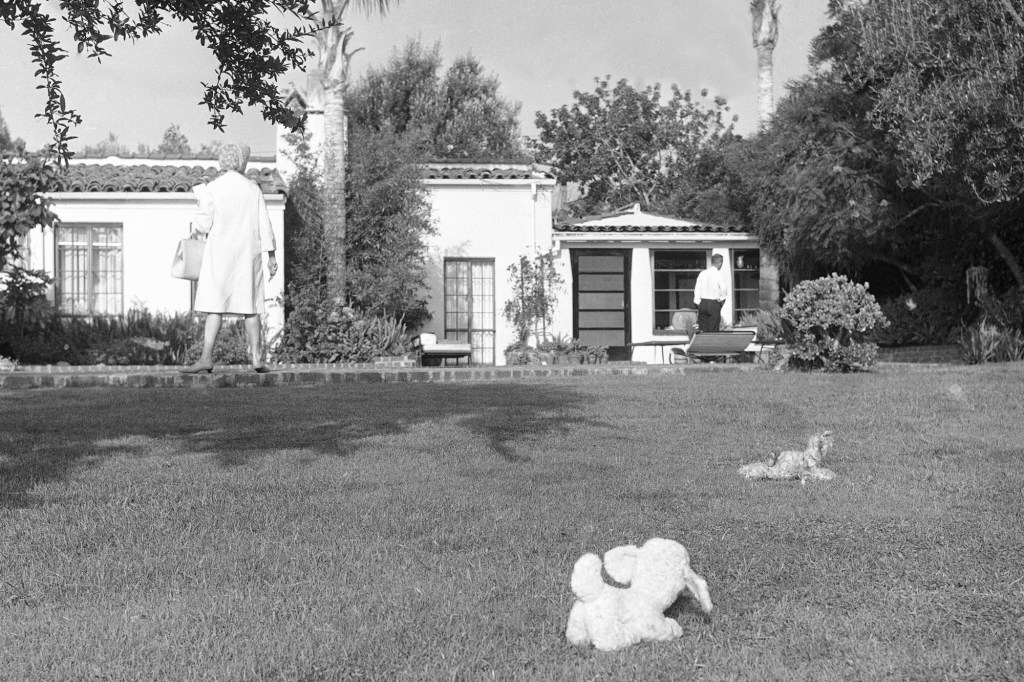
This is the house the Hollywood icon purchased in 1962, the sunlit rooms and backyard swimming pool where she gave interviews and was photographed, and the bedroom where she tragically died of an overdose in August of that same year. She was 36.
Marilyn Monroe’s extraordinary life took her from an unhappy childhood in a series of foster homes to the pinnacle of stardom and the edges of power. Decades of speculation that the actress had been killed and the murder covered up by the most powerful people in Hollywood and Washington layered a poignant mystique over her radiant screen performances.
So when new owners purchased the property for $8.35 million in 2023 and obtained city permits to demolish the house, all hell broke loose.
In an interview posted to TikTok, City Councilmember Traci Park, who represents Brentwood, proudly described the work she had done to stop the demolition. “This was a sustained effort by my team over the last 24 hours,” she said, “We have been fielding many hundreds of phone calls and emails from around the city, the country and the entire world, working on the motion that we introduced today and doing everything we can to take the steps that are necessary to preserve this iconic home here in Brentwood.”
Everything except paying the owners.
Preserving the home “means a lot to a lot of us,” Park said.
The city used its “Historic Cultural Monument” ordinance to preserve the house, and in the process turned a narrow residential street into a tourist attraction. Google Maps labels the address as a landmark, “Marilyn Monroe Residence,” as if it’s Dodger Stadium or Universal Studios. Fans, tour buses and trespassers drive up to see the house, which is not visible at all from the street.
The historic-cultural monument designation is very restrictive. The owners can’t even relocate the house – something they say they suggested but the city refused – without going through a multi-year, multi-million-dollar process of environmental impact reports under the California Environmental Quality Act. The law protects historical and cultural resources. Even after years of costly studies, permission to work on the house at all might be denied.
So the owners have a deteriorating house they can’t renovate, rent or relocate, and they have six-figure bills for property taxes, insurance and security.
On January 23, the owners filed a federal lawsuit seeking to permanently block the city from prohibiting the demolition, or alternatively, to provide them with “compensation in the amount of the present value of their 2023 investment” if the property wasn’t a monument.
There must be a way to bring private donors together, get a CEQA waiver and relocate the house to another site where it could be restored and opened to the public.
Even though Marilyn Monroe owned the 1926 Spanish-colonial revival style home for barely six months and it has had fourteen owners since, it’s not just any house.
But it is still private property. The government can’t just take it.
Write Susan@SusanShelley.com and follow her on X @Susan_Shelley