
February is Black History Month, but when it comes to the arts, there is one San Diego institution that elevates the Black experience year-round.
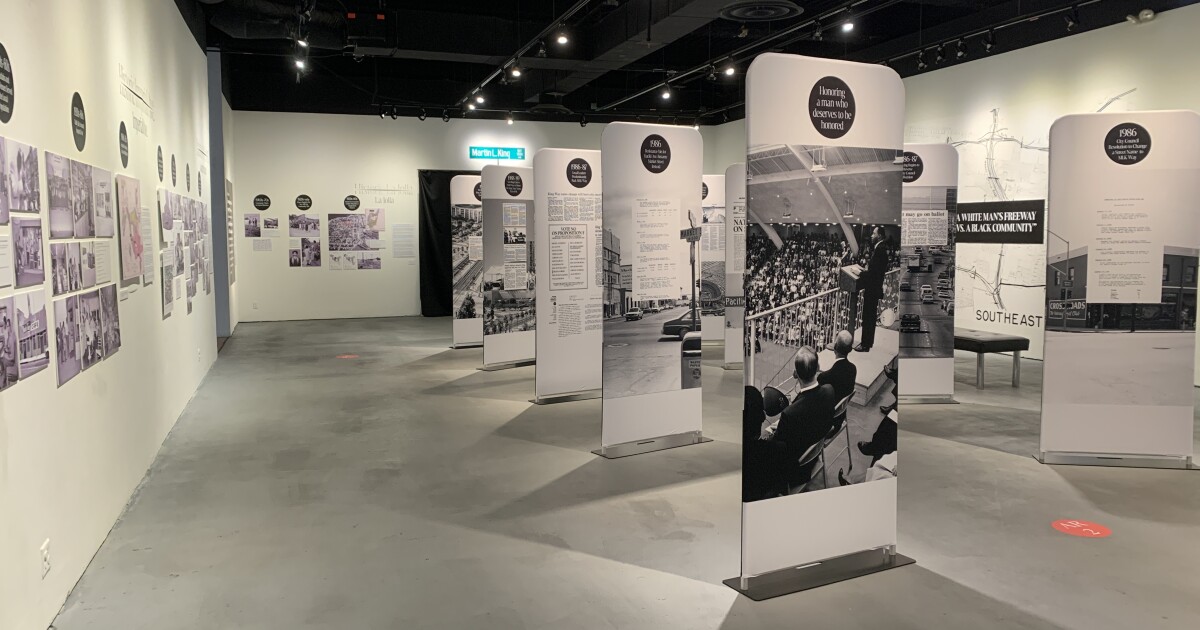
It’s the San Diego African American Museum of Fine Art (SDAAMFA), and its latest exhibition is called “San Diego’s Lost Neighborhoods.”
“We’re responsible to the community as well as the arts. So we do things that are responsible to the community, which is what this is,” said the museum’s executive director Gaidi Finnie. “So that’s why that is important to the San Diego history and the San Diego African American Museum of Fine Art.”
We met Finnie in a gallery at the San Diego History Center, one of many museums SDAAMFA works with to present exhibits. SDAAMFA does not have a physical building of its own.
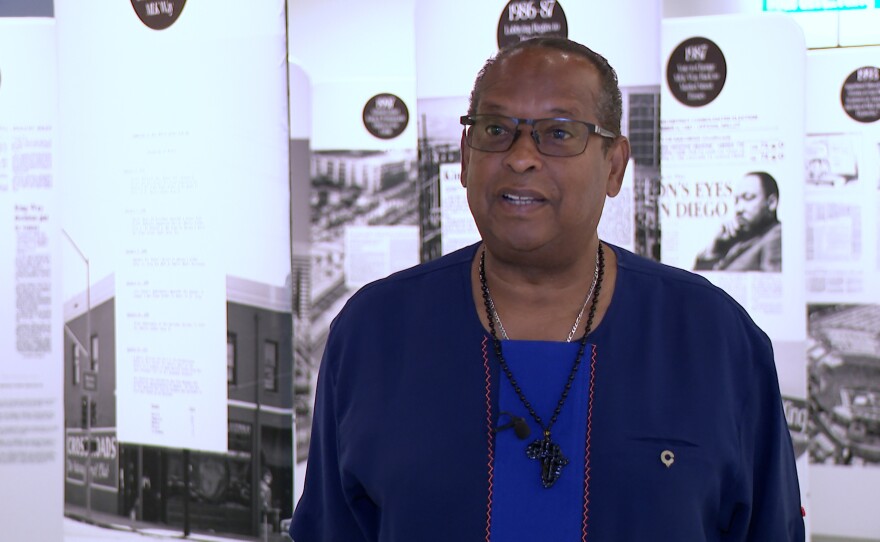
Gaidi Finnie, the executive director of the San Diego African American Museum of Fine Art, is shown at the San Diego History Center on Feb. 4, 2026.
“We are a museum without walls. Always have been,” Finnie said. “From the time before me, when it was Shirley Day-Williams, who ran it, it was also a museum without walls. It went dormant in 1998 or ’99 for a while, and I reopened it, if you will, in 2014. So it’s been 12 years since, but always as a museum without walls.”
And that answer led to an obvious question: Where does the museum keep its art when it’s not on exhibit?
“We are not a collecting institution for the very reason that we don’t have a building,” Finnie said. “However, we do have storage, and people are continuously wanting to give us things. We have a large African Art collection.”
Finnie said while it would be nice for the museum to have their own building some day, it is not a pressing aspiration. There are advantages to being a museum without walls, mainly when it comes to money.
“As a lifelong nonprofit administrative person, I’ve just seen so many times when they can’t keep up with the expenses of having a building. So you have to have enough income on a regular basis to sustain the electricity or the monthly payments or the gas or the lights. All of that stuff is important. You have to have it. But if you have to pay that, where’s that money coming from?” he said.
Finnie said a part from not having to worry about the costs, there are other good reasons not to be tied to a building.
“It’s a blessing in one sense because we have been able to work with all the museums. The reason is, because we’re a fine art museum, we could only go in certain places that have the climate control, the security, all those things to bring excellent art here,” he said.
And not having a building can lead to some out-of-the-box thinking when it comes to exhibits. “San Diego’s Lost Neighborhoods” is actually two distinct exhibits. The first is the physical one you see all around you. You see the other through your phone. It’s called augmented reality. Circles on the floor are in essence QR codes, leading you to see exhibits that are around you in the virtual world.
“You overlay history onto the real world. You feel like you’re going back in time. But just to your phone … It’s a wonderful way to showcase art anywhere in the world,” he said while showing us how to use augmented reality.
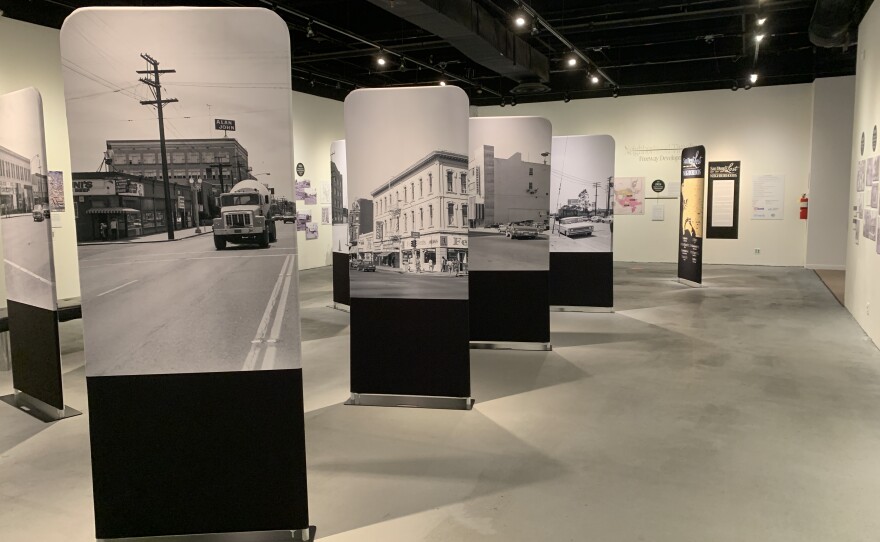
Displays of the exhibit “San Diego’s Lost Neighborhoods” are shown at the San Diego History Center on Feb. 4, 2026.
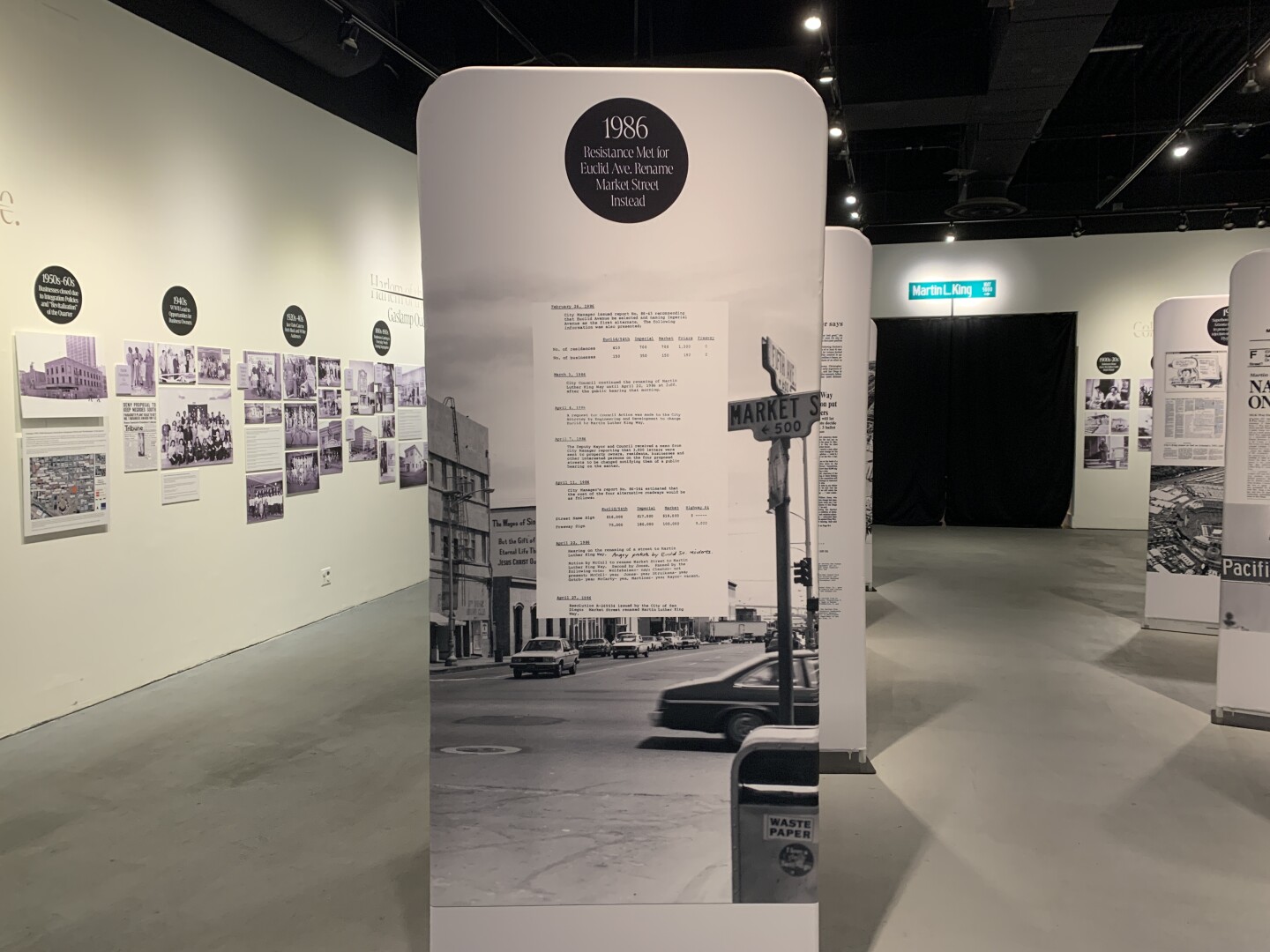
“Resistance Met Euclid Ave. Rename Market St.” is shown as part of the “San Diego’s Lost Neighborhoods” at the San Diego History Center on Feb. 4, 2026.
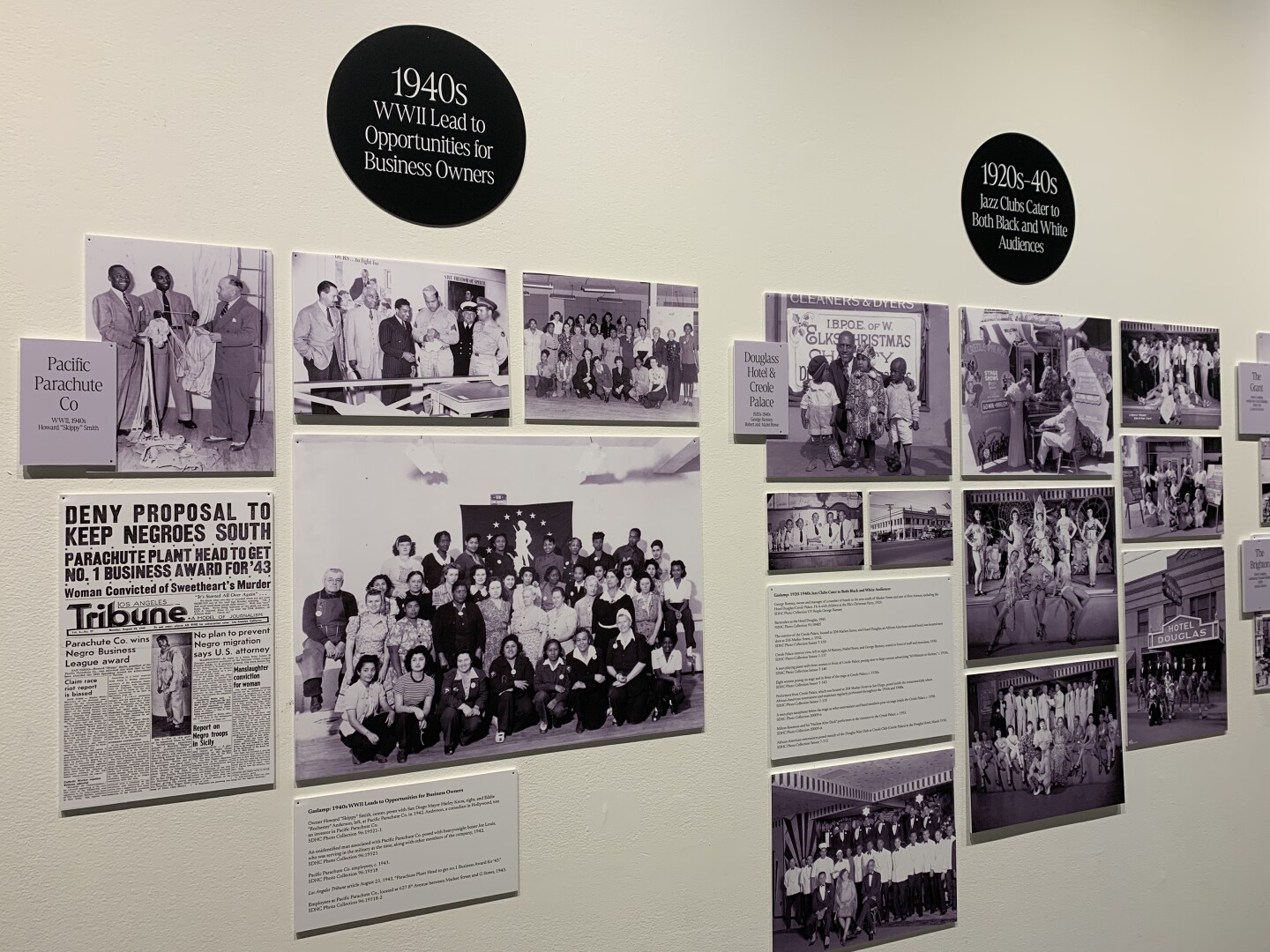
Circular signs denoting pictures showing San Diego neighborhoods from the 1920s through the 1940s are shown at the San Diego History Center on Feb. 4, 2026.
In fact, the SDAAMFA has and continues to exhibit artwork far from its home city.
“We have exhibits right now in Africa, we have exhibits in New York … and working on other places,” Finnie said.
Back to the museum’s current exhibition — “San Diego’s Lost Neighborhoods”; apart from being an important piece of this city’s overall history — it syncs well with the museum’s role of revealing the struggle Black people have experienced. The exhibit includes graphic art showing how freeways broke up various minority communities. A sign on a wall above a piece of graphic art said, “A white man’s freeway versus a Black community.”
When it came to putting together “San Diego’s Lost Neighborhoods,” Finnie said the museum got invaluable help in the significant amount of research it took to bring it to life.
Finnie got involved with UC San Diego students who had done extensive research on the issue. He described the work as “amazing.” That research, he said, helped them understand the various things that had happened to these neighborhoods.
Next up for the SDAAMFA is the annual “Keepers of the Culture” exhibition and honors program. It highlights members of San Diego’s Black community that have played an important role in shaping Black culture here, all the while proving museums don’t need four walls to display fine art.