
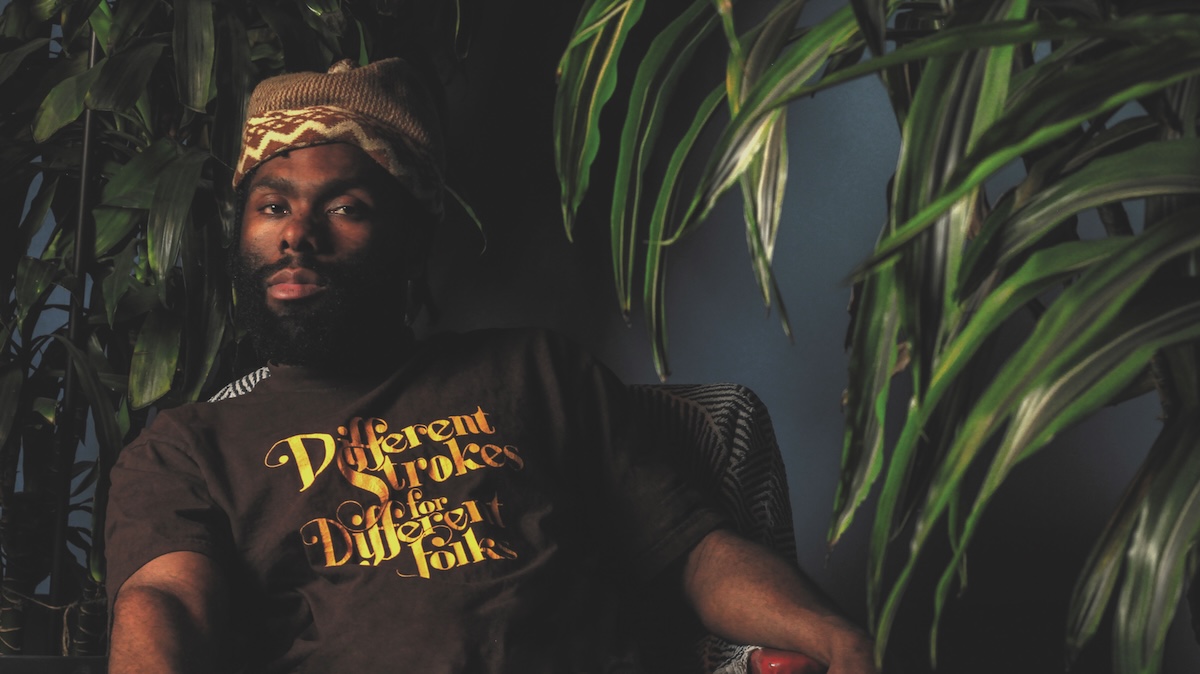
Oakland rappers continue to uphold a longstanding tradition of hip-hop that prioritizes community accountability over individual fame. This vital local scene persists even as streaming metrics and corporate influence reshape the genre, often pushing grassroots voices to the margins.
In the 1990s, artists commonly acknowledged incarcerated political prisoners or paid tribute to friends and family living behind bars. These stories feel unfashionable today and rarely translate into algorithm-friendly soundtracks.
East Oakland rapper Nimsins continues that tradition through his music, most recently with Black August 2. The album takes its name from Black August, an annual observance honoring imprisoned freedom fighters and political prisoners connected to the Black liberation struggle. The tradition is often marked by fasting, physical discipline and political study.
The project was recorded during a month-long fast from social media, along with daily fasting from sunrise to sunset. During that period, Nimsins focused almost exclusively on writing. The discipline allowed him to slow down and reflect on his place in the world.
“This album is what was on my mind when I was abstaining and moving through life,” he said. “That’s what I’m trying to leave with people.”
Nimsins’ connection to Oakland runs deep. At the age of two, he lost a kidney to a stray bullet while playing outside his grandmother’s house. Growing up, he was told the experience marked him with a sense of purpose.
“People always said I had a gift, like there was something I was supposed to do,” he said.
His teenage pursuits included graffiti, skateboarding and poetry. He described himself as an angry kid who struggled to process his emotions until writing offered a release. Over time, poetry evolved into hip-hop.
“I used to have a lot of anger problems,” he said. “Poetry helped me, and eventually it turned into rap.”
By the age of 15, Nimsins began recording music on a desktop computer and submitting songs to TeamBackPack. He studied Seagram and Richie Rich alongside Lil Wayne. Later he became more invested in freestyle rap and began participating in cyphers at First Fridays in downtown Oakland.
He attended local high schools before earning his diploma through independent study. During that rebellious period he also began engaging deeply with Black empowerment literature and questioning the institutions shaping his life and community.
After several years navigating the gig economy, he enrolled in college as a first-generation student. He moved through the Peralta Colleges and transferred to San Jose State, earning a degree in anthropology. That academic grounding surfaces throughout his discography and on Black August 2, where references to Frantz Fanon and bell hooks function less as name-drops and more as guiding influences.
Musically, the album finds Nimsins in a reflective pocket. He assembled a loose collective of producers through group texts, sharing sample ideas inspired by records he encountered at local shops. The result is a contemplative project that emphasizes observation over performance.
On “Cuz Doin Time,” he reflects on a conversation with a cousin who converted to Islam. “No Pape” features Nimsins moving confidently over an ImagineBeatz production, asserting a sense of resilience shaped by the literature he encountered as a teenager. On “You Know The Rest” he weaves together portraits of everyday realities in Oakland. The song touches on failed hoop dreams, domestic violence and addiction.
Black August 2 offers an on-the-ground view of life for people navigating Oakland from the margins. The story is told by a perceptive artist who uses music to make sense of the world around him.
A survivor of violent crime, Nimsins uses the music to push back against the idea that Black people are supposed to move and think one way. He wants Black people, especially in Oakland, to feel comfortable being themselves. “I like seeing Black people do different things,” he said. “You can be from the hood and still have your own interests. The world doesn’t always make space for that, so that’s what I’m trying to push.”