
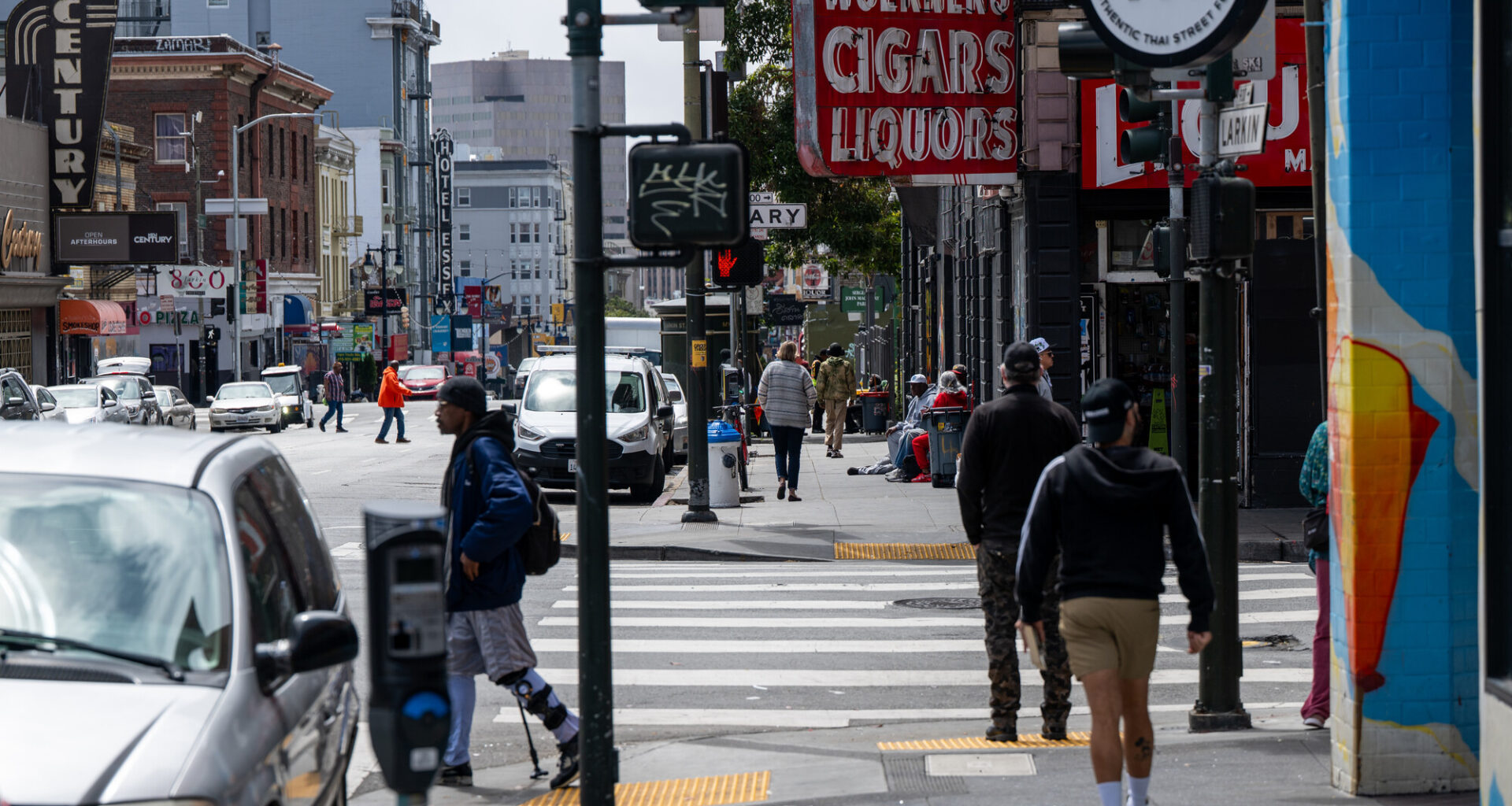
“This legislation is a necessary step toward bringing these drug markets under control and restoring livability to Mid-Market and SOMA,” Leah Edwards, a District 6 resident, wrote in a letter of support.
A separate independent study published in November 2025 also found a 56% reduction in drug-related incidents during the curfew hours over nine months. However, authors of that study told Mission Local that their findings should not be taken as conclusive support for the approach, but rather offer preliminary and limited data.
Dorsey said the plan has helped calm down street conditions late at night, but that there is still work to do to address underlying issues. He pointed to the city’s effort to hire more police officers and a new sobering site downtown where people can get connected to drug treatment options like buprenorphine, a medication for opioid use disorder.
He said his office is also working to secure some kind of relief, such as limiting business fees, for the roughly 75 shopkeepers who could be impacted by the curfew.
Opponents of the approach, which include the Small Business Commission, maintain that it threatens to cut off sales and could make it harder to operate in an area known for its music venues, galleries and event spaces.
Other skeptics said the data on the program so far might fail to capture where street-level challenges have shifted since the program’s implementation.
“Incident counts alone are not a clean measure of underlying street conditions, particularly when enforcement strategies may change alongside policy implementation,” Kayla Brittingham, a resident of SoMa West, wrote in a letter to the Board of Supervisors ahead of the vote on Tuesday. “For many blocks, nighttime activity is a defining feature of the neighborhood’s identity and economic viability, rather than a source of disorder.”