
Keith R. Solar is a water attorney. He lives in Point Loma.
Californians are no strangers to drought, having lived through many dry periods in the last several decades. The good news is that December storms and previous strong rainfall filled state reservoirs to healthy levels. The bad news is that history shows the good conditions won’t last and worries over water supplies will continue in the coming years.
One need only look to 2015, when California was in one of its most severe droughts on record and Gov. Jerry Brown ordered the first-ever, statewide water reduction requirements aimed at urban Californians. Local reservoirs were depleted, imported supplies were strained and the region faced escalating uncertainty about the stability of its water future.
Interest in desalination had increased substantially in California after severe droughts in the 1970s and late 1980s. The state’s rapidly growing populations and ecosystem degradation from existing water supply sources forced a rethinking of water policies and management.
Desalination, which removes salt from seawater to create quality drinking water, was gaining traction as a viable solution to the region’s drought challenges. Investing in seawater desalination was seen as ambitious, necessary and the responsible thing to do.
Yet it was not without its environmental and cost critics. It took 14 years of permitting, public meetings, planning and litigation before construction began on a desalination plant that today produces 10 percent of San Diego’s water supply.
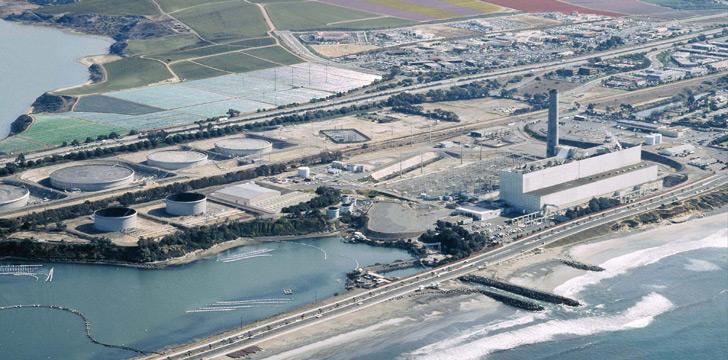
When the Claude “Bud” Lewis Carlsbad Desalination Plant, owned by Poseidon Water Resources, opened in December of 2015, it assumed an important role in strengthening San Diego’s water security. It has advanced San Diego County’s long-standing goal of reducing dependence on the over-allocated Colorado River and Sacramento-San Joaquin Delta.
In a time when Western states are renegotiating water-sharing agreements under increasing stress, the ability to generate a portion of our supply locally offers stability that cannot be overstated.
At full capacity, the plant produces 50 million gallons of drinking water daily. That supply of desalinated water is reliable regardless of drought, shrinking snowpack, below-average rainfall or the normal, expected fluctuations in water resources such as seasonal changes in river flow that impact water availability.
For a region at the end of every major pipeline that has long depended on imported water delivered across hundreds of miles of desert, and which now faces a drier, more uncertain climate, this is a qualitatively different supply of water – a purely local supply that is a critical asset for San Diego.
The Carlsbad Desalination Plant, designed by IDE Technologies Ltd., and later sold to Channelside Water Resources, is the largest desalination facility in the Western Hemisphere. IDE, the plant’s operator since day one, has maintained strict water-quality standards and worked closely with regulators and environmental partners to minimize ecological impacts.
While critics point out that desalinated water is more expensive than other water, it is important to note that it is more reliable than other sources. Its value as insurance against disruption of supplies from other sources makes it a critical part of our future.
Desalination has not replaced other strategies. Rather, it is one tool in the toolbox that complements conservation, potable reuse, water recycling, groundwater management and stormwater capture. There is no one silver bullet for our water security, and San Diego needs a little bit of everything to safeguard its water supply. This diversified approach has positioned San Diego as a statewide leader in long-term water planning and reliability.
As the Carlsbad Desalination Plant marks its 10th year of operation, the takeaway is clear: no single project can solve all of California’s water challenges, but strategic investments in locally controlled resources can deliver lasting benefits. The Carlsbad plant stands as a model of how forward-looking infrastructure can contribute to a region’s stability.
San Diegans no longer need to wonder whether desalination would make a meaningful difference. The answer arrives every day, reliably, safely and without regard to weather, through water flowing into homes and businesses across the county.
Although powerful storms in 2024 and 2025 helped ease drought conditions, the past has taught us that the prospect of serious drought conditions will return to San Diego and could become the new, multi-year norm.
The Carlsbad Desalination Plant helps San Diego weather these severe water shortages. Let’s not forget why it’s here.