
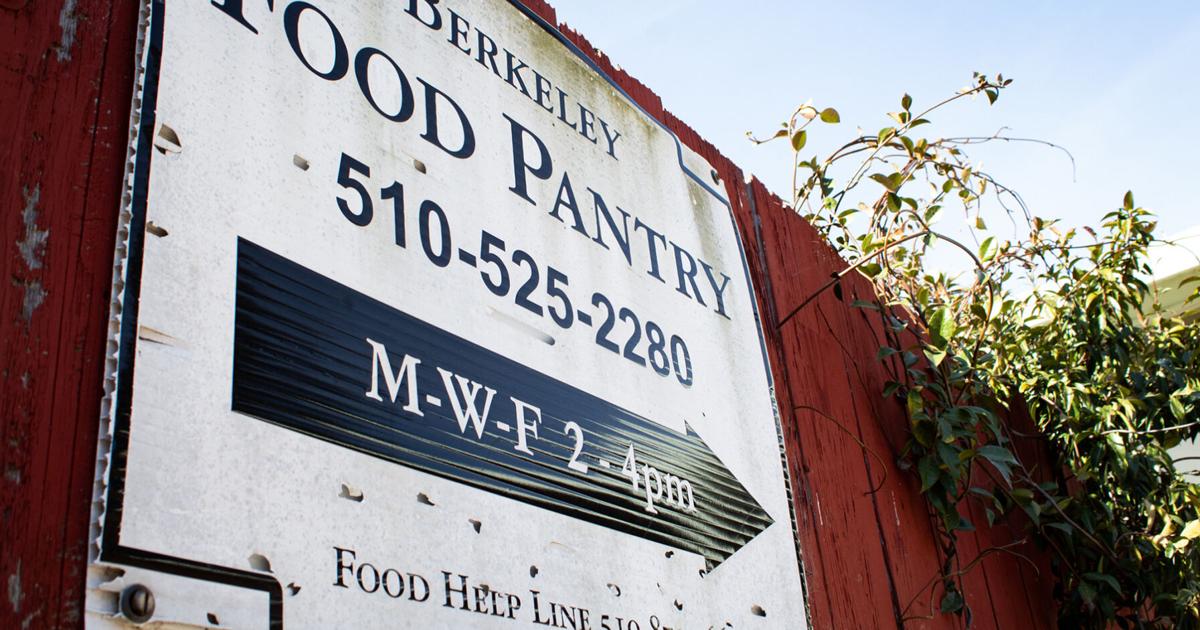
The Berkeley Food Pantry operated from a single site serving seniors, families, students and unhoused residents for 56 years. The pantry closed its doors last month after negotiations with the Berkeley Food Network, the city’s largest nonprofit food distributor, fell through. As demand increased, the pantry sought to merge with the Berkeley Food Network. When no agreement was reached, the pantry shut down.
Administratively, little changed. City officials and partner organizations emphasized that food distribution would continue through other programs across Berkeley, redirecting residents to sites scattered across the city.
However, the pantry’s closure makes clear a distinction that matters far more than whether or not programs remain listed. Access depends not only on whether programs exist, but on whether people can realistically use them. When officials point to continuity, they are often referring to the presence of other food programs across the city. That framing overlooks what mattered about this pantry: It was a fixed, predictable access point for the people who relied on it, many of whom are students.
The pantry did not close because food insecurity in Alameda County declined or because demand disappeared. Its continued operation depended on an institutional agreement with Berkeley Food Network. When that agreement failed, a half-century-old service ended.
This reflects how many basic services now operate. As budgets tighten and constraints grow, business-style frameworks of “efficiency and effectiveness” are applied more broadly. But they cannot be applied to everything. They fail most evidently at the bottom of the economic ladder, where people have the least time and flexibility to adapt.
Food insecurity in Berkeley is not driven by shortages. Food continues to move through nonprofit networks and distribution programs. What changes is how much time, travel and effort it takes to get it.
The Berkeley Food Pantry worked because it was simple. It operated from a fixed location with predictable hours and minimal administrative requirements. Students could stop by between classes. Seniors and families knew exactly when and where to go. Thus, using the pantry required little extra planning.
Other programs may offer food, but they often demand more: longer travel, narrower windows and additional intake procedures. For people who are already stretched thin, those differences matter. They determine who continues to receive assistance and who slips between the cracks.
For students, the consequences are real. A 2024 U.S. Government Accountability Office report found that about 23% of college students — roughly 3.8 million people — experienced food insecurity in 2020, with nearly 60% of those who were potentially eligible for SNAP not reporting receiving benefits. Food-insecure students are more likely to struggle academically and to leave school. Inadequate nutrition also affects concentration and cognitive performance, directly undermining learning.
In a city with high housing costs and a large student population, access to food shapes who is able to stay enrolled.
Research in psychology helps explain why these frictions matter. A study by Sendhil Mullainathan and Eldar Shafir, professors in economics and psychology, looked at sugarcane farmers in India before and after harvest, which causes incomes to fluctuate dramatically throughout the year. The same farmers performed significantly worse on cognitive tasks before harvest, when money was scarce, than after harvest, when financial pressure eased. To convey the size of that difference, the researchers compared it to familiar benchmarks, describing the temporary decline in performance as similar in magnitude to a 13-point difference in IQ, or the cognitive effects of losing a full night’s sleep.
The implication is not that scarcity makes people less capable. It is that scarcity consumes mental bandwidth. When people must spend more time navigating instability — whether financial or logistical — fewer cognitive resources remain for planning, learning and long-term decision-making.
That insight applies directly to food access. When programs become harder to use, the burden does not fall evenly. It falls hardest on those with the least flexibility.
Large food networks face real constraints: funding structures and compliance requirements, reward scale, standardization and efficiency. Centralized systems are easier to manage and report. But they are often organized around administrative needs rather than daily life.
The failed negotiation between the Berkeley Food Pantry and the Berkeley Food Network exposed this mismatch. The food pantry was free to prioritize convenience because it was smaller, while the network operated within a more rigid framework on account of it being a much larger organization. Ultimately, both systems were incompatible, and, as a result, the smaller access point disappeared.
This dynamic extends beyond food assistance. Housing programs end when contracts lapse. Clinics close when reimbursement structures change. Services vanish through administrative mechanisms, even when demand remains.
Berkeley’s response reflects how routine this has become. Are the other programs enough? It’s too early to say, but what’s apparent is that there was insufficient public discussion of whether eliminating a long-standing access point served the people who depended on it.
When a service with clear use can disappear without intervention, it sends a message: The people who relied on it were not central to the decision.
The closure of the Berkeley Food Pantry matters not because food assistance vanished, but because a dependable way to meet a basic need did. If Berkeley is serious about addressing food insecurity, it must treat access itself as something to preserve — not as a byproduct of administrative efficiency, but as a design priority.
Consolidation itself is not the issue. The problem is treating efficiency and effectiveness as the primary goals in systems meant to serve people who already have less time, less money and less room to adapt. Hunger does not disappear — it just becomes harder to see.