
There are certain days in Berkeley when it is undeniable that the city is alive with beauty and splendor. The air is perfectly misty, the streets bustle with excitement and artists from every walk of life work to energize the eccentric city.
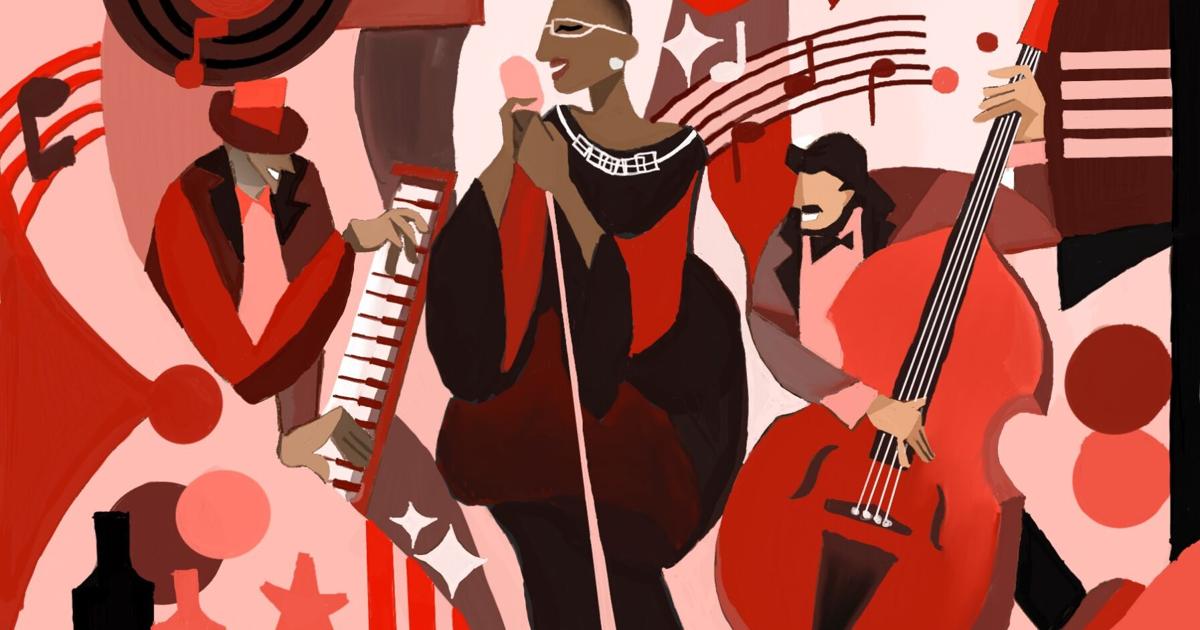
French American jazz vocalist Cécile McLorin Salvant took the spotlight at UC Berkeley’s Zellerbach Hall on Feb. 5 alongside Sullivan Fortner on the piano, Yasushi Nakamura on the bass and Kyle Poole on the drums. Clad in a flowy black dress paired with giant metallic turquoise clogs and her iconic lightning-shaped sunglasses, Salvant’s presence promised pure magic.
As soon as she sat at the keyboard to play “I Am a Volcano” from her newest album, Oh Snap, she began laughing and fighting with her pianist about who would take the lead playing the keys. As insignificant as this seemed, this opening moment embodies Salvant’s entire vibe — effortless, improvisational and ultimately ending with an entrancing musical spectacle.
The audience that filled the room at Zellerbach was alive with excitement. In row after row, from the very floor to the corners of the mezzanine, faces were eagerly fixed on the artist before them. Whether it was their first time experiencing Salvant’s magnetic voice or their fiftieth, it was impossible to tell — she had them mesmerized.
Salvant sang a stunning setlist, with old classics from Margaret Johnson’s “Changeable Daddy of Mine” and Vincent Youmans and Irving Caesar’s “Tea for Two,” to her original songs from Oh Snap. The crowd-favorite “What Does Blue Mean to You?” — inspired by Toni Morrison’s “Beloved” — electrified the stage. From song to song, her tone shifted from dark and moody to light and jaunty, fashioning a dynamic performance. Each piece is performed elegantly and intentionally with character and soul.
The lighting morphed colors as the set progressed, from sea blues to warm oranges. The opalescent lights, the gentle rhythm of the bass that vibrated through the floors and the silky vocals that permeated the space between artist and audience, shimmered with energy.
“Second Guessing” featured both Salvant and Fortner on vocals. While Fortner seemed hesitant to sing, his soulful voice complemented Salvant’s rich tone gorgeously. His vocals brought forth a fun dynamic midway through the set, aiding in the shift from grand piano to electric keyboard.
Salvant’s gateway into the world of jazz is addictingly immersive — sweet and true as we have known it for decades. Salvant becomes a small part of a greater ensemble, a soulful tie to the music played by her fellow artists on stage. There is space for each instrument to flourish and tell its part of the story. Poole and Nakamura both had a chance in the spotlight, stunning the audience (and Salvant) with captivating drum and grooving bass solos. Often, Salvant sat back, observing the movement of each player; she met them where they were, and slowly, in that auditorium on Bancroft Way, magic unfolded.
As Salvant finished her closing song, “Blackwing and Silver Hue” from Sir Peter Hall’s staging of Aeschylus’ “Oresteia,” the crowd sat silently in amazement. However, slowly but surely, they joined Salvant’s chant of the line — “Batter, batter the doom-drum, but believe there’ll be better!” — from Tony Harrison’s translation of the Greek classic.
The message resounds powerfully during a time when political violence and borderline authoritarianism engulf our country and haunt our communities. Salvant reminds us that music can be more than just pleasing to the ear. It can also be a call to acknowledge the tragedy surrounding us while maintaining hope for a brighter future.
Salvant reminds us of the importance of jazz through an enchanting modern lens. A unity between the mind and soul, a space between entertainment and sacredness, a gripping connection between artist and audience — jazz is an invitation to listen to the stories told and untold throughout history. It is an invitation to feel connected to the people around you. It is an invitation to follow along, if you dare, and tap your feet while you’re at it.