
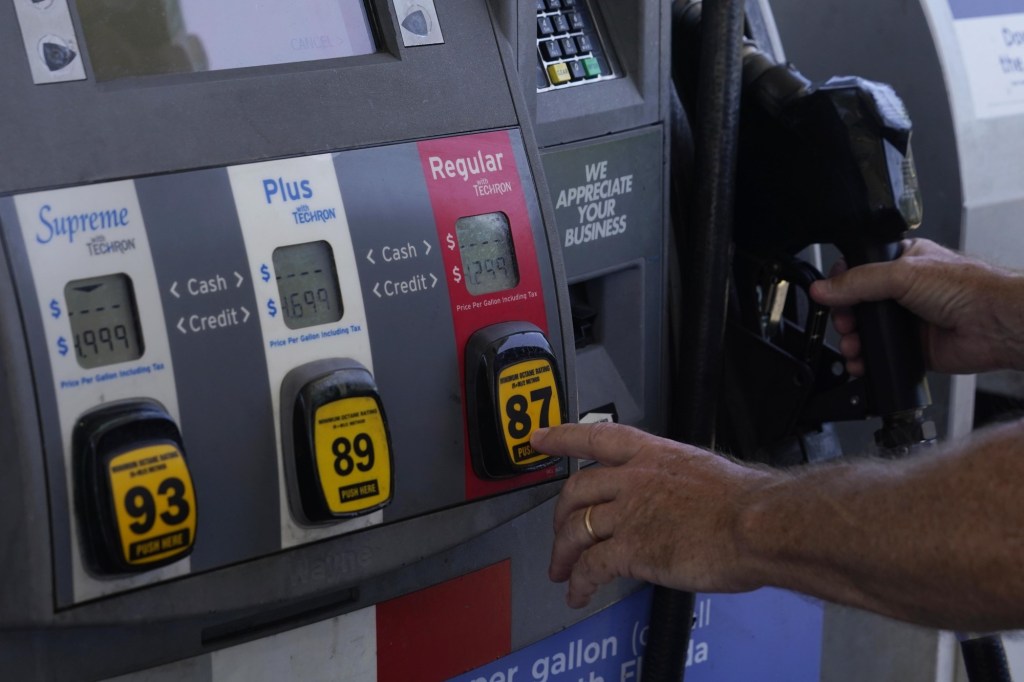
If it seems you’re paying a little more for gasoline lately, you’re not just imagining things.
Prices at the pump have been climbing in the San Diego area, up 19.7 cents per gallon on average since Dec. 23.
And the average price for diesel fuel is poised to crack the $5 mark for the first time in more than two months.
The average price for a gallon of regular gas in San Diego stood at $4.591 on Thursday, according to AAA. Prices have increased for 15 consecutive days.
“It’s been a sure and steady clip,” said Patrick DeHaan, head of petroleum analysis at GasBuddy.
The big reason for the increase, fuel analysts say, is because California refineries are going through their annual transition from winter-blended gasoline to the state’s unique summer mixture. The summer blend’s lower-volatility formula helps reduce smog, but it’s more expensive.
The term “summer blend” is a bit of a misnomer in the Golden State because the California Air Resources Board requires gas stations in Southern California to use the less-polluting gasoline from April 1 through the end of October.
So while it may be February, refiners start making the switch to the summer blend early in the year to get the summer fuel to retailers by the end of March.
“They want to have winter gasoline completely purged right about now or in the next couple of weeks because it’s highly complex getting that winter gasoline that can’t be sold out of the system,” DeHaan said, adding that most stations will probably start having summer gasoline in their tanks in the next two to three weeks.
DeHaan predicts gas prices may increase another 10 to 20 cents per gallon — provided there are no unexpected refinery shutdowns, accidents or international incidents that could rock the petroleum market.
The average price for a gallon of diesel fuel in San Diego stood at $4.978 on Thursday, up nearly 16 cents from one month ago.
But the increase has nothing to do with winter/summer blends. Rather, it’s due to tight diesel supplies as a result of the recent deep freeze experienced in other parts of the country.
While very few motorists in passenger cars use diesel fuel, its price affects everyday consumers because trucks, trains and shipping services rely on diesel to deliver goods. If diesel prices go up, those costs get passed on to customers.
“The economy runs on diesel, not gasoline,” DeHaan said. “Diesel and jet fuel are very similar. These heavier fuels power the economy.”
Denton Cinquegrana, chief oil analyst at the Oil Price Information Service, which provides data and forecasting on global energy, said California gasoline prices may experience “a little bit of a plateau, but I still think the trend is going to be higher.”
He pointed to the fact that Phillips 66 recently completed the closure of its twin refinery in the Los Angeles area. In addition, Valero still plans to shut down its 145,000-barrel-per-day refinery in the Northern California city of Benicia by the end of April.
The Valero and Phillips 66 facilities combine to account for about 18% of the state’s crude oil capacity. Fuel shipped from foreign countries can help pick up the slack but the shuttering of the two refineries may leave the state more vulnerable to price spikes.
“You see a lot of electric cars but California still consumes a lot of fuel,” Cinquegrana said. “The state has become a lot more reliant on imports of gasoline and components that go into making the gasoline that just don’t appear overnight … I think you’re dealing with kind of a tightrope situation.”
To help counteract the refinery closures, Sacramento lawmakers — at the urging of Gov. Gavin Newsom — passed Senate Bill 237 last year that included provisions to boost crude oil production in the state, particularly in the Bakersfield area, where the largest concentration of derricks are located.
In light of concerns about California gasoline supplies, Kinder Morgan and Phillips 66 recently announced plans to build the Western Gateway Pipeline, which would bring fuel to western states such as Arizona and allow more oil production in California to stay within the state.
The proposal has received a healthy amount of interest from potential investors and shippers, but it would still need to clear numerous regulatory hurdles before work could begin.
“These plans are in their infancy,” DeHaan said. “It would probably take at least 18 months for these projects to be fulfilled, I think, under the most ideal of outcomes.”
If it’s much solace, gas prices in San Diego are lower than the Bay Area’s.
The average price per gallon in San Francisco, according to AAA, on Thursday stood at $4.798 — almost 21 cents higher than San Diego.
The average price in the U.S. on Thursday came to $2.944, compared to California’s statewide average of $4.545, which is the highest in the country.
According to the U.S. Energy Information Administration, state taxes and fees on gasoline as of Jan. 1 ranged from a high of 70.9 cents per gallon in California to a low of 9 cents per gallon in Alaska.