
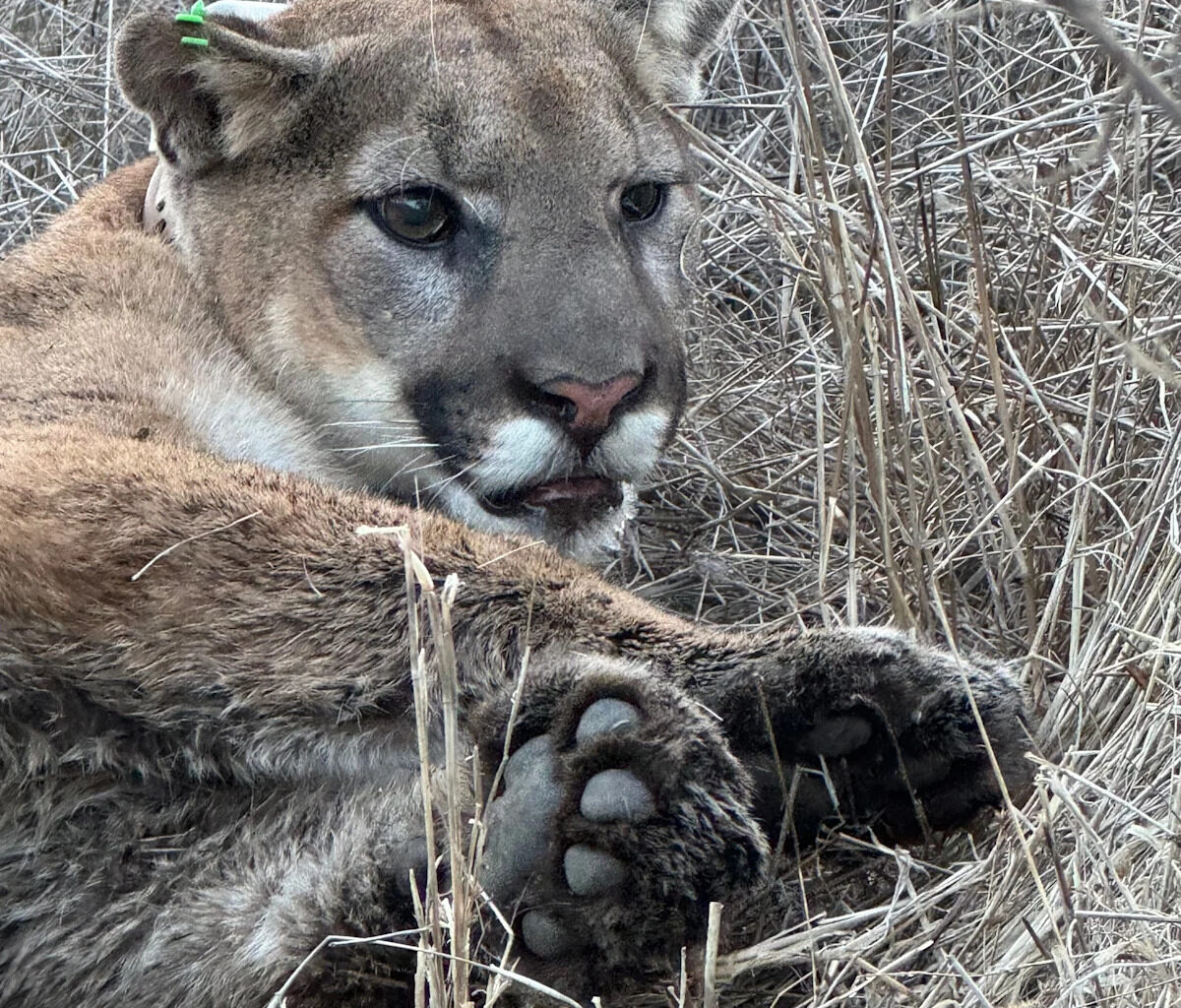
California officials have voted to list cougars in the Santa Monica Mountains and elsewhere as a threatened species, maintaining protections in place for the past several years.
The state Fish and Game Commission approved a proposal to list hundreds of mountain lions in Southern California and along the Central Coastal under the state’s Endangered Species Act. The commission voted 3-0 for approval at a Feb. 12 meeting in Sacramento.
The decision came after comments from dozens of speakers. Many urged protections for the mountain lion groups that they said face significant threats in a fragmented landscape. Others asked commissioners to deny the petition, saying the listing could jeopardize ranchers’ ability to protect their livestock and that more input was needed.
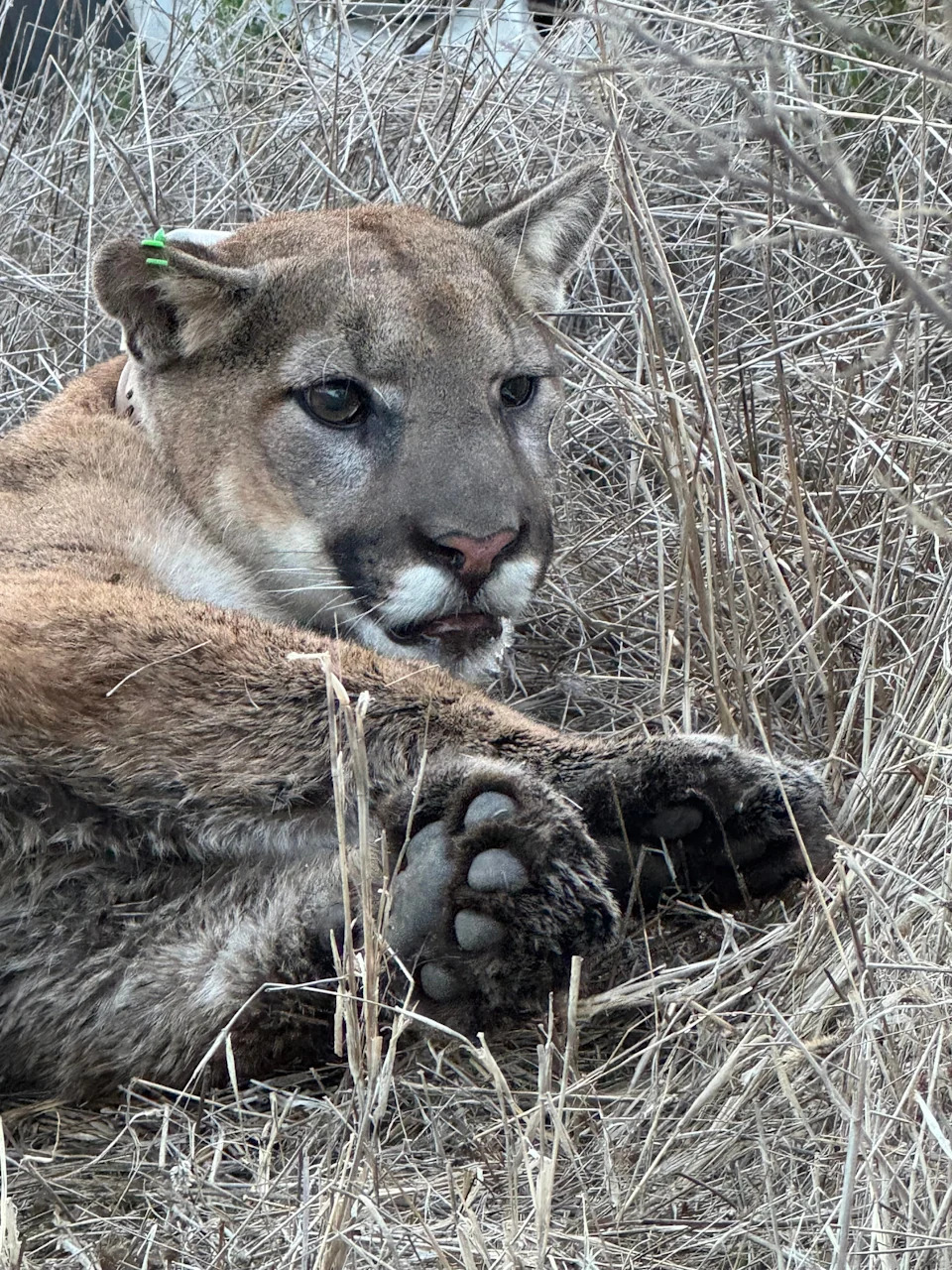
A young male mountain lion is released back to the wild after being caught in Camarillo on Wednesday, Feb. 19, 2025. Wildlife officials checked the lion’s health and attached a GPS collar prior to setting him free.
Before the vote, Commissioner Samantha Murray said she believes the review from the California Department of Fish and Wildlife supported the threatened status. It is not the same as endangered, she said, calling it a different threshold.
The California Endangered Species Act was not “created just to protect species that are on the verge of blinking out with extinction,” Murray said. “It’s to give species a chance to bounce back before it’s an absolute crisis.”
In 2019, the Center for Biological Diversity and the Mountain Lion Foundation petitioned the state to protect the cougars. They sought the listing for six populations, including those living in the Santa Monica Mountains in Ventura and Los Angeles counties. Other populations included cougars in the Santa Ana, Santa Cruz, San Gabriel and San Bernardino mountains.
Research shows the populations face serious threats to their genetic health, the groups said. Those in the Santa Monicas and Santa Anas may be most at risk.
What threatens cougars in the Santa Monica Mountains?
The National Park Service has studied mountain lions in local areas since 2002 to see how the animals are surviving in an increasingly urban area.
The small cougar population in the Santa Monicas is boxed in by development and highways and faces steep odds. The obstacles have led to inbreeding, low genetic diversity and lions killing each other.
At any given time, there’s only one or two breeding adult males in the population. Researchers have said the Santa Monica Mountains pumas could go extinct within 50 years.
Vehicle strikes and rodenticide poisoning are some of the leading causes of death for mountain lions in the study area.
How did mountain lions become a protected species?
More than five years ago, commissioners voted to give the mountain lion populations temporary protection under the Endangered Species Act, a decision that prompted what was initially called a yearlong status review.
During the review, the cougars received the same protections as animals and plants already listed. In December, the California Department of Fish and Wildlife released its findings, recommending the listing.
Large areas of the state appear to have genetically diverse and well connected populations while others show evidence of inbreeding and genetic isolation, state officials said. The review found the six populations were imperiled and recommended the listing, though some areas differed slightly than those proposed in the petition.
On Thursday, Valerie Termini, the department’s interim director, told commissioners that the segments of the mountain lion population were clearly at risk if threats are left unmitigated.
The commission’s decision Thursday won’t change much in terms of the protections already in place for the past five years, according to a department attorney. One change will be that the zones will be scaled back from the broader area initially proposed.
Two commissioners – Darius Anderson and Jacque Hostler-Carmesin – were absent from Thursday’s meeting.
Why experts recommend wildlife crossings?
The department also has recommended measures to help with the mountain lions’ management and recovery, including efforts to identify potential wildlife crossing locations over or under roads and highways.
Crossings can reduce collisions with wildlife, but also add connections to other areas and reduce isolation, officials said.
The Wallis Annenberg Wildlife Crossing over the 101 near Agoura Hills could reconnect the Santa Monicas to other areas. Scientists have found mountain lions and other animals approach both sides of the 10-lane freeway but few attempt to cross it.
One study showed that just one mountain lion crossing into the Santa Monica Mountains every few years would help increase genetic diversity.
This story will be updated.
Cheri Carlson covers the environment for the Ventura County Star. Reach her at cheri.carlson@vcstar.com.
This article originally appeared on Ventura County Star: California officials vote to list local cougars as threatened species