
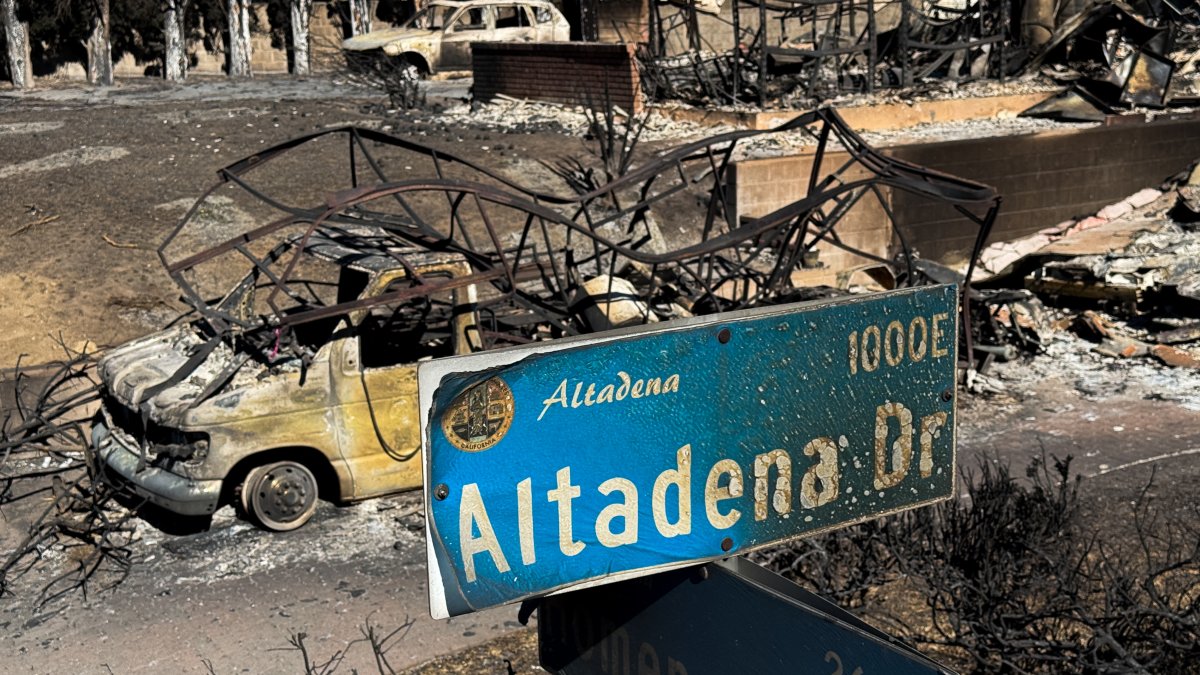
California authorities are investigating whether race, age or disability played a role in delays in emergency notifications or evacuations in Altadena, more than a year after the wildfire killed 19 people.
Eighteen of the 19 people perished in the January 2025 fire were from West Altadena, a historically Black neighborhood. The average of the age of the fire victims was 77 years old, according to the California Attorney General’s Office.
Attorney General Rob Bonta said Thursday that there have been questions and concerns from Altadena community members whether the Los Angeles County Fire Department violated civil rights by discriminating against Black neighbors and those with disabilities.
“Did unlawful race-, disability- or age-based discrimination in the emergency response result in a delayed evacuation notification that disproportionately impacted West Altadena residents? That’s the question,” Bonta said, admitting his investigators are still not certain whether the probe will come up with clear answers.
While incorporating analyses from reports from other institutions, state investigators will include input and first-hand accounts from the community, Bonta added.
A UCLA study from last year highlighted the disparities that nearly half of Black households in Altadena were destroyed or were majorly damaged, compared to 37% of non-Black families.
A grassroots organized called Altadena for Accountability has also argued that emergency personnel failed to respond quickly, including door-knocks and timely in-person evacuation effort.
“Amidst increasing climate change catastrophes, this investigation is expected to enforce a high standard of equity in the dispensation of emergency services during a disaster for all communities regardless of race, disability, or socioeconomic status,” according to the group.
NBC Los Angeles reached out to the LA County Fire Department for a response.
County Supervisor Kathryn Barger, who represents the Altadena area, welcomed the investigation, saying if there were indeed disparities, they must be addressed.
“The concerns raised by residents of West Altadena deserve to be taken seriously and examined thoroughly,” Barger said.
The county Board of Supervisors last year ordered an independent review of the fire response. The resulting report, released in September by the McChrystal Group pointed to a series of outdated policies, weaknesses and systemic vulnerabilities that hampered emergency notifications and evacuation orders during the early onset of the Eaton and Palisades fires.
The consultant group found “no single point of failure” relating to lapses in public alerts, warnings and notifications, referring instead to widespread weaknesses in the overall system.
“Beyond alerting and evacuation operations, this review identified systemic issues that impacted the alert and evacuation response,” the report stated. “Outdated and inconsistent policies, protocols and standard operating
procedures created ambiguity around evacuation authority and responsibilities. In many cases, decision-making roles were unclear, and pre-incident public messaging responsibilities lacked standardization across agencies. These gaps contributed to nonuniform preparedness strategies across jurisdictions and slowed coordinated efforts.”
In response to the report, Sheriff Robert Luna said last year: “The Palisades and Eaton Fires were the worst natural disaster in our county’s history, and it tested us and our community in every possible way. This After-
Action Report is not only a reflection about the past, but it’s a tool for building a stronger emergency response. It highlights what went well and identifies where we can improve, with a focus on enhanced cross training and better technology to strengthen our preparedness. I’m deeply proud of how our deputy sheriffs performed with professionalism and dedication under dangerous and extraordinary circumstances, which exemplifies the strength and resilience of our department, and how we serve our communities.”
City News Service contributed to this report.