
Federal judge rules against LA in homeless property seizure lawsuit, finding city fabricated records
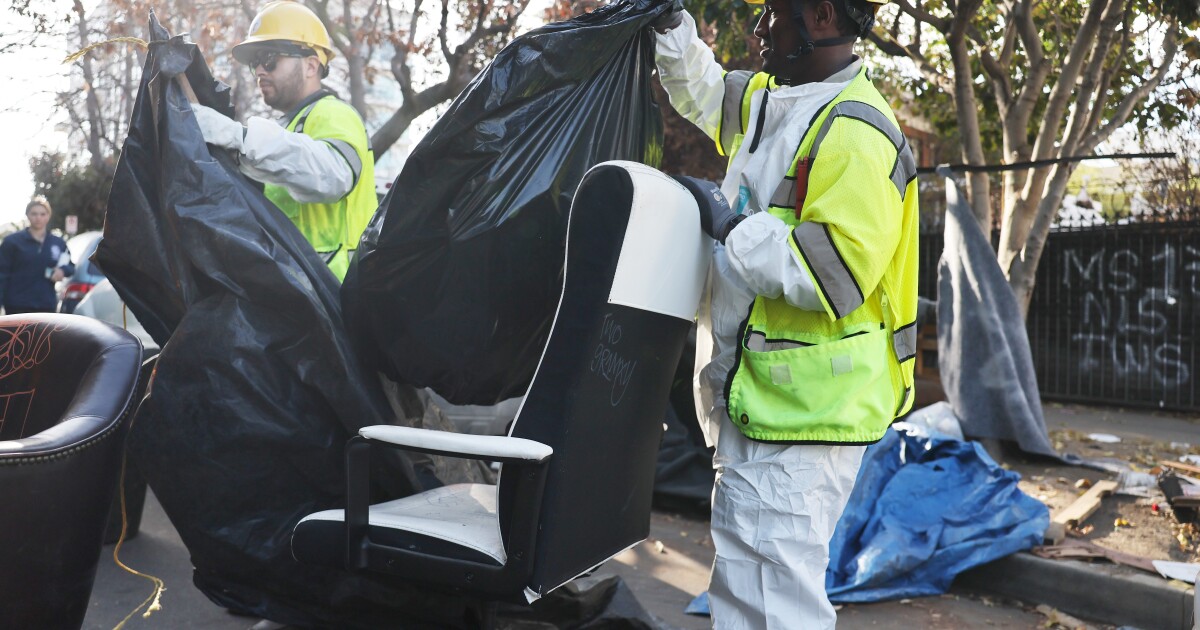
A federal judge this week ruled against the city of Los Angeles in a long-running lawsuit over the city’s practice of destroying unhoused people’s property during encampment sweeps.
A federal judge this week ruled against the city of Los Angeles in a long-running lawsuit over the city’s practice of destroying unhoused people’s property during encampment sweeps.
In a rare default judgment, U.S. District Judge Dale S. Fischer found the city willfully fabricated and altered key evidence, ending the case in favor of the plaintiffs without trial. It’s a landmark legal win for six unhoused residents and advocacy organization Ktown For All, who filed the lawsuit in 2019, challenging whether L.A. Sanitation employees violated unhoused residents’ constitutional rights when seizing and discarding belongings during sweeps.
L.A. city code allows employees to remove and impound unattended, abandoned or hazardous items that are in the public right-of-way. In the lawsuit, plaintiffs alleged city sanitation workers arbitrarily seize and destroy property without objective standards or proper notice. With the default judgement, the court accepted those allegations as true.
City’s misconduct
The judge found that L.A. city employees altered reports or otherwise tainted evidence in more than 90% of the cleanup cases examined by the court in order to justify the city’s legal defenses of unhoused residents’ belongings.
Keep up with LAist.
If you’re enjoying this article, you’ll love our daily newsletter, The LA Report. Each weekday, catch up on the 5 most pressing stories to start your morning in 3 minutes or less.
According to the judgement, city employees systematically doctored or falsified records about encampment cleanups, including Health Hazard Assessment Reports, after the lawsuit began. The judge affirmed that city employees rewrote reports to change the reason for seizures, including adding details about “biohazards” and describing property as “surrendered” or “dangerous.”
The L.A. City Attorney’s office hid the misconduct from the court and violated multiple court orders over five years, the judge said.
“The court cannot proceed to trial with confidence that plaintiffs have had access to the true facts,” Fischer wrote.
“Where a party so damages the integrity of the discovery process that there can never be assurance of proceeding on the true facts, a case-dispositive sanction may be appropriate,” she continued, quoting another legal ruling.
Reaction from the attorneys
Shayla Myers with the Legal Aid Foundation of Los Angeles, lead attorney for the plaintiffs, said the city’s fabrication and alteration of documents made a fair trial impossible.
“The fabrication of cleanup reports in this case is itself an indictment of the city’s practices,” Myers said. “At these sweeps, the city provides unhoused people absolutely no recourse.”
L.A. city officials did not immediately respond to request for comment on the court’s decision.
What’s next?
The plaintiffs are seeking damages and a permanent injunction blocking the city from seizing and discarding personal property during encampment cleanups. They have until March 27 to file a brief in support of a proposed permanent injunction.