
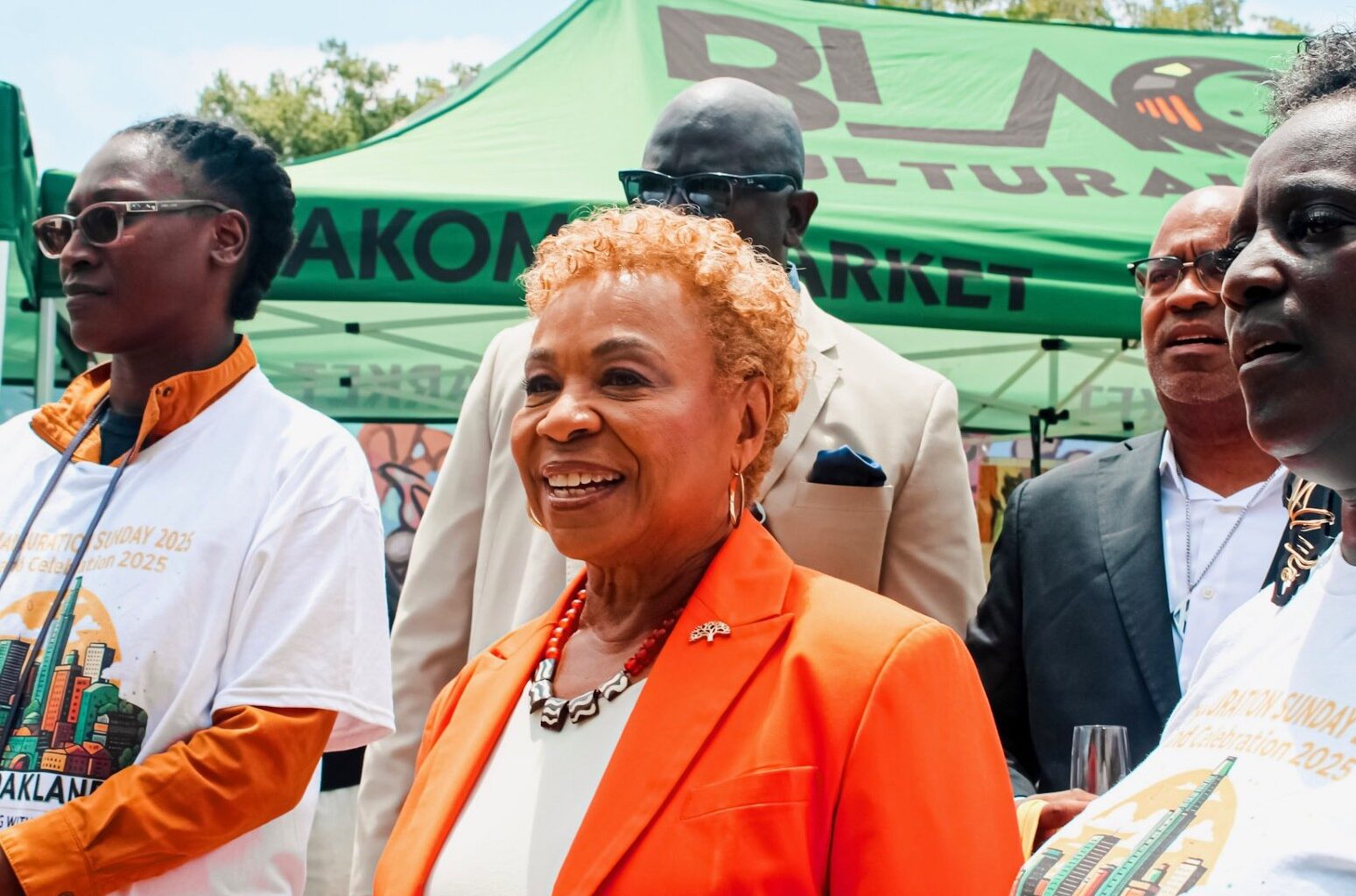
Shortly after being elected, Barbara Lee unveiled a 10-point plan for getting Oakland back on track. Point number three was to establish public-private partnerships to “improve Oakland’s economy and increase public safety,” and point number seven was to “generate entrepreneurial and philanthropic investment in Oakland.”
So far, Lee has been delivering on these promises.
Since being sworn in last May, Lee has helped raise millions of dollars from private companies and foundations to support city services, programs, and civic initiatives.
The most recent and significant example was announced a few weeks ago when Lee revealed that PG&E and Kaiser Permanente, the city’s two heavyweight corporate citizens, had agreed to pay $900,000 to resurrect the city’s police cadet program. Executives from the two companies praised Lee’s vision of public safety.
“We’re proud to stand with Oakland Mayor Lee on this,” David Leach, senior vice president and chief security officer at PG&E, said in a statement.
PG&E and other institutional stakeholders have backed Lee with cash ever since she took office. Last summer, a committee putting on an inaugural celebration for Lee raised $290,000 from donors. Kaiser, PG&E, and Blue Shield all gave money.
Behind the scenes, Lee has leaned heavily on a handful of partners to help her fund and manage various civic projects. Last year, Lee announced the creation of the “One Oakland Fund,” which is run through the East Bay Community Foundation. According to a press release, the fund was launched with over 30 philanthropic partners and generated $650,000 in seed funding for “high priority programs and innovation.”
Lee also worked with the Kapor Foundation to secure $2.14 million for science and tech education and to lay “the groundwork for responsible AI practices that center equity and transparency.”
“The mayor knew coming in that she really wanted to partner with philanthropy, with the private sector, with community partners, on the priorities she knew needed to happen for the city,” said Miya Saika Chen, Lee’s chief of staff. She added that the mayor was also aware these partnerships could help take pressure off Oakland’s ongoing budget problems.
In some cases, Lee or her representatives are personally asking organizations to contribute to various causes or groups. Last year, the mayor reported 15 occasions in which she successfully persuaded philanthropic groups to give money to different organizations. Called “behested payments,” these 15 contributions totaled $905,000. About one-third of this was used to pay for staff positions in her office, including a director of innovation and a director of data and technology transformation.
Much of the remaining money has gone to outside organizations for the following:
$54,000 to the Brady Center for regional gun violence prevention events.
$100,000 to the Stand Together Bay Area Fund, a program established by the San Francisco Foundation to support local nonprofits that help immigrant families.
$50,000 to fund a youth employment program in Oakland.
$251,000 for arts and culture.
$50,000 to support a charter reform initiative.
$60,000 toward “government accountability, civic engagement, and participation.”
Most of the money Lee raised through behested payments has gone to the East Bay Community Foundation, which is managing the One Oakland Fund.
Behested payments, in which public officials solicit funds from individuals or organizations on behalf of third parties, were a favorite tool of former mayor Libby Schaaf. Between 2017 and 2022, Schaaf raised a staggering $43.9 million from outside organizations, most of which went toward education and youth initiatives in Oakland.
Sheng Thao did not report any behested payments during her two years in office, although big companies interested in backing public safety initiatives did provide some support to the city. In March 2024, the CEOs of Oakland’s four largest employers — Blue Shield, Clorox, Kaiser, and PG&E — announced they were pouring $10 million into a program to improve public safety downtown.
According to Saika Chen, a big thing potential funding partners are looking for is the existence of a comprehensive plan in the mayor’s office for tackling Oakland’s most pernicious issues: public safety, homelessness, illegal dumping, and economic development.
“It makes a big difference when they are able to have trust in the leadership of a city to commit to get a job done,” she said.
The organizations raising money for the mayor and her causes were tight-lipped about their relationship with Lee. Those who responded to The Oaklandside’s inquiries said they have always maintained strong relationships with previous city leaders.
“Our interactions with the current mayor have been constructive and focused on shared goals, just as they have been with previous city leaders,” a spokesperson for PG&E said in a statement.
Autumn McDonald, East Bay Community Foundation’s vice president of community investments and partnerships, told The Oaklandside that the nonprofit has a “long track record partnering with the City of Oakland, working with multiple mayors over nearly 100 years.” Last year, EBCF also partnered with the city to raise funds for a summer food program and allocated money for arts and culture programming, she said.
A big open question is whether Lee will provide the continuity of leadership to keep private dollars flowing. The mayor has raised funds for a reelection committee but made no public announcement about her plans to run again.
“*” indicates required fields