
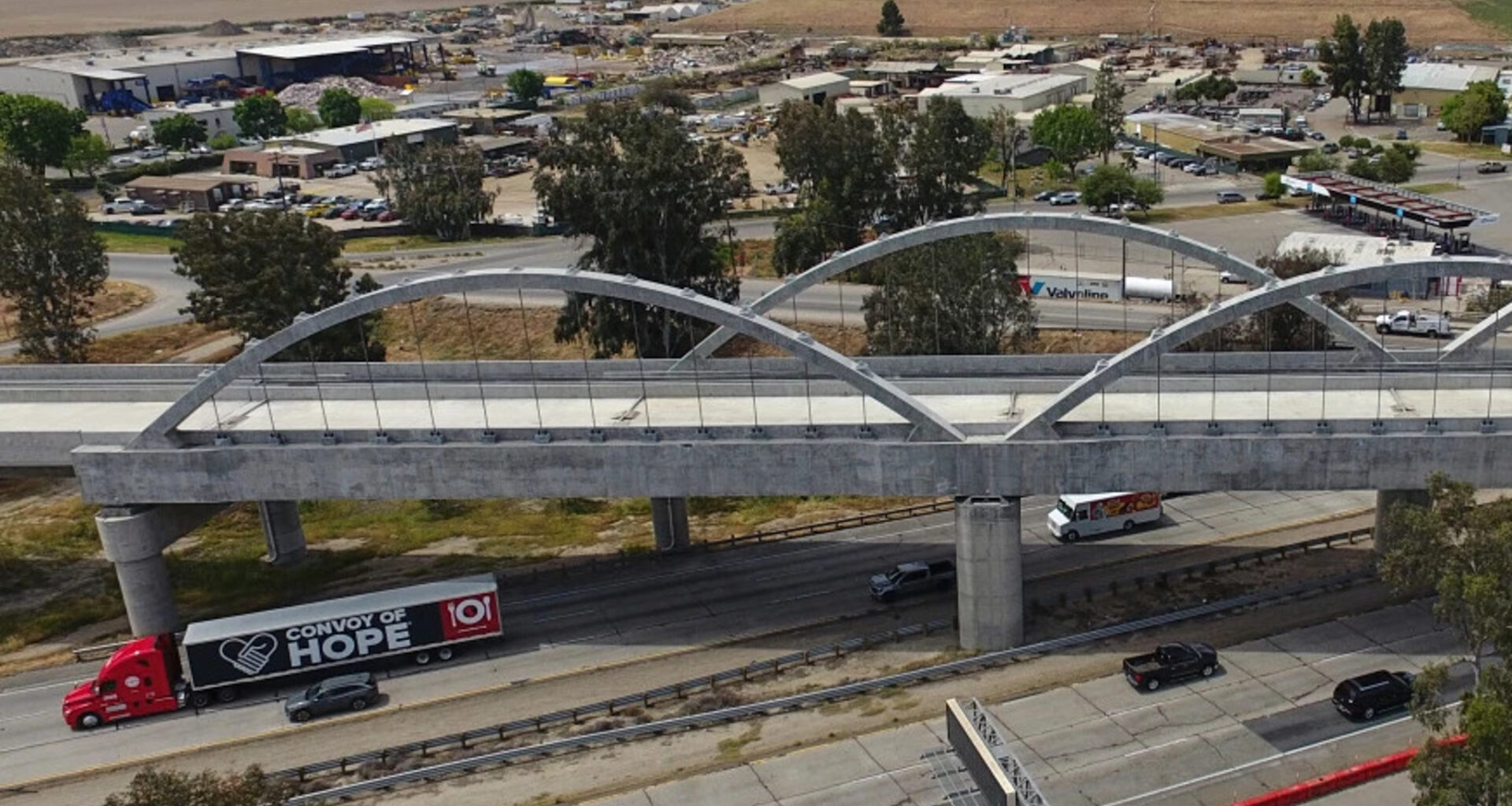
A bill to shield information about California’s embattled bullet train is adding new political scrutiny to the rail project as the state grapples with a loss of federal funding.
Democratic Assemblymember Lori Wilson said her legislation would clarify what records the state’s Office of Inspector General can access from the High-Speed Rail Authority.
But critics argue the bill’s language is too broad and could allow more information to be withheld from the public.
That’s why Wilson said she plans on changing it.
What the bill would do
Wilson said the inspector general currently lacks access to certain documents because it and the rail authority operate under different confidentiality rules.
“That means the High Speed Rail Authority could say, ‘I can’t share this information with you because it could result in information or physical security, or exposing how we detect fraud, or giving information about pending litigation before it’s final,’” Wilson explained. “We want the Office of Inspector General to be able to see all of that data and not have anything withheld from them.”
Wilson said her intention was to increase transparency, not limit it.
“People have noted that it [the legislation] is more broad than it should [be] because it uses language ‘included to’ instead of ‘limited to,’” she said. “Everything we do goes through [legislative] counsel, so I’m sure they’ll refine it even better to match my intent.”
Wilson said she will narrow the language and require the inspector general to publicly explain why any information is deemed confidential.
Critics question timing
The debate over shielding information comes as the rail project saw its most expensive construction change order yet at $537 million for a Central Valley segment.
Republican Congressman Kevin Kiley — who successfully pushed to cut off future federal funding for the project — argued that existing exemptions under the California Public Records Act already protect sensitive information.
“So why is it that all of a sudden for this specific agency, this specific project, we need to have brand new exceptions to have an even broader veil of secrecy at the very moment when you have heightened scrutiny as to where all of these billions of dollars have been going to,” he said. “It just makes absolutely no sense.”
But Wilson said her bill would not shield information on unexpected costs or delays.
“Cost overruns absolutely they’re going to report on because that’s an accountability measure,” Wilson said, referring to the inspector general.
A spokesperson for the High-Speed Rail Authority said in a statement that the bill would not change its obligations under state transparency laws.
Republican State Senator Tony Strickland, vice chair of the Senate Transportation Committee, said he’s not confident the changes Wilson plans to make will do anything to improve transparency.
“I’m dumbfounded that anybody would try to pass a bill to make the high-speed rail, with its history, less transparent and have less accountability because it’s going to go down in history as one of the most wasteful and mismanaged projects in world history,” he said.
The project’s estimated cost has climbed from $33 billion when voters approved it in 2008 to more than $120 billion today.
Governor Gavin Newsom — who championed the extension of a $1 billion dollar annual commitment to the bullet train project through 2045 — said during a press conference earlier this week no infrastructure project in the country has been more heavily examined.
“That has been scrutinized and audited and kicked around for many, many decades, not just the last few years and I imagine will continue to be,” he said.
Newsom refused to answer questions regarding the timing of this bill’s introduction following the half-billion-dollar change order.
Federal support shrinks
California recently dropped a lawsuit seeking to reclaim $4 billion in federal grants. The federal government also rescinded another $1 billion in previously approved money and cut off future funding.
UC Berkeley transportation expert Ethan Elkind said high-speed rail has long struggled to win federal backing in a country that prioritizes highway spending.
“It’s an area where it becomes unfortunate for a state like California that is generating a lot of tax revenue for the United States, but it’s transportation needs are not really reflected in the federal priorities,” Elkind said.
But Democratic leaders say federal support could return under a future Congress. In the meantime, the rail authority is pitching private investors, using the state’s $1 billion annual commitment through 2045 as leverage.
CapRadio provides a trusted source of news because of you. As a nonprofit organization, donations from people like you sustain the journalism that allows us to discover stories that are important to our audience. If you believe in what we do and support our mission, please donate today.