

Super Bowl success usually brings glory and payday — but this time there was a strange twist for Seahawks quarterback Sam Darnold. After leading the Seattle Seahawks to a 29-13 victory over the New England Patriots in Super Bowl LX, Darnold’s financial “win” didn’t look so golden on paper — at least in the short term. Former NFL QB Boomer Esiason addressed the issue and believes that California shouldn’t host Super Bowls in the future. Here is why:
What Darnold Made for the Win
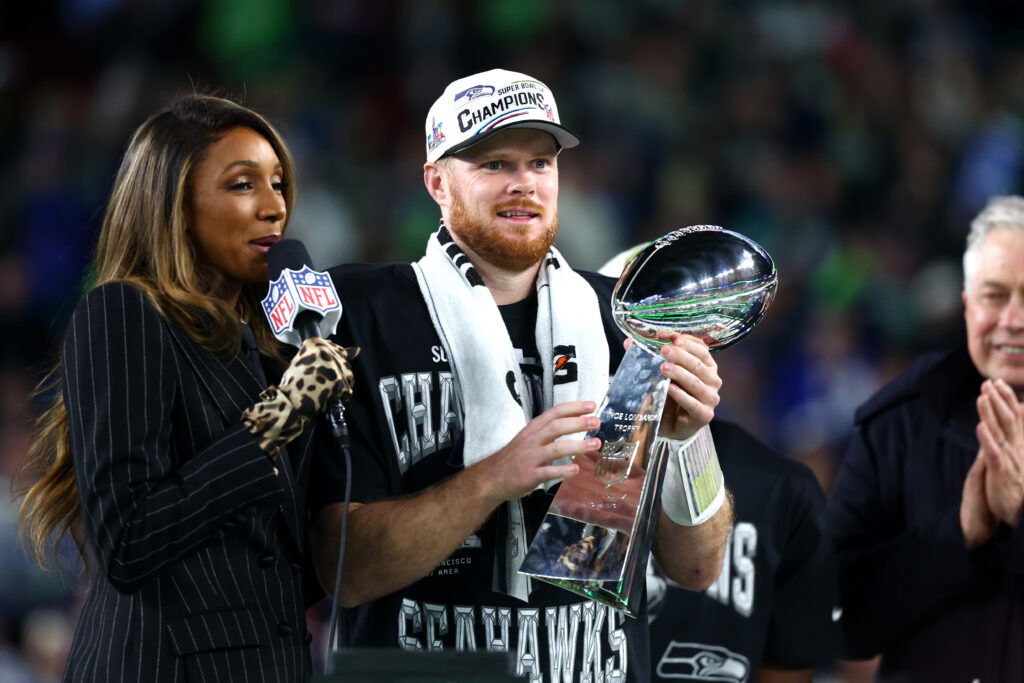 Feb 8, 2026; Santa Clara, CA, USA; Seattle Seahawks quarterback Sam Darnold (14) celebrates with the Vince Lombardi trophy on the podium after defeating the New England Patriots in Super Bowl LX at Levi’s Stadium. Mandatory Credit: Mark J. Rebilas-Imagn Images
Every player on a Super Bowl–winning team receives a bonus from the NFL, and for Super Bowl LX, that amount was $178,000 per player. This is separate from a player’s regular salary or any incentives already earned during the season.
In addition to that league bonus, Darnold has a lucrative contract with the Seahawks — a three-year, $100.5 million deal signed in March 2025. He’s also earned millions in bonuses and salary throughout the season.
MORE: NBA Power Rankings ahead of 2026 All-Star Break
The California “Jock Tax” Surprise
But because Super Bowl LX was hosted in Santa Clara, California, that’s where the financial twist comes in. California imposes what’s commonly called a “jock tax” — a state income tax on out-of-state athletes whose workdays take place in the state. That includes practices, media events, and game day itself.
Because Darnold and the Seahawks were in California for about eight workdays leading up to the game, the state calculated a portion of his income as taxable. And because California’s income tax rates are among the highest in the nation, the resulting bill was steep.
How He Lost Money
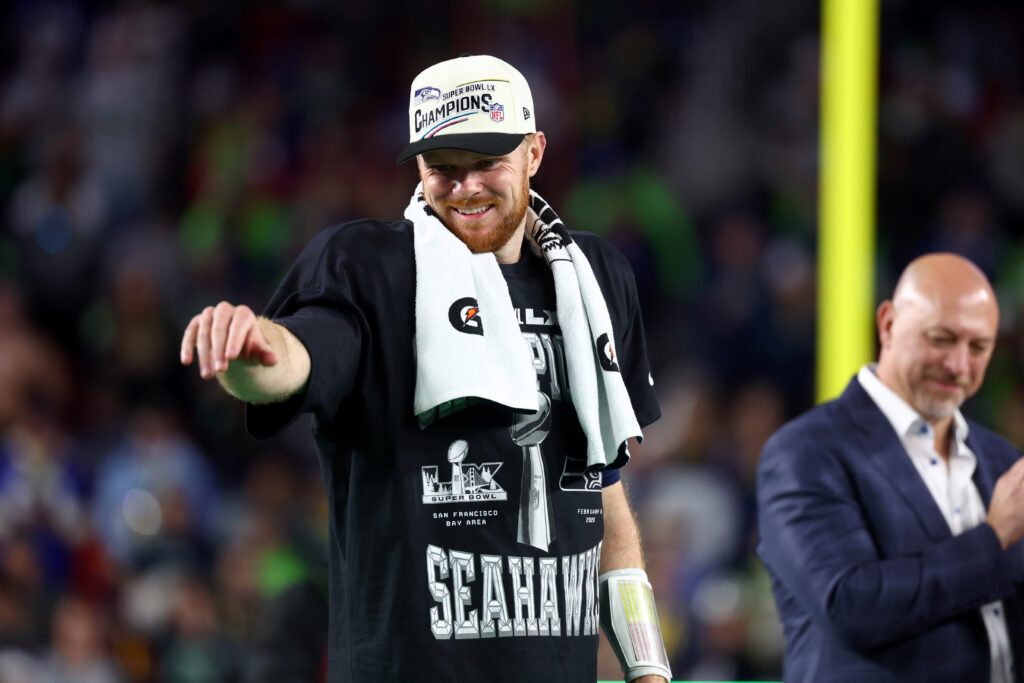 Seattle Seahawks quarterback Sam Darnold (14) celebrates on the podium after defeating the New England Patriots in Super Bowl LX at Levi’s Stadium. Mandatory Credit: Mark J. Rebilas-Imagn Images
According to multiple reports:
Super Bowl bonus: ~$178,000
Estimated California tax bill: ~$249,000
That means, on the specific bonus from the Super Bowl alone, Darnold ended up about $71,000 in the red — paying more in taxes than he earned from the game bonus itself.
Why It Happens
Professional athletes are taxed not only in their home state but also in any state where they play “duty days.” In years when they have multiple away games in high-tax states like California, that tax bill can add up fast. Super Bowl week magnifies that because of the extra practices, media obligations, and events that count as taxable workdays.
Notably, this doesn’t mean Darnold lost money on the entire season — he still made a huge amount from his contract and other bonuses. But when isolating the Super Bowl bonus itself, the tax hit was larger than what the league paid out for that game.
— Enjoy free coverage of the top news & trending stories on The Big Lead —
OLYMPICS: Norway skier goes viral after displaying insane Winter Olympics speed
SUPER BOWL: Ranking the last 10 NFL Super Bowl champions
MLB: Texas Rangers’ Nolan Ryan jersey giveaway is a bloody mess
MEDIA: Photos of potential suspect in Nancy Guthrie disappearance released by FBI
VIRAL: Norwegian Olympics star makes stunning girlfriend admission after winning bronze medal