
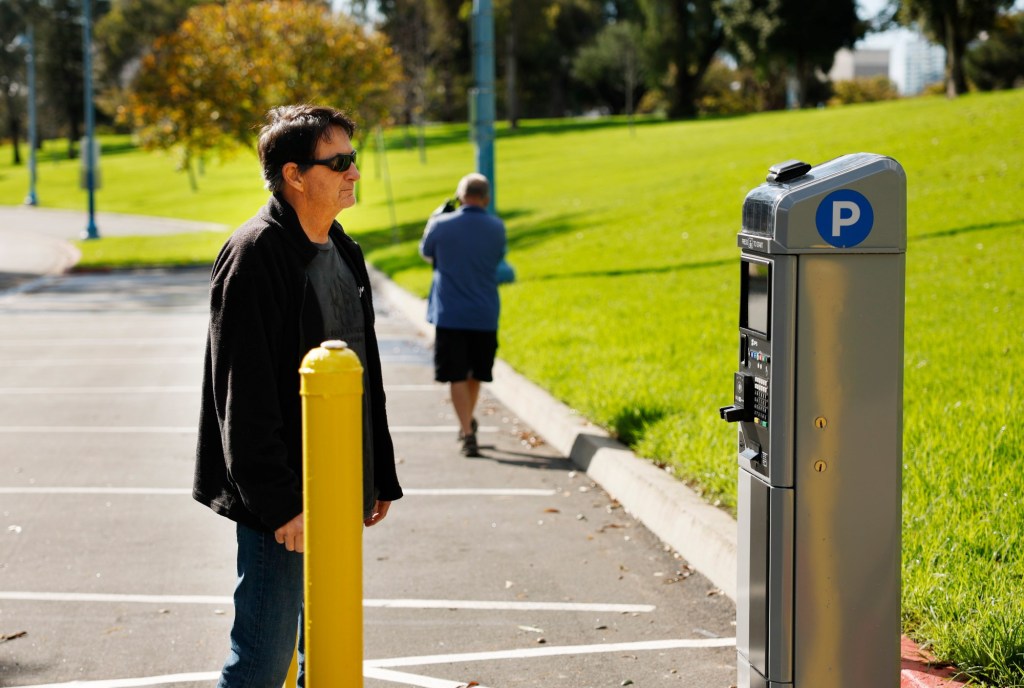
After eight years serving on the San Diego City Council, I learned one lesson above all others. When a policy will affect residents, businesses and community institutions across the entire city and county, you slow down, ask tough questions and demand real analysis. You do not rely on optimistic assumptions, ignore warning signs or rush a major change through just to plug a budget hole.
But that is exactly what happened with paid parking at Balboa Park.
What I’ve learned is disturbing. City staff based their projections on assumptions about parking demand, occupancy rates and daily fees. But there was no holistic independent economic impact study. There was no modeling of how higher costs might reduce park visits. There was no serious analysis of how museums, restaurants and vendors inside the park might be affected. For example, businesses like The Prado restaurant were never approached about how the fees might impact their business.
In other words, the mayor and City Council members looked only at the money going into parking meters, not the money that might disappear everywhere else.
Before the council cast its final votes, the city’s own Independent Budget Analyst raised clear concerns. Its report warned it was difficult to predict how charging for parking would change visitor behavior. It noted the city lacked basic data on how many park users lived outside San Diego, information essential to forecasting the program’s performance. It also warned that pushing drivers into free peripheral lots could create serious problems in surrounding neighborhoods.
These were not minor footnotes. They were major red flags about the core assumptions behind the entire program. But instead of slowing down, asking more questions, or commissioning deeper analysis, the council pushed forward.
The program was approved in September 2025 by six council members — Sean Elo-Rivera, Kent Lee, Joe LaCava, Jennifer Campbell, Marni von Wilpert and Henry Foster — with the promise of roughly $15 million a year in net new parking revenue. Yet despite glaring gaps in the analysis, the proposal was rushed from committee review to implementation on Jan. 5, pushed through over the holidays. Community concerns and the Independent Budget Analyst’s warnings were simply brushed aside.
This was not careful policymaking. It was reactive budgeting, rushing to squeeze money out of residents and visitors because City Hall could not control its spending. And now we are seeing the consequences.
Within the first month of paid parking, museums reported attendance drops of 20% to 50%. Some art vendors say their sales have been cut in half. Restaurants are seeing fewer customers. Volunteers are walking away because some now have to pay just to help. Events and weddings are being cancelled. The Balboa Park Cultural Partnership has estimated losses of $20 million to $30 million a year. So the city did not just hurt the park’s cultural institutions and small businesses. It will not even solve the budget problem it claimed to address. It may have made it worse.
This is what happens when a plan is ill-conceived, rushed and incomplete. Warnings were dismissed. Basic questions went unanswered. The public overwhelmingly opposed it, yet the council forged ahead.
Balboa Park is not just another line item in the city budget. It is the cultural heart of San Diego, meant to be open and accessible to everyone. Charging people just to visit the park breaks that promise and creates a new barrier, especially for older adults, students and residents on low or fixed incomes. Every week this policy remains, the damage grows. Museums lose visitors, vendors lose income, volunteers walk away and many residents decide the trip is no longer worth the cost.
City leaders should not double down on a costly mistake. Good government means making careful, responsible decisions that protect the places people rely on. This was not one of them, but it is not too late to listen to the public and fully repeal paid parking at Balboa Park before the harm becomes permanent.
Zapf is a former San Diego City Council member. She lives in Ocean Beach.