
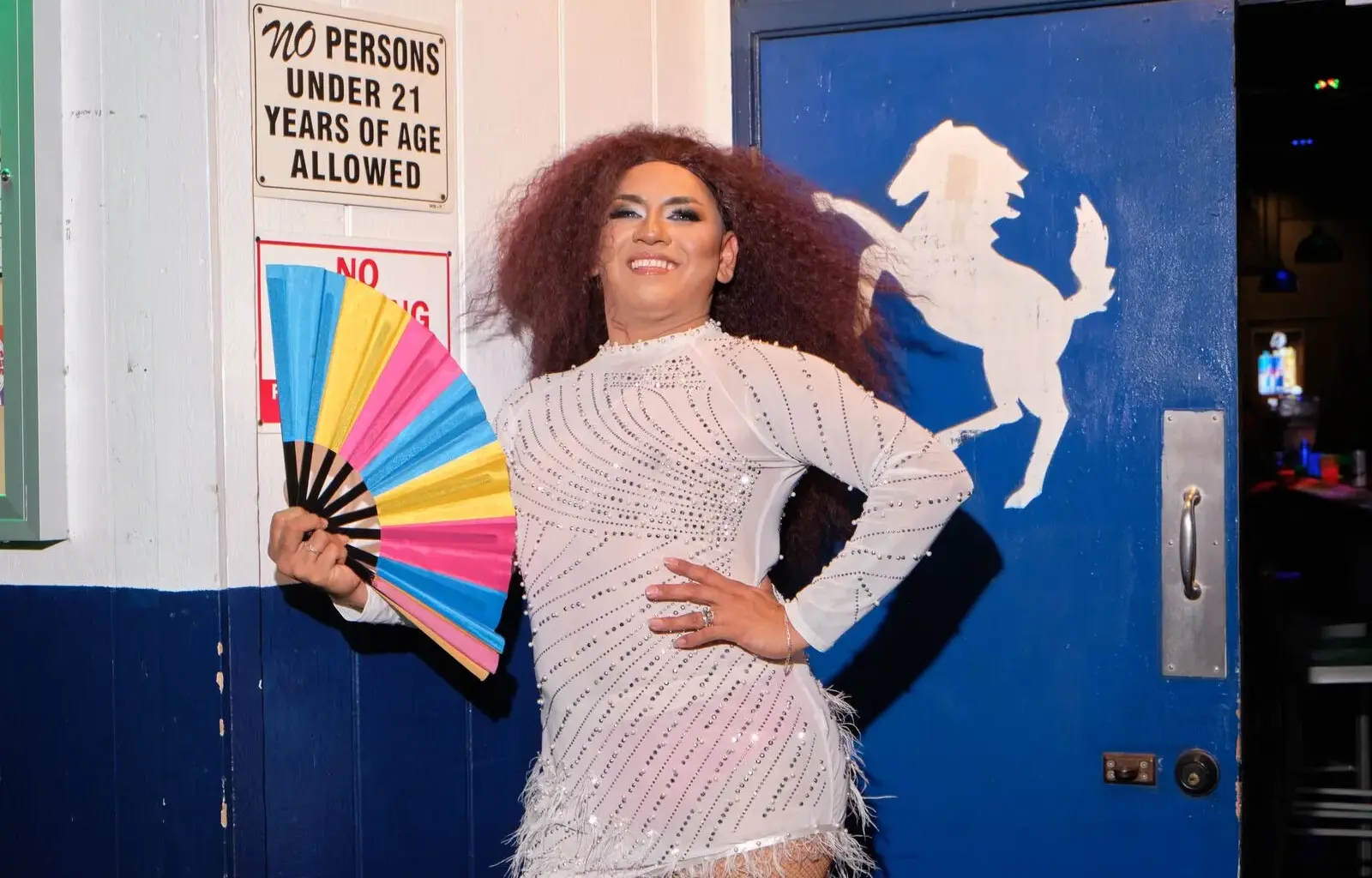
An ICE officer escorted Hilary Rivers through a crowd, forcing her hands behind her back. Rivers wore a green prison uniform, her head hanging down. Then, her big curly red mane started bouncing to a beat. The officer froze as Rivers danced around him, his hands clasped at his waist. She ripped off his vest and her uniform. Dollar bills rained down. The crowd went wild.
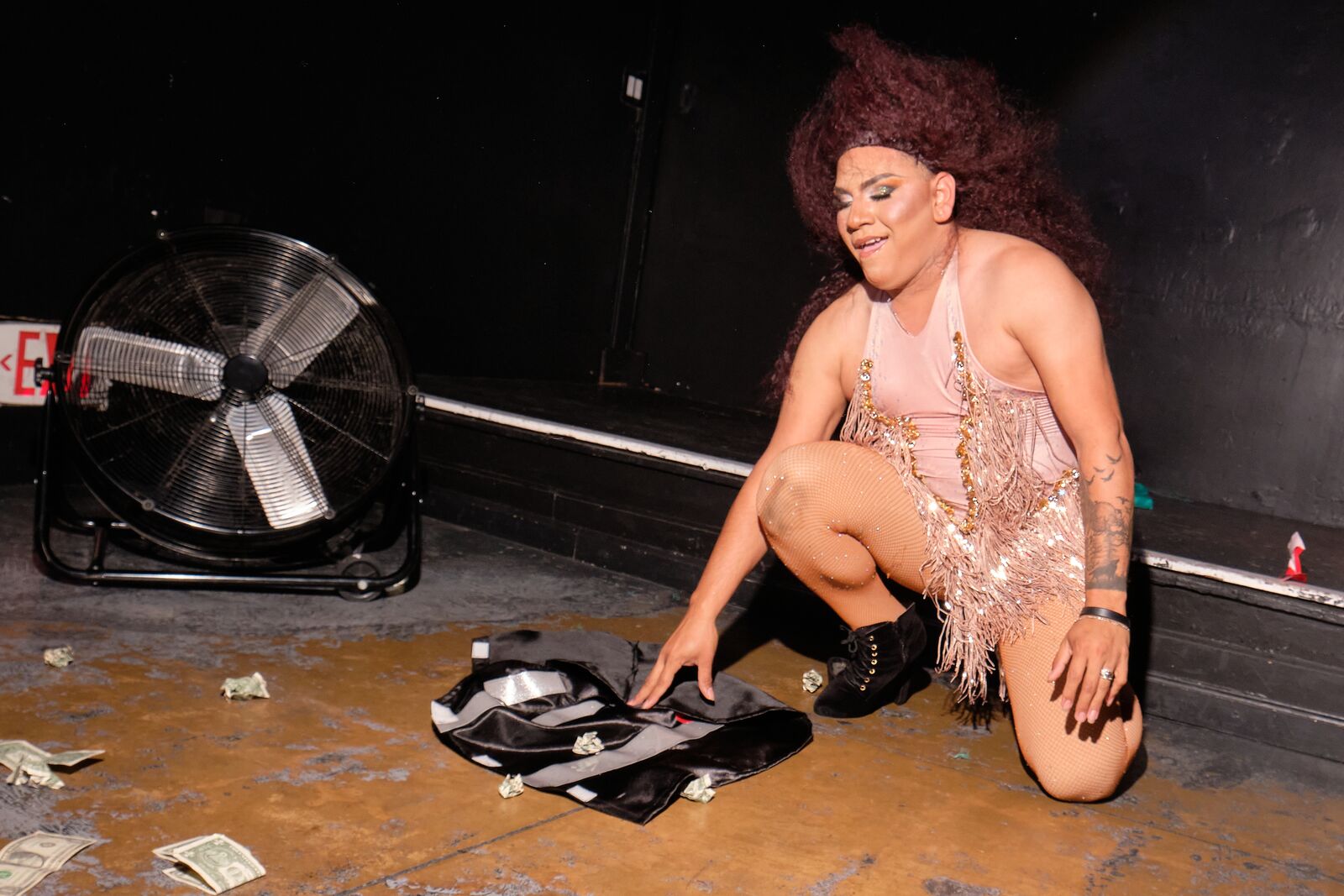 Hilary Rivers slams an “ICE” vest on the ground and dances on top of it, while the crowd at White Horse throws dollar bills on Nov. 8, 2025. This was Rivers’ first drag performance since her release from an ICE detention center. Credit: Jess Lynn Goss for The Oaklandside
It wasn’t a real immigration arrest, of course. It was a powerful drag performance at Oakland’s White Horse Bar in November. But it was also a reimagining of a real-life experience that ended with Rivers spending nearly three months in U.S. Immigration and Customs Enforcement custody last year.
Rivers was arrested during San Francisco’s Pride Weekend in June 2025, one day after competing in the 30th annual Miss and Mr. Safe Latino pageant. On the day of the arrest, Rivers, who was born in El Salvador and raised in Guatemala, was attending a scheduled immigration appointment with her lawyer at San Francisco’s immigration court. After a judge determined they would need more time to review the case, ICE agents approached her and shackled her hands and feet.
After Rivers was taken to the San Francisco ICE Field Office, she was held at the Golden State Annex detention center in McFarland, a small city outside Bakersfield, reported El Tecolote.
“From beginning to end, it was very bad,” Rivers said. “There is a lot of discrimination and homophobia, both by the staff and the people in custody. I got a lot of physical and psychological abuse.” She also disclosed that someone tried to sexually assault her while incarcerated.
Rivers lost her housing, job, and car. She was the primary provider for her family back in Guatemala with earnings from her barber and styling job. Until her detainment, she sent money home weekly. While Rivers was incarcerated, her mother suffered a stress-related medical emergency.
Ultimately, Rivers was granted asylum and released on September 20, 2025.
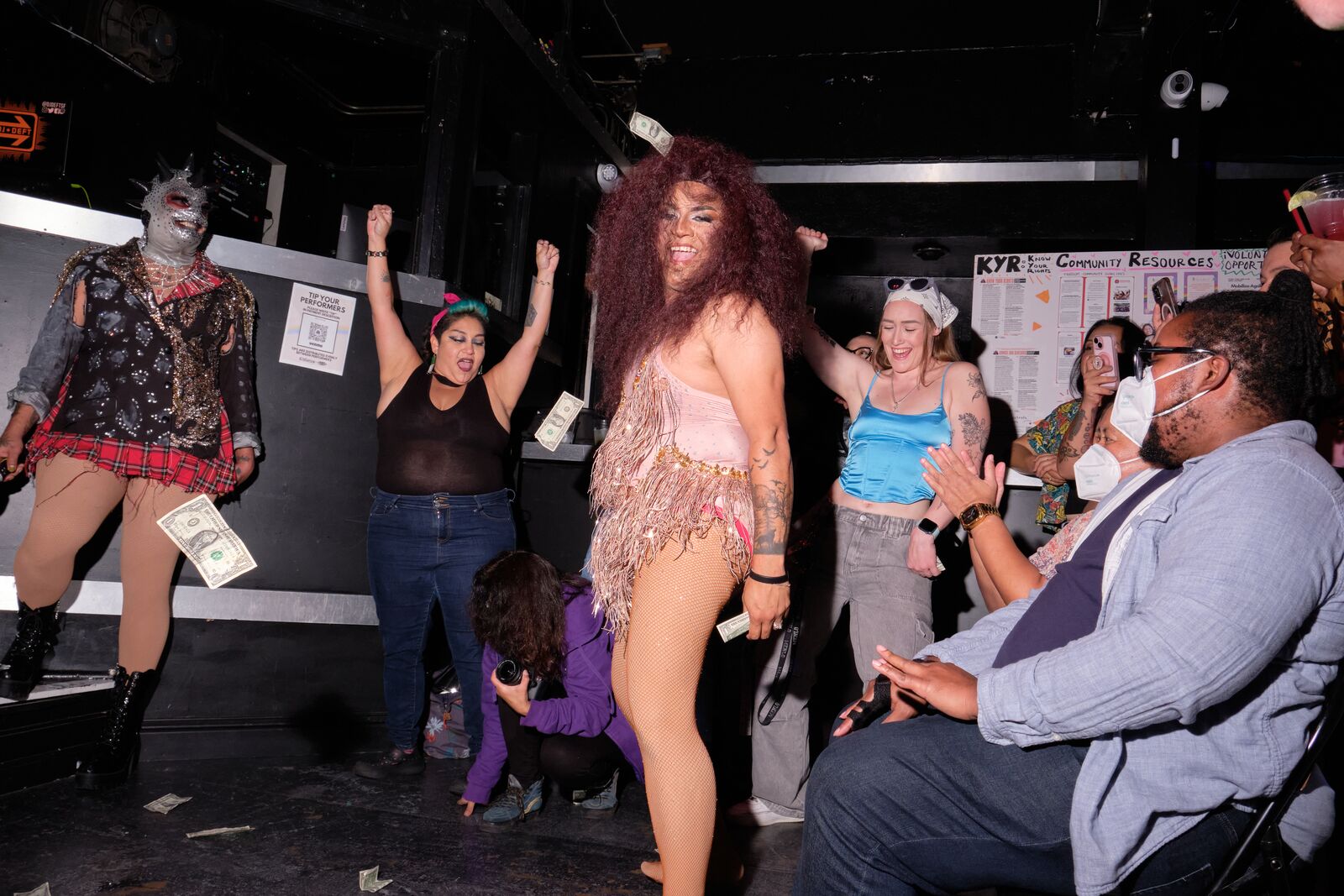 Partygoers at White Horse Bar cheers and throw dollar bills during Hilary Rivers’ first performance since her release from ICE detention facilities. Credit: Jess Lynn Goss
Two days before River’s release, a coalition of immigrants’ rights organizations filed a class-action lawsuit against the Trump administration, challenging its practice of courthouse arrests in Northern California and the prolonged detention of immigrants in unsafe and unlawful conditions at ICE’s San Francisco field office.
Rivers came to the United States from Mexico seeking asylum in 2023, after surviving what she described as an assassination attempt and repeated attacks for being openly gay. She was admitted through the Customs and Border Patrol’s One program, which allowed asylum seekers to legally enter the United States with eligibility to work. Trump canceled the program last year.
Rivers made her debut back to the stage as a drag performer at Oakland’s White Horse Bar in November. The “Caballo Blanco” drag show featured an entirely migrant cast of performers. Bedazzled and defiant, they blended resilience with humor.
“Are we ready to just explode with pure immigrant joy?” emcee and producer La Chucha Rude asked the packed audience at the start of the show. Television screens and a trifold poster provided attendees with information about immigration rights, hotlines, organizations, and volunteer opportunities to support immigrant communities. The show also heavily promoted River’s GoFundMe to raise awareness and money as she reestablishes herself.
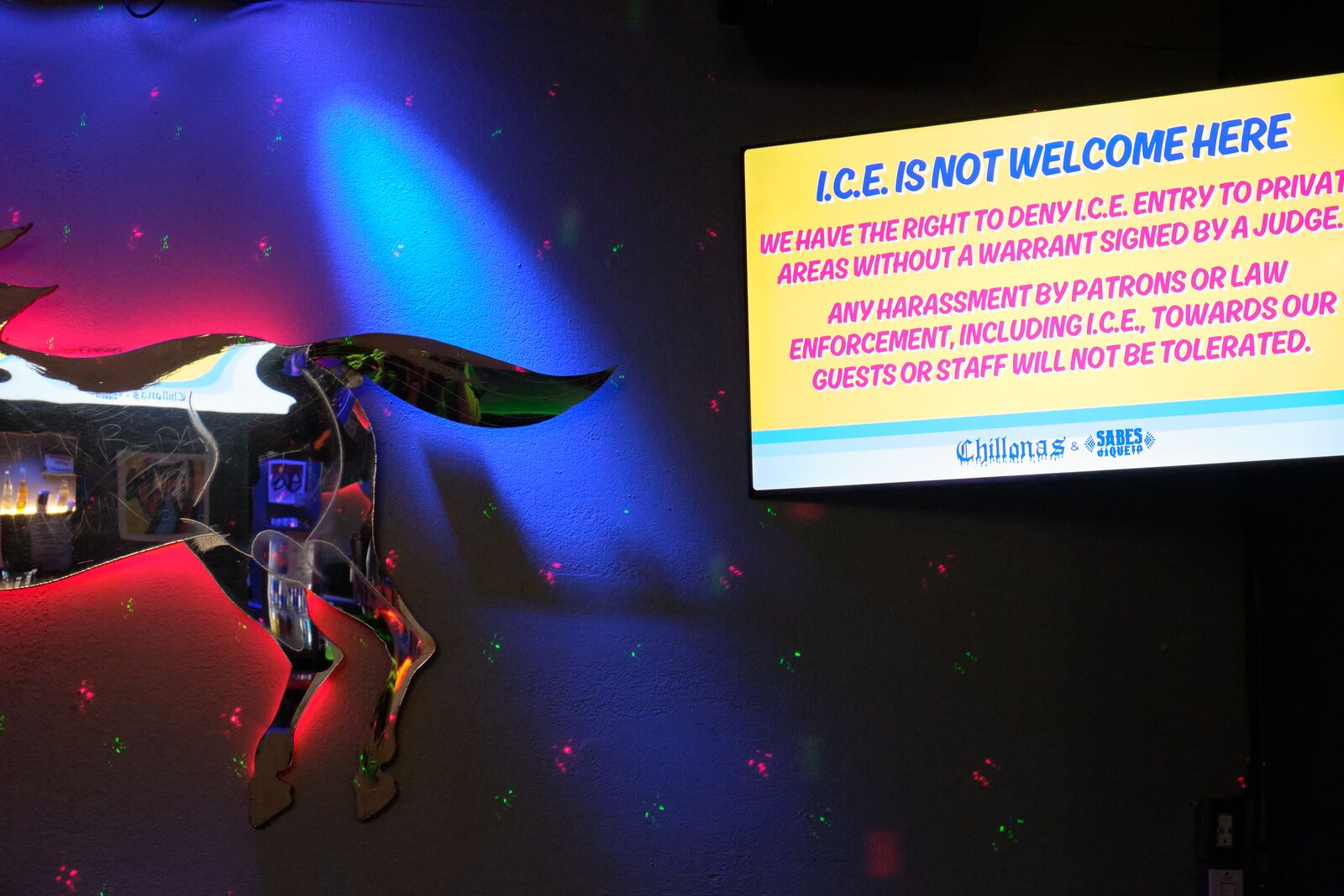 Television screens display “I.C.E. is not welcome here” during the “Caballo Blanco” show Nov. 8, 2025. Credit: Jess Lynn Goss for The Oaklandside
When Rude asked fellow performer Xochitl what type of citizen she was looking to marry for a green card, she replied, “Anyone who will love me.”
Another performer, Tori Tia, poked fun at stereotypes while dressed like Dora the Explorer, splicing news reports of US tariffs and the rising costs of eggs into her routine.
River’s act included sound clips from news coverage of her detention. She beamed on stage and worked the crowd. You would never know her leg was wrapped in bandages, still healing from an injury that got worse without medical attention in the detention center.
Still, Rivers expressed optimism after her first performance since her release.
“I’m so happy, and I can’t contain my joy, especially seeing the support from so many wonderful people who are following my recovery journey,” she said. “It’s one of my favorite places to take refuge from all the bad things that have happened throughout my life. I feel very happy and comfortable the moment I’m on stage.”
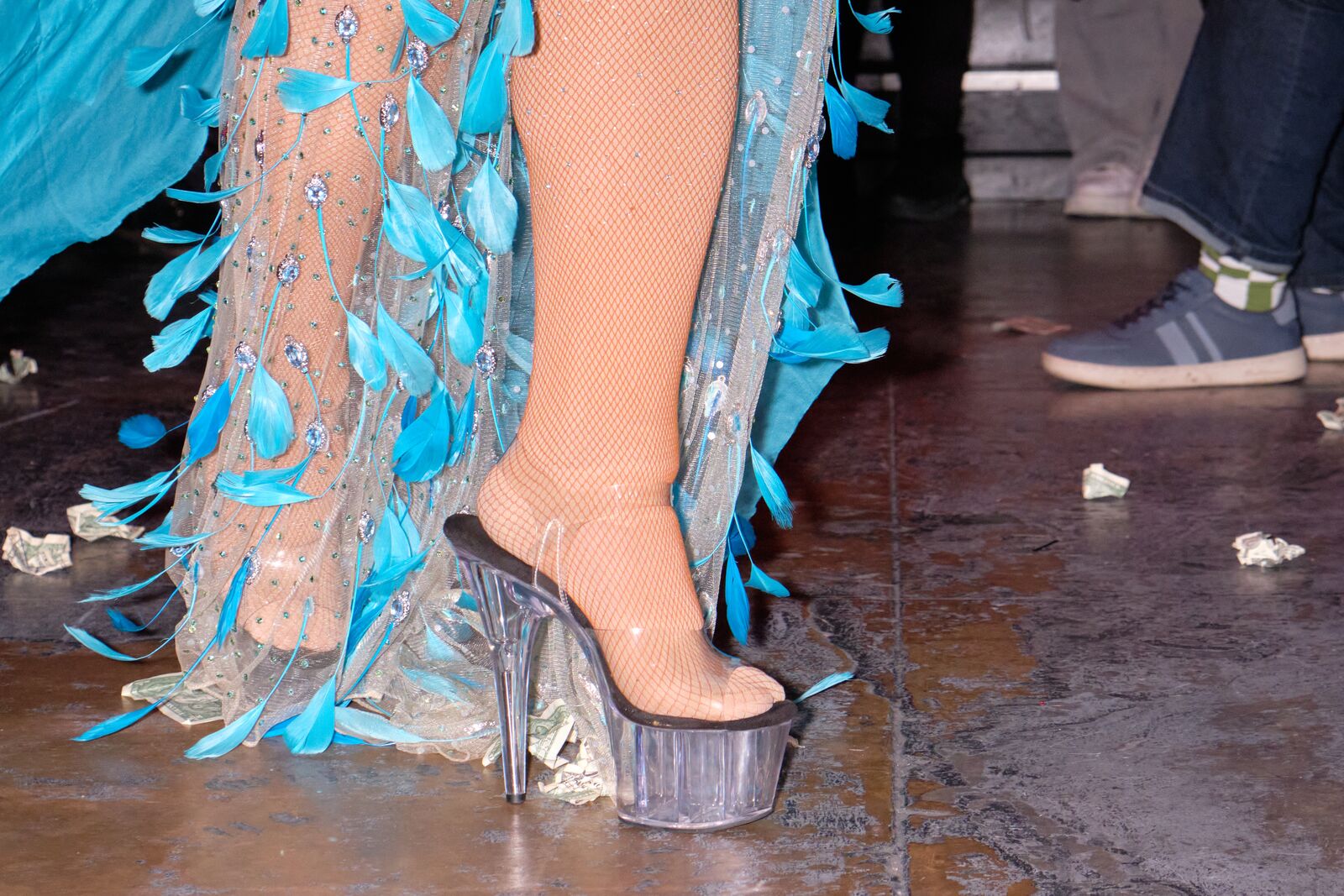 Hilary Rivers performed in platform heels, despite a leg injury that got worse without medical attention in an detention center. Credit: Jess Lynn Goss for The Oaklandside
Drag as protest
Last February, Trump fired several board members of the John F. Kennedy Center for the Performing Arts, the first federally funded performing arts structure and national cultural center of the United States, and appointed himself chairman, renaming the center to The Trump Kennedy Center. In a social media post, he signaled the kinds of changes he wanted to see. “Just last year, the Kennedy Center featured Drag Shows specifically targeting our youth,” he wrote. “THIS WILL STOP.” He also declared: “NO MORE DRAG SHOWS, OR OTHER ANTI-AMERICAN PROPAGANDA — ONLY THE BEST.”
Among the Kennedy Center’s 2,000 annually hosted programs, the event Trump referenced appears to be “Dragtastic Dress-up,” a story time event that welcomed LGBTQ youth under 18, and their parents and guardians, to learn about the history of drag.
In response to Trump’s takeover of the cultural center, several performers canceled their productions, including the touring musical Hamilton and Issa Rae’s sold-out March show. On the opening night of “Les Misérables,” Trump and Melania attended, a group of DC-based drag queens—dressed in full garb—filled seats left vacant by ticketholders who boycotted the event.
Earlier this month, Trump announced the Kennedy Center would close for 2 years starting in July due to construction, but critics argue fundraising dilemmas and artist cancellations may be the reason.
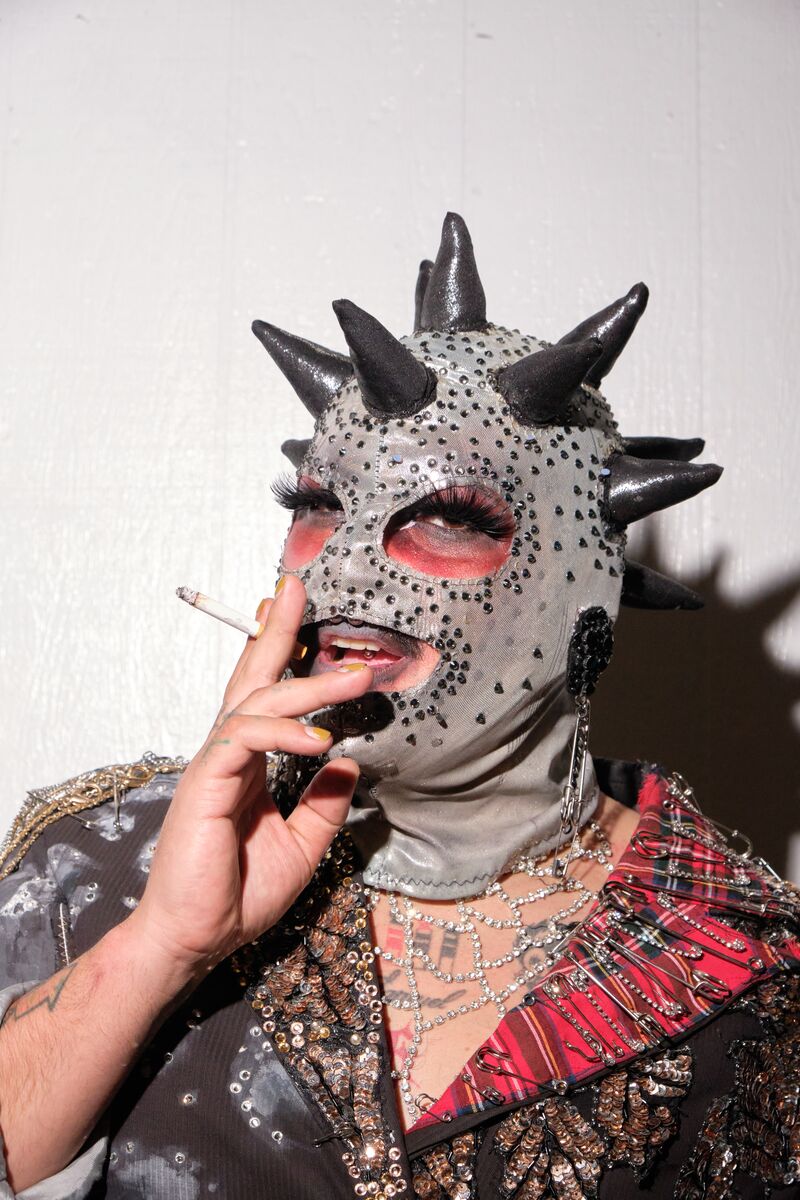 Host of Caballo Blanco, La Chucha Rude, smokes a cigarette outside of White Horse Bar. Credit: Jess Lynn Goss for The Oaklandside
“If anything, the current administration has magnified the importance of drag because they put a magnifying glass on a community that is so strong, creative, beautiful, and conscious,” said Patty Nishimura Dingle, who took ownership of White Horse Bar (previously called White Horse Inn) four years ago, after its previous owner of 20 years retired. A regular at White Horse’s hip-hop dance parties in the 90s, Dingle respected the legacy of the bar and wanted to bring the joy she saw while working at some of the biggest gay clubs and parties in San Francisco to the community in Oakland.
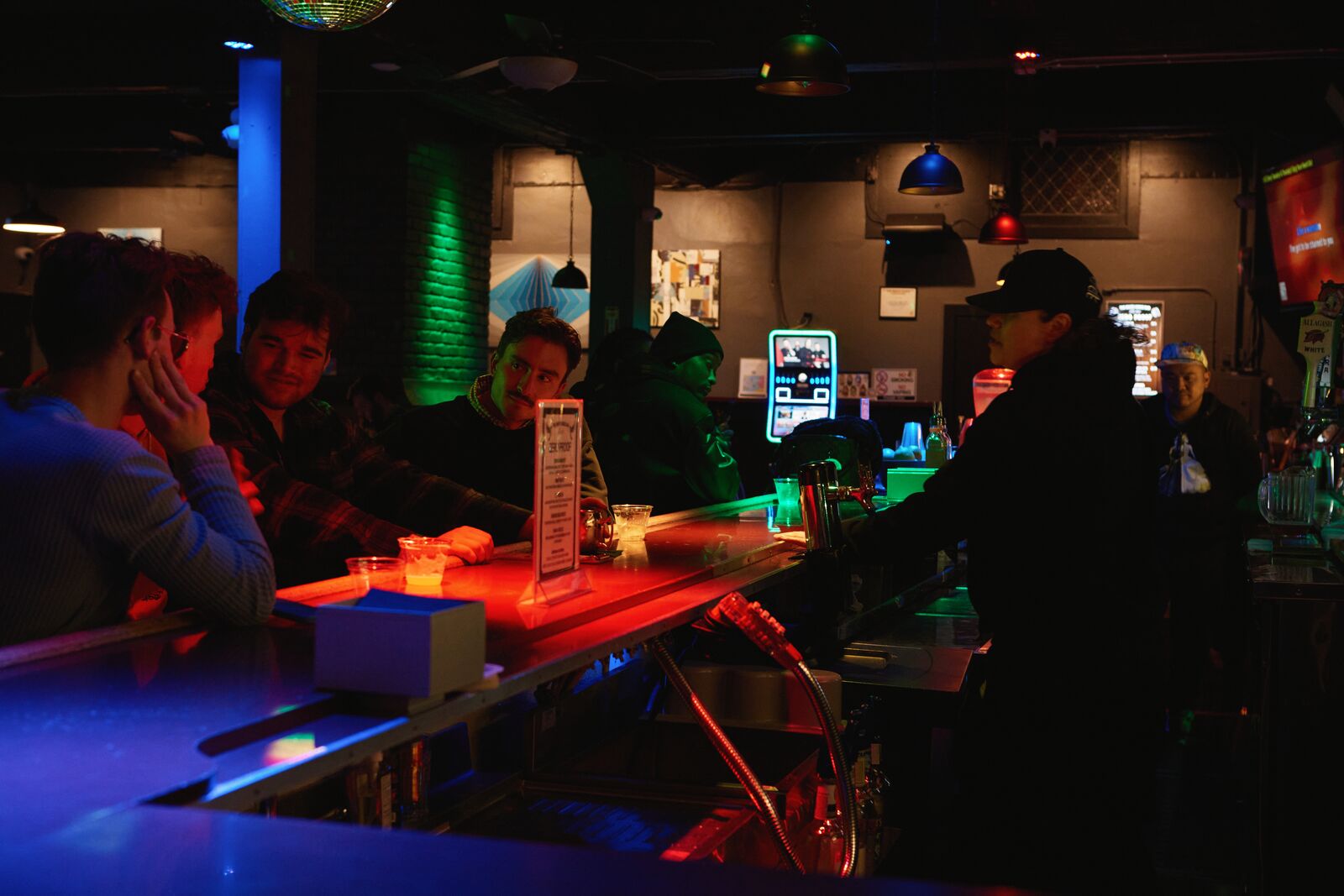 Bartender Amanda Ayala serves patrons at White Horse Bar on Dec. 12, 2025. Credit: Jess Lynn Goss for The Oaklandside
Dingle, the first woman of color to own White Horse, stressed the importance of hiring a diverse staff and partnering with external artists and promoters who bring in diverse groups of people.
“I want every single person who walks through our doors to feel seen and valued,” said Dingle, who is of Black and Japanese descent. “I think visually I am a bit of a mystery to people, but what they do know is that I am a person of color. That in itself can create a bit more trust, particularly among Black and brown folks in the community. Once you get to know people and they realize I really am putting this community first, they vouch for you, and people want to support you.”
The White Horse’s Caballo Blanco show, which takes place every first Friday, exemplifies how Oakland’s LGBTQ+ community, and particularly those of color, continues using drag as protest, celebration, and healing. The show is a collaboration between Chillonas, a queer Latine party in San Francisco that shares resources and protest information, and Sabes Que Show, a Latine/Indigenous collective based in the Bay Area.
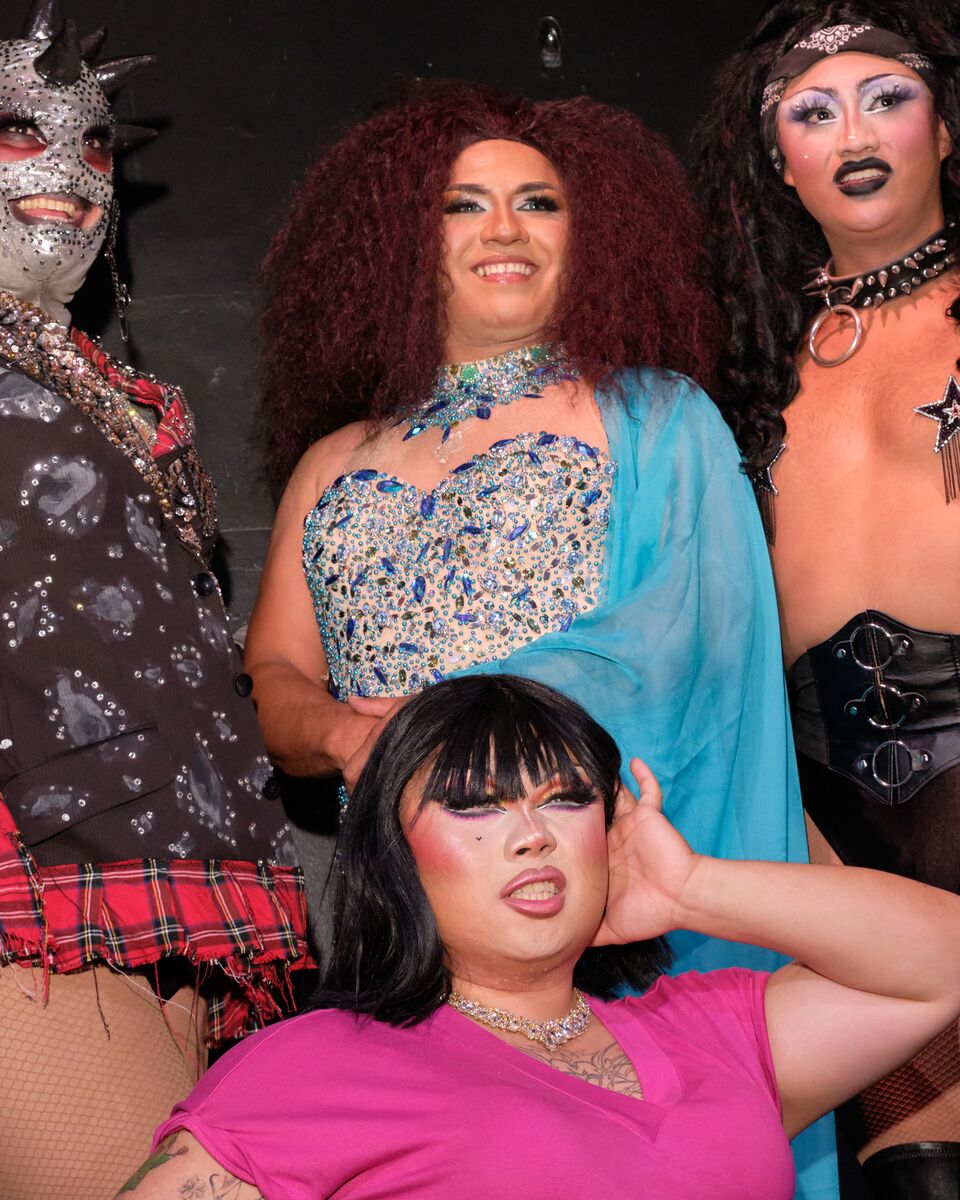 The cast of “Caballo Blanco Against ICE,” clockwise from left: La Chucha Rude, Hilary Rivers, Xochitl and Tori Tia. Credit: Jess Lynn Goss for The Oaklandside
“It’s hard to use our voice right now, especially with the hostile administration, a hostile police force, ICE force, and everything going on,” said Xochitl, a DACA recipient and outspoken immigrant activist, who performed alongside Rivers at White Horse. “But we just gotta say it loud because we can’t let them define us. We have to define who we are because we’re not the evil monsters that they make us out to be. We’re your farm workers, your doctors, your nurses — heck, even your drag queen.”
The Bay Area is celebrated as a vibrant home for queer communities, but even its most iconic landmarks can struggle to stay open. Oakland’s only LGBTQ+ center lost state funding for its addiction services, and 10 employees were laid off due to funding constraints. Club 21 and Club BNB, which catered to Oakland’s queer Latine and Black communities, both closed at the beginning of 2020. After nearly nine years, Port Bar shuttered its doors in 2024. Just last month, the James Beard Award semifinalist queer-owned bar and restaurant Friends and Family, located just a few miles down Telegraph from White Horse, closed.
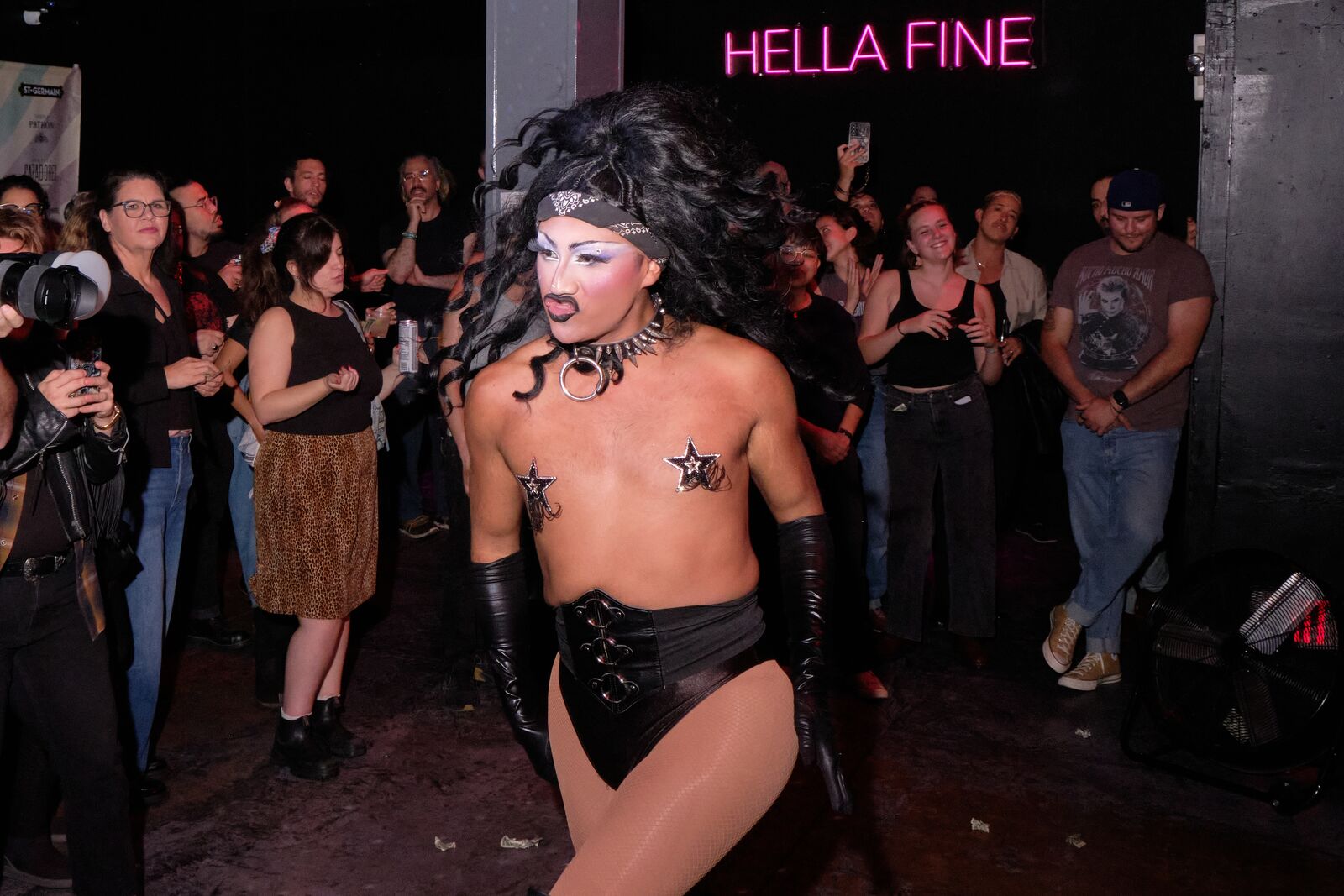 Xochitl, an outspoken undocumented drag queen and activist, performs drag at “Caballo Blanco Against ICE” at White Horse Bar on Nov. 8, 2025. Credit: Jess Lynn Goss for The Oaklandside
New fears connect longstanding communities
Since 1933, White Horse, which holds the claim as America’s oldest continuously operating queer bar, has endured prohibition, avoided police raids, and navigated changing expectations within the communities it serves. After the Gay Liberation Front organized a boycott of the bar in the 70s, White Horse Inn ended its longstanding “no touching” policy for patrons. In an effort to preserve and share its history, posters on the walls in the bar direct guests to a website with stories from the bar’s nine decades of history.
Long-standing drag shows like Rebel Kings of Oakland have performed at White Horse for 16 years, and events like Queer-aoke, queer comedy nights, dance parties, and Valkyries and RuPaul’s Drag Race watch parties draw folks in every day of the week.
On a recent Tuesday night, some people were visiting White Horse Bar for the first time from out of town, while others were long-time regulars. Some looked to be in their 20s, others in their 60s. They chatted at the bar, shot pool, belted out lyrics to a favorite song, and shared intimate coming-out stories during the night’s open-mic comedy.
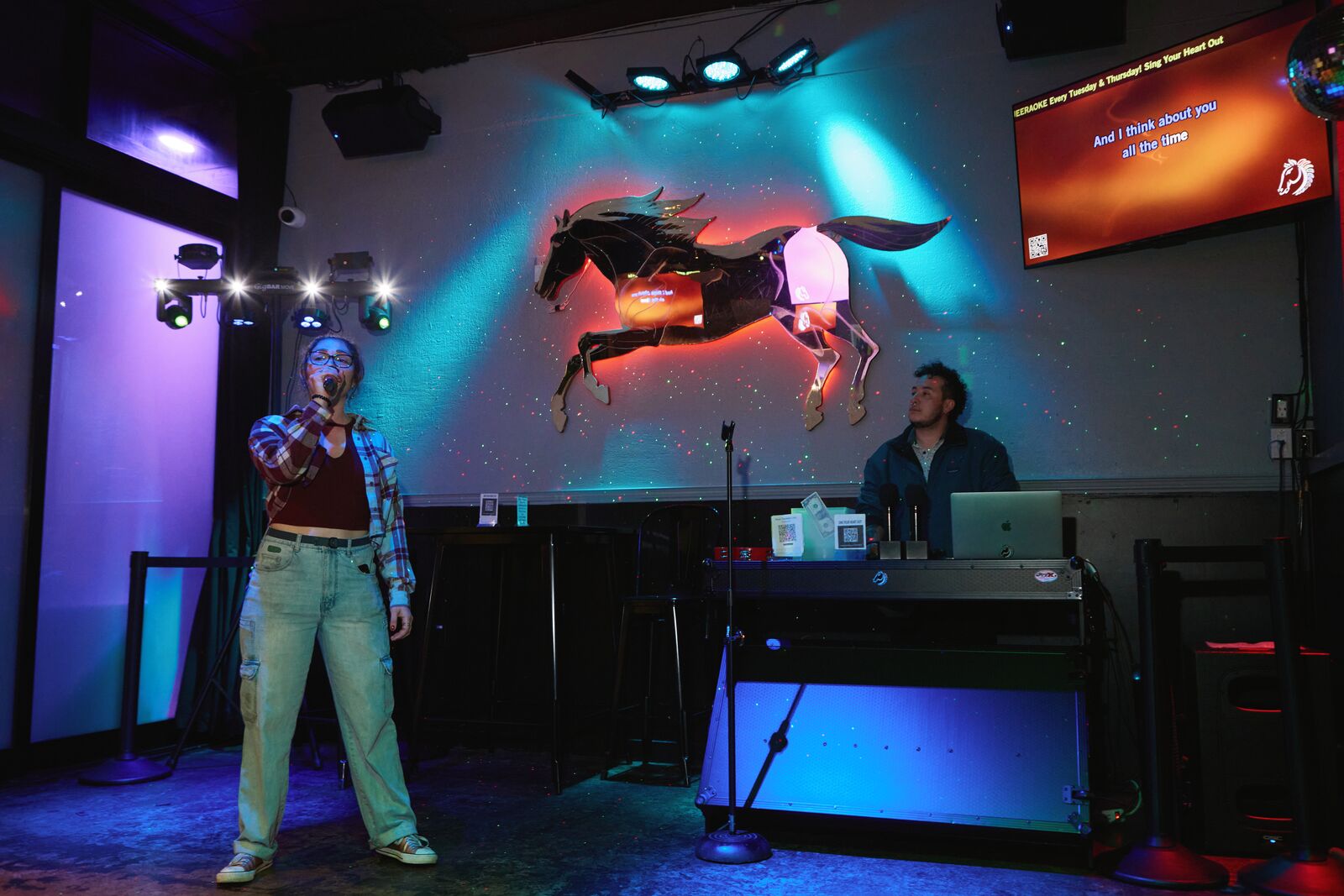 Hana Yamate-Morgan sings at Queer-akoe, a karaoke night hosted by Noor Lino every Tuesday and Thursdays at White Horse Bar. Credit: Jess Lynn Goss for The Oaklandside
“I’ve been coming here since 1991,” said James Wilson. “I like the environment.” He said he liked the events the bar hosts, but did express a desire for more game nights that might draw some of his older friends back to the bar, like spades or checkers.
Noor Lino moved to the US from Bolivia in 2018. After years of singing at White Horse’s Queer-aoke, which happens every Tuesday and Thursday, he started hosting it last year. He loves the Caballo Blanco show for its Latin-American focus. “It brings out the brown and Black queers who don’t always feel represented.”
“White Horse, to me, isn’t just where I work and host Queer-aoke; it’s a place I go to have fun and feel safe. It’s where my friends work, and where my friends party. It means a lot that White Horse has so many different events centered around all different facets of our community. I love that drag is a facet of that! Drag means being moved by something–sometimes that’s by laughing at something ridiculous, or tearing up from an emotional performance. I love that the variety of people in the bay leads us to get to experience that from a wide range of performers with various backgrounds,” said Lino.
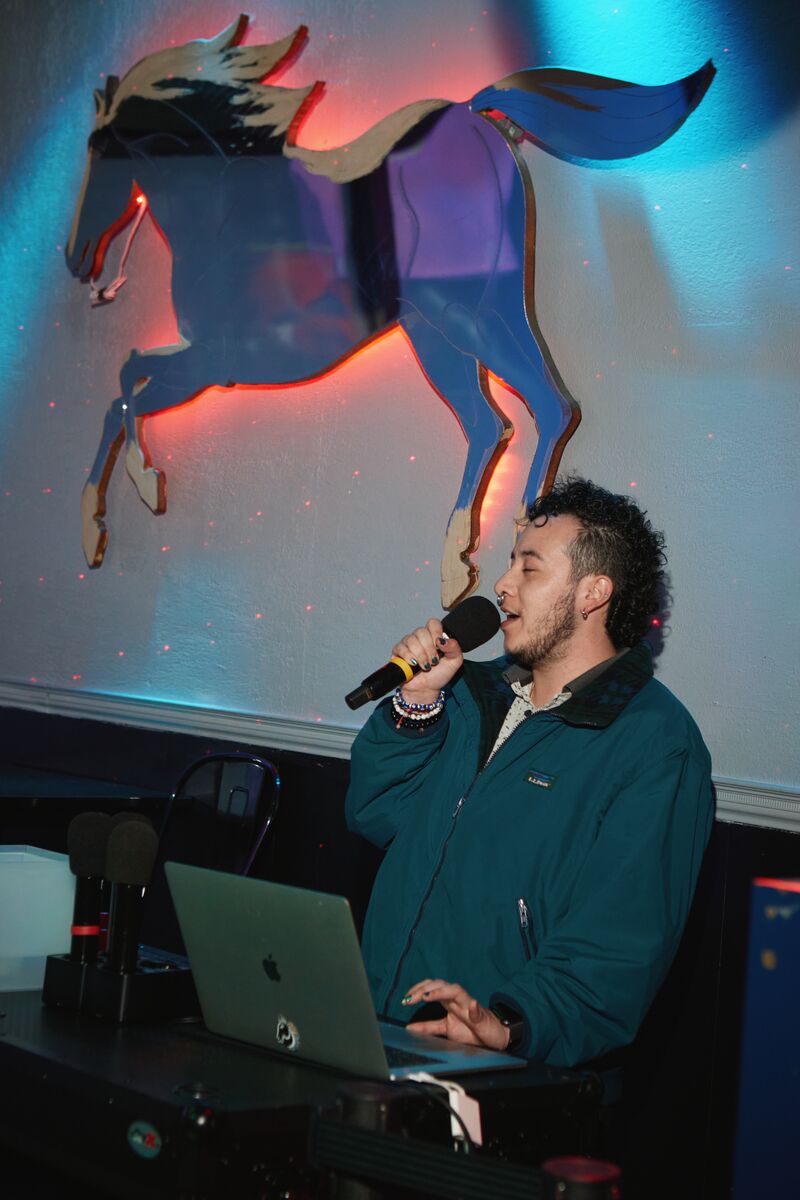 Noor Lino sings while hosting Queer-aoke, a karaoke night that occurs every Tuesday and Thursdays at White Horse Bar. Credit: Jess Lynn Goss for The Oaklandside
Since Trump’s second inauguration, more immigrants with no criminal history have been arrested, and fewer than 3% have been released within 60 days, according to data compiled by the Deportation Data Project, a nonprofit run by lawyers and academics. Protests around the country call for reforms to aggressive ICE tactics as tensions continue to rise following the killings of two US citizens in Minneapolis. In courts, several legal battles challenging Trump’s immigration policies continue to develop, with a federal judge recently issuing a scathing opinion ordering the release of 5-year-old Liam Ramos and his father, Adrian, after more than a week in a Texas detention facility designed to detain families.
Safe spaces and supportive communities for immigrants and those identifying as LGBTQ+ are even more crucial now, as some people fear leaving their homes. “There’s a lot of fear. Fear of going out. Fear of spending money. Fear of safety. It’s important to figure out how to communicate with our community and explain that this is a safe space,” Dingle said.
Returning to the stage for the first time after a traumatic event can be a courageous and defiant act—one that requires the feeling of safety and a supportive community.
“I want my community to know that when we feel the road is difficult and we think we can’t go on, we must keep fighting because, as the saying goes, ‘a tree that bears no fruit is not beaten or struck,’” said Rivers. “Let’s keep fighting because behind all of this, there are many people in the community who are with us, the marginalized and forgotten immigrants. Hilary is here to raise the voice of the forgotten.”
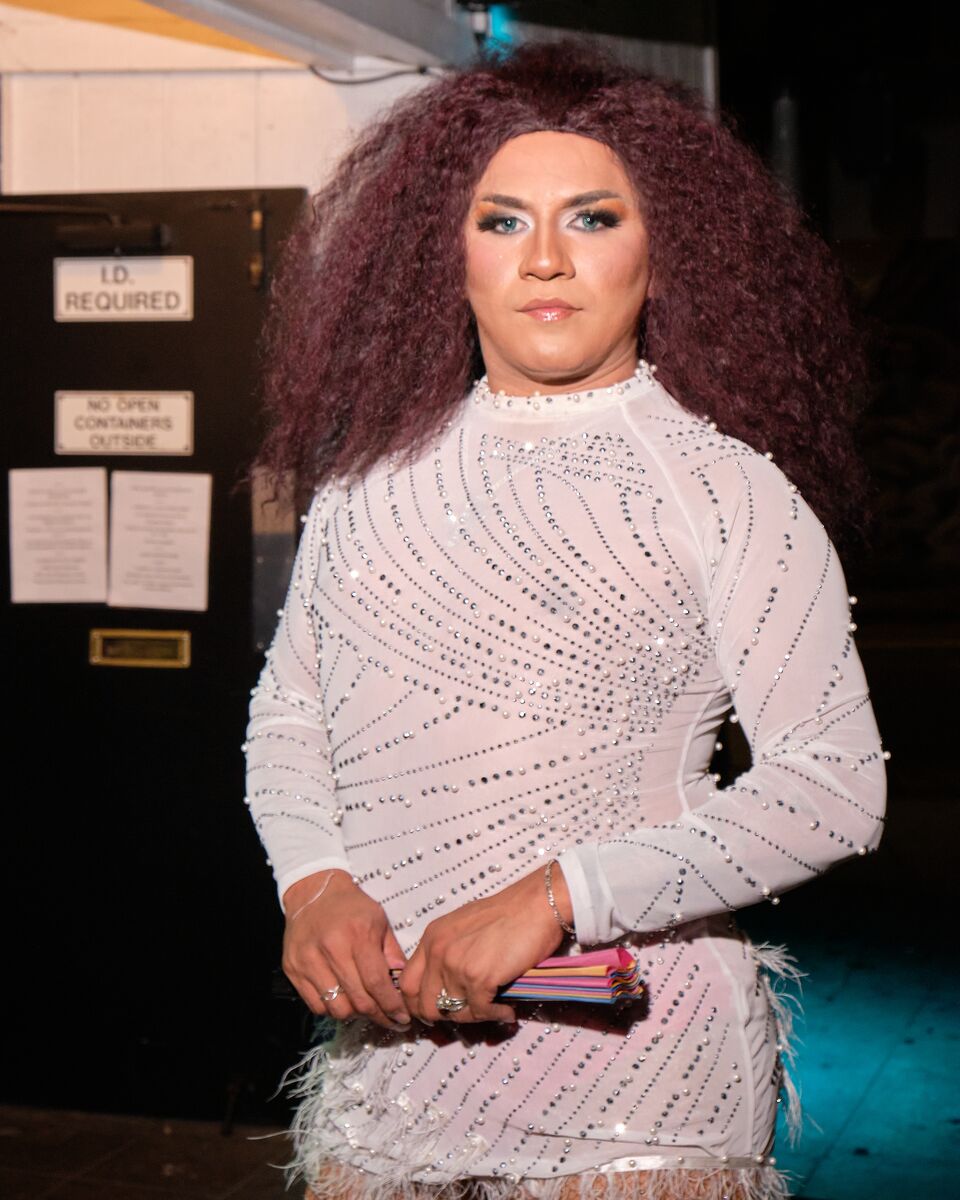 Hilary Rivers poses for a portrait outside of White Horse Bar in Oakland, Calif. on Nov. 8 after her first performance since being released from an ICE detention facility. Credit: Jess Lynn Goss for The Oaklandside
“*” indicates required fields