
SAN FRANCISCO (KGO) — Saturday, Feb. 14, is the deadline for seven western states to come to some kind of agreement over the Colorado River.
These states, which rely on the Colorado, must agree on how to reduce their water intake from a source that is drying out. Some of those states refuse mandatory conservation measures, opting instead for voluntary action. You may not think so, but this will have an impact on Northern California.
It may be somewhat of a cliché, but time is running out for seven states that get water from the Colorado River.
“Oh, it ran out a long time ago. I think we’re at a disastrous point. I think history will judge us very poorly,” said Felicia Marcus, former chair of the State Water Resources Control Board,
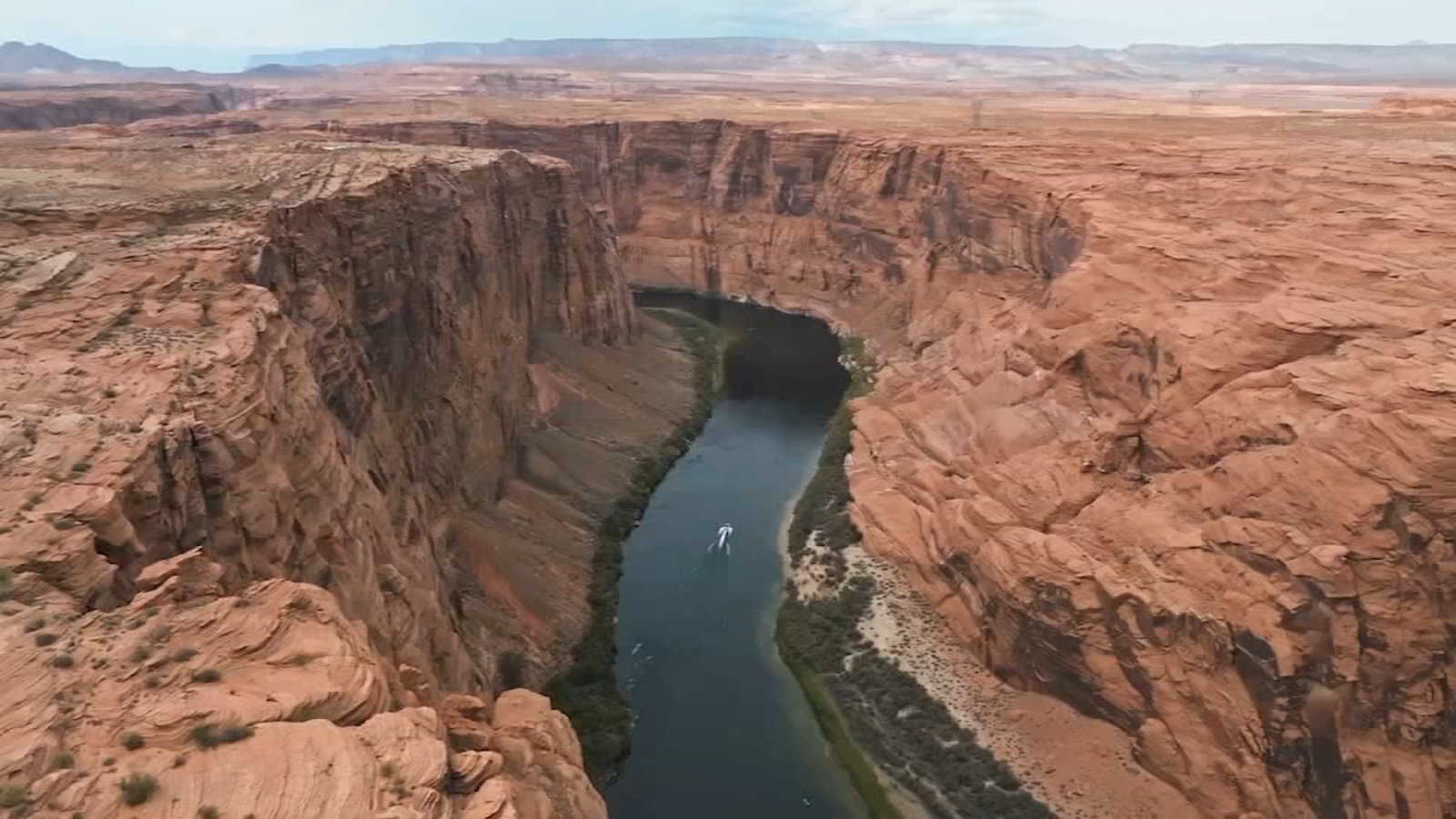
Twenty-six years of continuous drought have impacted the flow of the Colorado. Think of its reservoirs as a savings account that continues to be depleted.
MORE: North Bay reservoirs reach capacity after winter storms, ending drought fears
The Colorado River provides water to nearly 35 million people in the U.S., including five million acres of farmland.
The river hasn’t been able to keep up with the demand.
“We use more every year, on average, than nature supplies,” said Anne Castle, former U.S. commissioner for the Upper Colorado River Commission.
Seven states, including California, Nevada, Utah, Wyoming, Colorado, New Mexico and Arizona, take water from the Colorado.
Representatives from those states recently met in the nation’s capital to talk about conservation, an issue discussed so many times that people have lost track and, perhaps, hope it will be resolved.
MORE: California has zero areas of dryness for 1st time in 25 years: Drought Monitor
Let’s take a closer look at California and its relationship to the Colorado. Southern California takes about one-third of the Colorado River’s total flow. That’s the largest share among the seven basin states. Between 70% and 80% of what Southern California takes from the Colorado goes to the agricultural needs of the Imperial Valley. That’s crucial because two-thirds of the nation’s vegetables during the winter months come from the Imperial Valley.
The rest of California’s share of the Colorado River goes to urban areas and homes via the Metropolitan Water District. But when it comes to the pecking order, they have less of a water priority than the Imperial Valley, as dictated by an old water rights agreement.
People in Southern California know how to deal with drought conditions.
“Waves and waves of water conservation, both in terms of fixtures, but also in terms of letting lawns turn brown, transferring lawns — which is a lot of urban water,” Marcus said.
What does all of that have to do with us here in Northern California? We don’t get anything from the Colorado. People in the know told me, you can bet your bottom dollar that Southern California will look to us if it needs to increase its demand for water.
MORE: Trump executive order could divide control of CA’s water system, putting distribution at risk
Northern California already supplies 30% of Southern California’s water demands.
Here’s how it moves: The Sierra snowpack feeds the Feather River, which then collects at Lake Oroville. The dam there controls what is released into the Delta watershed. From there, the water goes to the Central Valley and Southern California through miles and miles of canals, tunnels and pipelines.
“In Northern California, we are just absolutely pulling for the folks on the Colorado River basin to come together and find a solution to help water supply for all seven basin states. But obviously the urban areas of Southern California need that water supply, and if they get that water supply, it takes pressure off of Northern California, and so we’re really pulling for them to come to an agreement,” said David Guy, president of the Northern California Water Association.
“I’m a very diverse farmer here in Northern California. We’re looking at one of my wheat fields,” said Fritz Durst of Yolo County.
Farmers like him are also hoping for a resolution.
MORE: Stanford study documents sinking in San Joaquin Valley and looks for potential solutions
Durst says in a drought year, if Southern California demands more water, he’ll have to leave some of his land unplanted — like his rice fields — therefore giving up some of his water needs.
“I’ll allow the water that I would normally take out of the Sacramento River to stay in the river to flow through the Delta and get transferred to Southern California,” he said.
While he gets compensated for not growing his crops, there are economic and ecological impacts to his actions.
“There are people who transport and mill the rice afterwards, the effects go all the way to Sacramento, because that’s where my rice gets milled. There’s no habit and there’s no rice in the wintertime for the migrating birds to eat, so it affects birds, fish,” Durst said.
He told us he’s done that only four times in the past 40 years. He fears the effects of global warming will only make matters worse.

Copyright © 2026 KGO-TV. All Rights Reserved.