
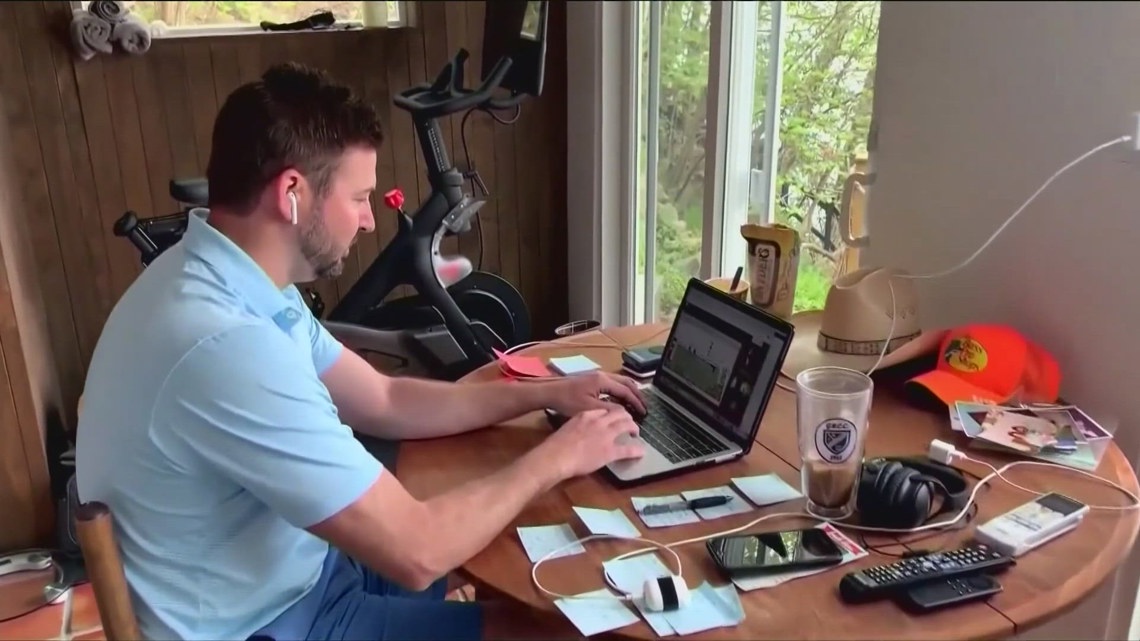
AB 1729 would require state agencies to offer employees telework “to the fullest extent possible” and establish clear, permanent work-from-home policies.
SAN DIEGO — New bipartisan legislation would allow state workers to continue working remotely, creating a standoff between Governor Newsom and the state’s largest public-sector union ahead of a July 1 deadline.
A clash over remote work has intensified between California state workers and Governor Newsom as newly proposed legislation challenges his executive order requiring all state employees to return to in-person work at least four days a week starting July 1.
Assembly Bill 1729, sponsored by Democrat Assembly Member Alex Lee and Republican Assembly Member Josh Hoover, would require state agencies to offer telework “to the fullest extent possible” and establish permanent telework policies. The legislation would also mandate that state agencies provide clear justification for requiring employees to work in-person and create a dashboard documenting the benefits of remote work, including reduced commutes, lower emissions and cost savings to the state.
SEIU Local 1000, California’s largest public-sector union, has backed the proposal and vocally opposed Newsom’s mandate since he signed the executive order last year.
“For our people, it’s a pay cut,” said union president Anica Walls, speaking last year. “We know that telework makes sense, we saw it through Covid, we saw the governor himself put up a dashboard that showed that the infrastructure was better, the environment was better, and we were more productive. The state was saving money.”
A recent state audit supports the union’s position, finding that telework could save the state as much as $225 million a year by reducing office space by 30 percent.
Assembly Member Lee emphasized the environmental and economic benefits of the legislation. “What my bill is saying is every department should figure out their own telework policy,” Lee said.
Lee noted that AB 1729 would decrease carbon emissions by nearly 400,000 metric tons annually through the elimination of lengthy commutes while also creating new economic opportunities for the state.
“We don’t have to rely on an outdated 1960s cubicle kind of sense. I represent workers in Silicon Valley, who go into the office maybe twice a week, and they still work for some of the most record-breaking profit-making corporations in the world,” Lee added.
Co-author Assembly Member Josh Hoover, a Republican, stressed the competitive advantage of flexible work arrangements in recruiting talent to state positions.
“I think that the Governor’s blanket executive order is not the direction that we want to go,” Hoover said. “It’s about attracting the best and brightest talent to work for our state. The private sector has embraced remote work very effectively, and we want to be able to compete for that talent pool for the best and the brightest in our state.”
Governor Newsom has remained firm in his position, citing concerns about workplace collaboration, community well-being and local business recovery. He framed the return-to-office mandate as essential to downtown revitalization following the pandemic’s impact on small businesses.
“I’m for addressing the issue of loneliness and isolation, I’m for getting us back, and I believe we are on track to do that on July first,” said Newsom. “We got to get these downtowns moving again. Get a sense of community in place. I’m supporting the local deli that’s been around 20 or 30 years, that doesn’t know if they can last another 20 or 30 days.”
Newsom’s original executive order required workers to return to the office last July, but that deadline was pushed to July 2026 following intense pushback from union members.
Committee consideration of Assembly Bill 1729 is expected early next month. If passed, the legislation includes an “urgency clause” that would allow it to take effect immediately.