

Find out which stores have opened, closed or moved and what’s new in Berkeley’s nonprofit, retail and small-business communities. If you have updates to share, send an email to editors@berkeleyside.org.
In the Spotlight
Berkeley resident has sold hundreds of presidential poop bags
 Berkeley resident and brand designer Stefan Schuch created the SH*T Bag after the 2024 presidential election. Courtesy: Smolotov
Those who think the president is full of shit can now turn that belief into a reality, with a little help from man’s best friend.
SH*T Bag is a new line of biodegradable, leak-proof, eco-friendly poop bags, which enlist dogs “in the fight against fascism,” according to founder Stefan Schuch.
Schuch, a Berkeley resident and longtime brand designer, who has worked with Apple, Google and other companies, launched Smolotov (which currently just sells the bags) soon after the presidential election. He had a little bit of time between clients, and “just for fun” designed a poop bag illustrated with the face of President Trump. He built a website for the brand full of tongue-in-cheek copy, poking fun not just at the new president, but the entirety of American politics.
“The voice of the brand is satire, but it’s also not,” Schuch said. “It’s very serious times.”
At first, Schuch had no intention of actually making the bags. But everyone who saw the website loved the designs and he decided to go for it.
“I’m like, maybe I could pull this off,” he said. “Maybe I could actually make dog waste bags with Donald Trump’s face on them. Wouldn’t that be crazy?”
But first he had to find somewhere to make them. That meant China. “There is no infrastructure to make waste bags in America,” he said.
He found a Chinese factory that could create the biodegradable bags (they’re made of corn starch) and could print on the inside of the bag (a deft touch that only a dog owner would know to do). After receiving the initial order of 500 boxes, he went to dog parks in Berkeley, El Cerrito and Oakland and handed out samples. People loved them.
“You pick up the dog waste, you turn it inside out, and all of a sudden you see this orange-faced goon on your bag,” he said. “And then you just take it and you chuck it in the trash. And it just feels so good. It’s like this small, meaningless act of resistance.”
The name of the brand, Smolotov, picks up on this theme. A portmanteau of “small” and “Molotov,” it suggests that “small things can have a big impact,” said Schuch.
“Picking up your dog’s waste with a bag that looks like the orange clown won’t really change anything but it feels good,” said Schuch. “And if that feels good, maybe going to a protest or a town hall and yelling at your constituents also feels good. And the next thing you know, you’re fighting for democracy like a proper radical.”
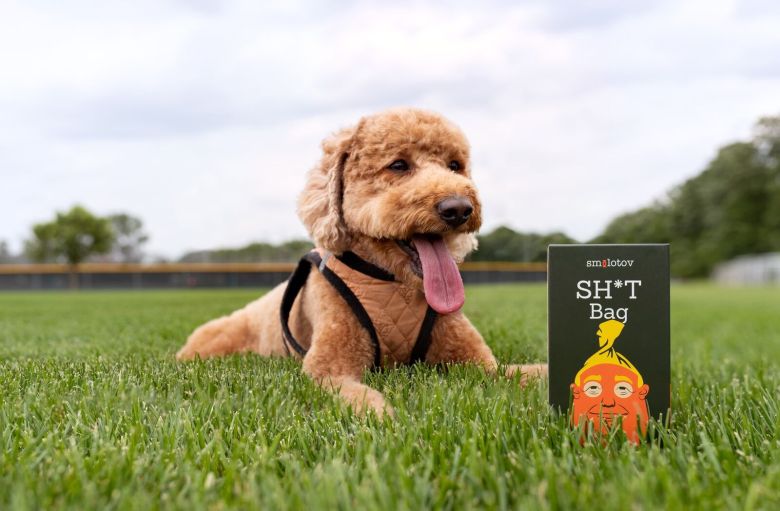 Schuch has handed out samples of his novelty bags in Berkeley, Oakland and El Cerrito parks and sold about 350 so far across the country. Courtesy: Smolotov
After road testing the bags at dog parks, he joined forces with Kevin Tiell, who he met working at Apple, and the two of them posted the bags for sale on Amazon. Without any online marketing, Schuch said, the bags began to sell and the five-star reviews started flowing in. They’ve sold about 350 of the bags so far to customers across the country, including in red states like Texas.
Encouraged by brisk sales and positive reviews, Schuch and Tiell recently placed an order for 20,000 units. The bags retail for $17.47 for a 60-count box, or about 29 cents per bag, far more costly than your average poop bag, which typically costs pennies.
“ Honestly, we don’t know if this is a day-to-day bag for you, or a gift to give at birthdays and Christmas, because they are expensive,” said Schuch.
While the bulk of the recent order will go to Amazon fulfillment centers, Schuch is also in talks with local shops about carrying the bags. Once the bags turn a profit, he plans to donate the proceeds to charity.
And the two have even grander plans.
“The beauty of this concept, really, is that there are other leaders out there that people hate,” said Schuch. “And we’re going to go after all of them. I think the sky’s the limit on this little product.” — Nathan Dalton
SH*T Bag by Smolotov. Connect via Instagram and Facebook.
Closed Downtown
Paisley Vintage closes its brick-and-mortar shop
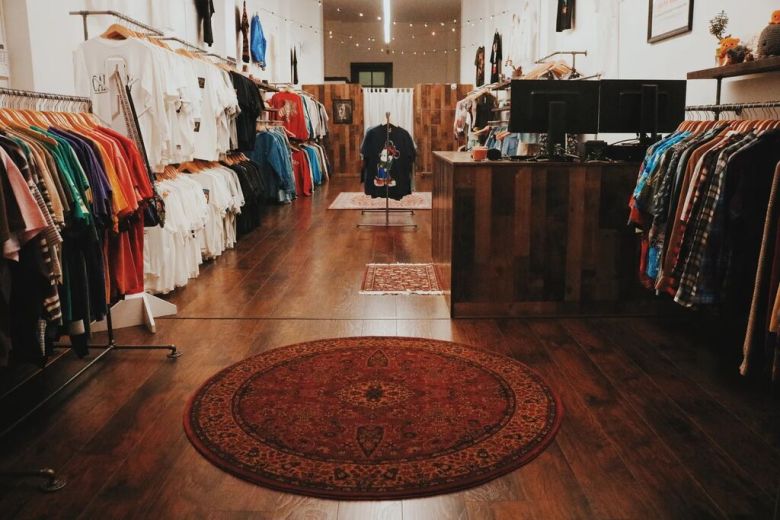 Inside Paisley Vintage on Bancroft Way before its closure. Credit: Paisley Vintage
After four years, Paisley Vintage has closed its brick-and-mortar store on Bancroft Way. But loyal fans of the shop, who have come to rely on it for a steady stream of ’90s-era graphic tees, Y2K women’s wear, and other items that seem to have come straight from their parent’s closet, can still buy from Paisley online, where brothers Michael and Kevin Dong began their vintage clothing business.
“It’s something my brother and I have been thinking about for a little bit now,” said Michael Dong about the closure, which was announced in September on Instagram. “It’s a combination of things, but the biggest factor would be the time.”
Paisley Vintage, which closed on Oct. 14, was open seven days a week and the Dong brothers never missed a day. They regularly logged 65-hour weeks. But as the brothers edge closer to their 30s (Michael is 28, Kevin is 29), they are looking to slow down a bit.
“It’s a lifestyle commitment,” said Michael Dong. “We knew this when we signed up for it.”
Sales have also slowed in the past year, which Dong thinks is due to the many empty storefronts downtown and the subsequent decline in foot traffic in the area. He also mentioned the “domino effect” of other vintage shops in Berkeley closing, including Mars Mercantile and Indigo Vintage Cooperative, which both closed last year, and 2nd Street Telegraph, which closed in April.
“It’s more worthwhile for people to come and hit four or five stores,” said Dong. “It was mutually beneficial to have a number of secondhand stores in a 15, 20 minute radius.”
That was exactly how the Dongs got their start in vintage shopping. Growing up in Concord, they would regularly visit Berkeley and hit all the thrift stores and vintage shops in town, in a whirlwind day of shopping.
They got the “collecting itch” from their father, who would drag them to yard sales and flea markets when they were kids.
“I remember as a kid I used to get annoyed because we’d spend all of our Saturday mornings doing these things,” said Dong. “And then once we got a little bit older, I kind of pulled the reverse on my dad and we started dragging him out to the thrift stores.”
The Dong brothers started selling their thrift store finds via Instagram during high school, using their father’s PayPal account to collect payment because they were too young to have their own accounts.
Both brothers went on to get degrees in engineering at UCLA and got jobs in that field after moving back home. But thrifting was still a constant in their lives. With full-time jobs, they were able to buy more and more clothes and started selling online again. They soon realized they had a genuine business on their hands, and — recalling their glory days of thrift shopping as teens — decided to open a store in Berkeley. They called it Paisley Vintage, in homage to the patterned shirts their father used to wear.
Paisley was truly a family affair. Their parents regularly helped out at the store, and their younger sister worked there a couple days a week. She was their only real employee.
“We’ve been truly blessed to be able to do a family business,” said Dong. “It’s brought my whole family closer.”
Michael Dong also met his girlfriend at the shop.
“She was an early shopper,” he said. “And then when she came in the third time that week, I was like, she’s here for more than just shopping.”
Now that the store has closed, he’s happy that he and his girlfriend can actually go out on a weekend date. But he and his brother will still be plenty busy running their online shop.
“We’re still going to do what we love,” said Dong. “But it will just be nice to get a little bit of our time back.” — Nathan Dalton
Paisley Vintage, 2181 Bancroft Way, Berkeley. Connect via Instagram.
Open South Berkeley
South Berkeley business teaches the parlor game of mahjongg
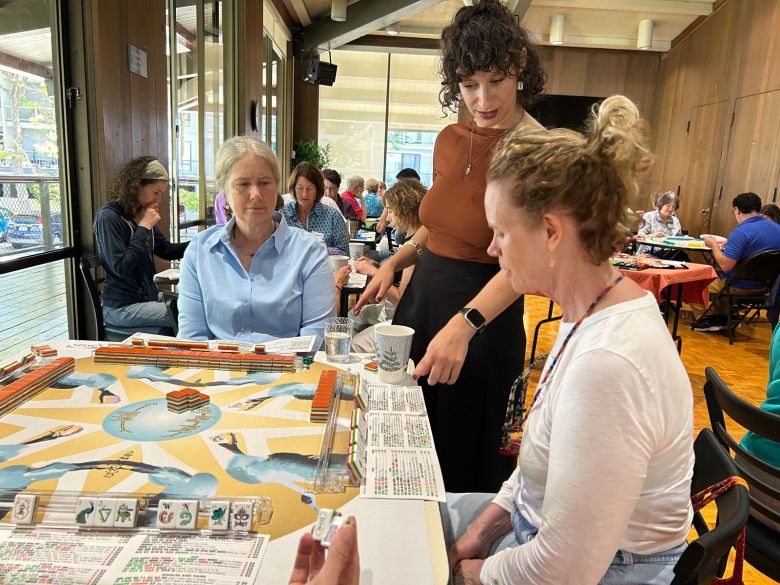 Molly Shapiro of Mahj with Molly instructs players on the intricacies of mahjongg at a recent event. Courtesy: Mahj with Molly
“I’m in the business of building community — one tile at a time,” said Molly Shapiro, who teaches people how to play the Chinese parlor game of mahjong through her company, Mahj with Molly. The game is played with tiles containing symbols and numbers.
Created in mid-19th century China, mahjong became a craze in the U.S. in the 1920s. By the end of that decade, the game fell out of fashion, but Chinese communities and Jewish American women kept it going. In the Jewish community, mahjong remained a game played by grandmothers — until recently.
Mahjong is undergoing a renaissance in the Bay Area, with impromptu meet-ups, Facebook events, restaurant game nights and even a new mahjong lounge, 13 Orphans, in Oakland.
Both of Shapiro’s grandmothers played the game. She started playing eight years ago.
“My bubbie built an amazing community of women through mahjong who showed up after she passed away and knew everything about me,” Shapiro said, using the Yiddish word for grandmother. “I decided that’s what I wanted to make happen in my life.”
Shapiro, who lives in South Berkeley, started teaching friends about a year ago and transitioned her passion into a business because it began “taking up more and more of my life.” She has since taught hundreds of players from all over the Bay Area.
A typical six-hour course, which can be divided into one, two or three classes, is $315 per person. Mahjong is typically played with four. Players learn the tiles, the rules, how to read the American mahjong card, how to set up and play the game.
“It’s not an easy game to learn,” Shapiro said, “but once you learn it, it’s like riding a bike.” — Joanne Furio
Mahj with Molly. Phone: 510-545-3792. Connect via Instagram.
We know that most readers don’t get to the end of the article. But you did! To support our in-depth, rock-solid reporting, please consider making a donation to our nonprofit newsroom today. We rely on our readers — particularly the ones who read the whole story!
“*” indicates required fields