
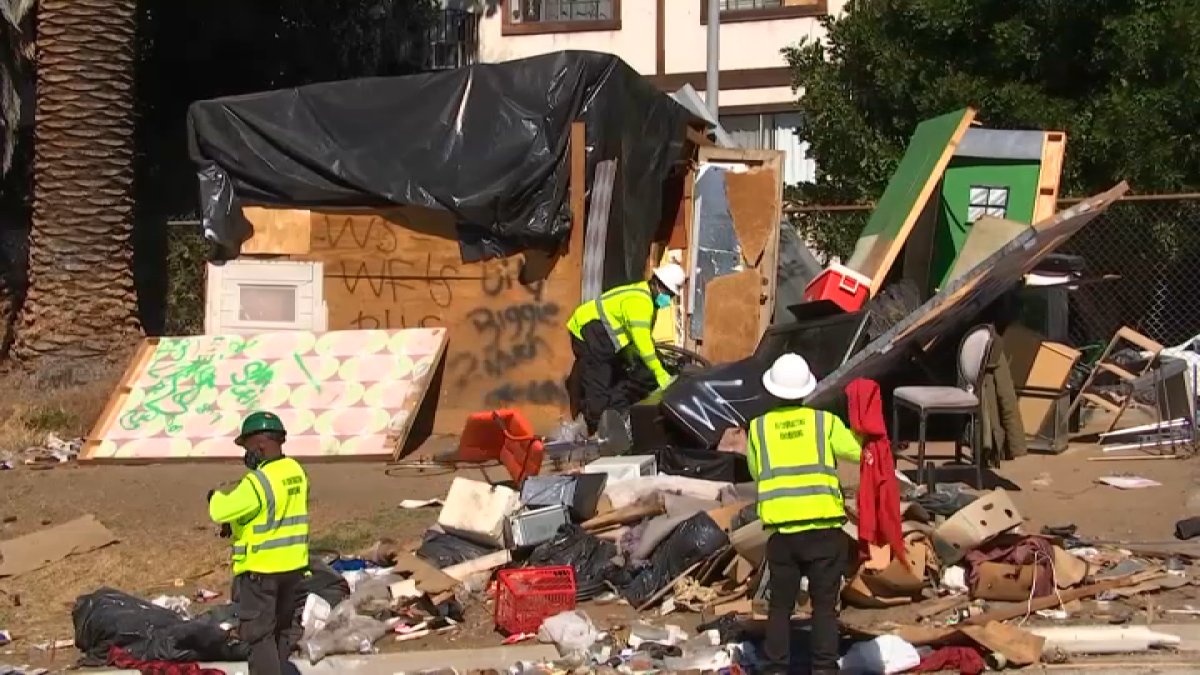
The city of Los Angeles violated the constitutional rights of the homeless people when their belongings and property was confiscated during encampment cleanups, a federal judge ruled Friday.
The ruling was the result of lawsuit filed by seven homeless people who were living in neighborhoods from Van Nuys to Harbor City as well as two community organizations, according to the court records. The lawsuit challenged the positionality of the city’s ordinance, which allows sanitation officers and police to seize and destroy homeless people’s belongings, including tents, medications and documents.
U.S. District Judge Dale S. Fischer also found that the city had “altered and fabricated” records of the cleanups after the case was filed to make it appear that care was taken to separate personal property from trash or hazardous material.
The court rejected defense explanations that any flaws in city checklists and other documents were the result of “error-filled record keeping during the pandemic,” and there was no “intent to deprive plaintiffs of the information’s use in the litigation,” Fischer wrote in a 22-page order filed late Wednesday in Los Angeles federal court.
The Los Angeles city attorney’s office did not immediately respond to a request for comment.
“The timing of the city’s modifications and fabrications is strong circumstantial evidence of bad faith, especially when considered alongside the types of modifications made to produced documents, including changing words to characterize items as biohazards, describing property as surrendered or dangerous, and adding narratives of procedures,” Fischer wrote.
After receiving the results of a court-ordered neutral forensic analysis, the court found that the city had “acted willfully and in bad faith to deprive plaintiffs of relevant information,” the judge stated.
The ruling did not describe how the city can comply with the judgment.
Both sides were ordered to file briefs by March 15 on proposed relief.
The city of Los Angeles routinely conducts cleanups of areas that are frequented and occupied by homeless people. The cleanups are aimed at reducing trash and preventing the spread of disease. The city has dedicated tens of millions of dollars to cleanup programs and outreach for homeless people.
One of the plaintiffs, who was homeless when the case was brought, said the city took her work materials during cleanup operations while she was living on the streets.
“I work as a house cleaner and I have had my cleaning supplies taken from me multiple times,” Janet Garcia said. “Every time I lose my belongings, I have to start over. How am I supposed to get back up on my feet when they keep making me go back to square one?”