
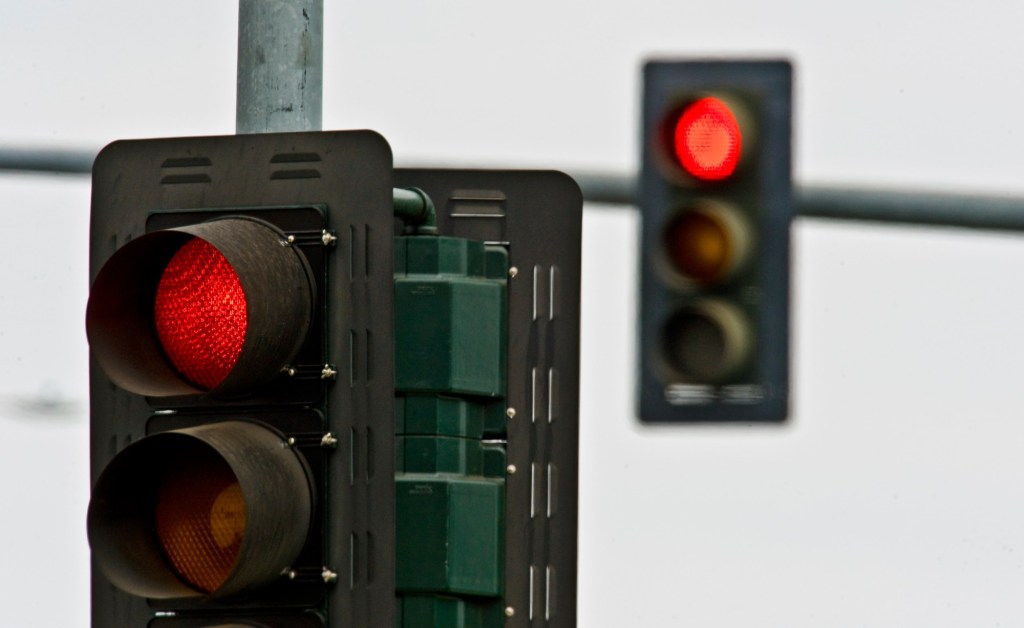
A new state law that makes it easier for cities to use cameras to catch red-light runners might help save pedestrians’ lives in Encinitas, a group formed in the wake of 12-year-old Emery Chalekian’s death is arguing.
Members of Safe Streets Encinitas made their case to the city’s Mobility & Traffic Safety Commission last week, and commissioners agreed to ask the City Council to look into their proposal. The commission’s vote was 5-1, with Commissioner Ron Medak opposed.
Before the vote, commissioners heard from nine public speakers, including Emery’s mother.
“Prevent the next family from standing where I stand today,” Bridget Chalekian said as she discussed her daughter’s death.
Emery, a sixth-grader at Park Dale Lane Elementary School, was struck and killed by a vehicle last spring while using the crosswalk at Encinitas Boulevard and Village Square Drive to go between her dance class and a hamburger restaurant. The driver, who is alleged to have run a red light, currently is facing vehicular manslaughter charges.
Stressing that Emery “did everything right” and followed the law, her mom said that putting in red light cameras could “change driver behavior and that is what we need.”
The intersection where Emery was killed is a block east of Encinitas Boulevard’s intersection with El Camino Real — a place where the city once had red light cameras. The City Council voted to remove those cameras in 2020 during the early months of the COVID pandemic.
At the time, council members cited as reasons the cost of the tickets — $490, including hefty court fees — and concerns that most ticket recipients were doing slow-roll, right turns at the intersection, rather than speeding straight through the red lights. One council member also said she worried that the city might need to find a new source of money to pay the camera provider because ticket revenue was likely to decrease as vehicle traffic dropped dramatically during the COVID lockdown periods.
At last week’s meeting, members of Safe Streets Encinitas said the city ought to reconsider the cameras’ removal now that state laws have changed, making the tickets less costly and enforcement less complicated.
In January, Senate Bill 720 went into effect. It eliminates a requirement that the cameras take photos of the drivers of the vehicles. Instead, only license plate images must captured by the cameras and vehicle owners then are mailed the tickets. The new law also treats red-light violations like parking tickets, so there’s no court fees and tickets start at $100. It also allows cities some flexibility about how to handle slow-roll, right-turn-on-red incidents.
The old law, enacted in the mid-1990s, was a “horrible law,” while the new one is similar to what most states, other than California and Oregon, already had, said Damian Levitt, executive director of the Los Angeles-based Streets Are For Everyone nonprofit. Speaking during a telephone interview last week, Levitt said the new law, which his organization helped craft, also contains requirements that ticket revenue only be used for roadway safety improvements and that the cameras can only be installed at major intersections with high rates of injuries or fatalities.
Los Angeles and Culver City currently are considering using the new law, he said.
Many San Diego County cities have removed their red-light camera systems in recent years, but ones remain in Del Mar and Solana Beach.