
Sacramento State football is poised to make a historic leap to the highest level of college football competition.Sources confirm to KCRA that the Hornets are moving up to the Football Bowl Subdivision (FBS), the NCAA’s top division, and are set to join the Mid-American Conference (MAC) as a football-only member starting this year. The move would make Sacramento State the first West Coast program in decades to transition from the Football Championship Subdivision (FCS) to FBS.The jump comes with a significant financial commitment. The total expected cost is $23 million, including $18 million paid to the Mid-American Conference and $5 million to the NCAA.University President Luke Wood has been vocal about his belief that Sacramento State athletics belong at a higher competitive level.“We have 21 intercollegiate sports at Sac State — 21 of them,” Wood previously said in an interview with KCRA. “And for the vast majority of them, they are in the wrong home.”Wood has also maintained publicly that the university expects to compete at the FBS level as soon as next season.“We still believe that will be FBS for next season. That has not changed,” Wood said. “I’ve been consistent about saying that.”Still, questions are emerging about how the university will fund the move. Documents show Sacramento State allocated just over $11 million to its entire athletics department this year, not just the football program. The university is also facing a projected $2.9 million deficit.David Berri, a sports economist and professor of economics at Southern Utah University, says college athletics often appear more financially impactful than they actually are.“You’ll hear talk about NIL contracts and broadcasting deals and attendance numbers, and they’ll say things in the millions of dollars,” Berri said. “And it makes it sound like athletics is incredibly huge to the business of a university.”In reality, Berri notes, athletics typically make up only a small share of a university’s overall budget.“It’s about 2.5% of the overall budget,” Berri said. “So this is a tiny, tiny part of the overall business. It’s really quite insignificant.”However, he says conference affiliation, particularly in the MAC, can bring weekly national television exposure that functions as advertising for a university.“The MAC is especially attractive,” Berri said. “They have a television deal where they get to be on TV every single week.”“If Sacramento State says, ‘I want to spend our money to get a three-hour advertisement of our school on once a week around the nation,’ that is more than $18 million,” he added. “You don’t have the amount of money to make that happen — but you can do this.”The move comes just months after Sacramento State hired new head football coach Alonzo Carter in December. If finalized, the transition would mark one of the most ambitious shifts in program history, elevating the Hornets to the national stage while sparking debate over the cost, exposure and long-term financial sustainability of the move.See more coverage of top California stories here | Download our app | Subscribe to our morning newsletter | Find us on YouTube here and subscribe to our channel
SACRAMENTO, Calif. —
Sacramento State football is poised to make a historic leap to the highest level of college football competition.
Sources confirm to KCRA that the Hornets are moving up to the Football Bowl Subdivision (FBS), the NCAA’s top division, and are set to join the Mid-American Conference (MAC) as a football-only member starting this year. The move would make Sacramento State the first West Coast program in decades to transition from the Football Championship Subdivision (FCS) to FBS.
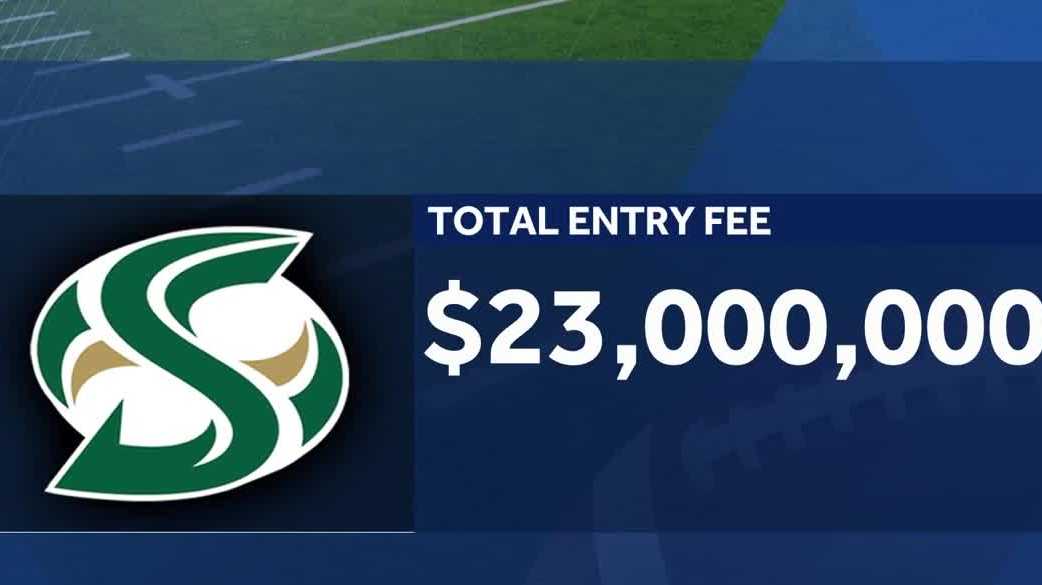
The jump comes with a significant financial commitment. The total expected cost is $23 million, including $18 million paid to the Mid-American Conference and $5 million to the NCAA.
University President Luke Wood has been vocal about his belief that Sacramento State athletics belong at a higher competitive level.
“We have 21 intercollegiate sports at Sac State — 21 of them,” Wood previously said in an interview with KCRA. “And for the vast majority of them, they are in the wrong home.”
Wood has also maintained publicly that the university expects to compete at the FBS level as soon as next season.
“We still believe that will be FBS for next season. That has not changed,” Wood said. “I’ve been consistent about saying that.”
Still, questions are emerging about how the university will fund the move. Documents show Sacramento State allocated just over $11 million to its entire athletics department this year, not just the football program. The university is also facing a projected $2.9 million deficit.
David Berri, a sports economist and professor of economics at Southern Utah University, says college athletics often appear more financially impactful than they actually are.
“You’ll hear talk about NIL contracts and broadcasting deals and attendance numbers, and they’ll say things in the millions of dollars,” Berri said. “And it makes it sound like athletics is incredibly huge to the business of a university.”
In reality, Berri notes, athletics typically make up only a small share of a university’s overall budget.
“It’s about 2.5% of the overall budget,” Berri said. “So this is a tiny, tiny part of the overall business. It’s really quite insignificant.”
However, he says conference affiliation, particularly in the MAC, can bring weekly national television exposure that functions as advertising for a university.
“The MAC is especially attractive,” Berri said. “They have a television deal where they get to be on TV every single week.”
“If Sacramento State says, ‘I want to spend our money to get a three-hour advertisement of our school on once a week around the nation,’ that is more than $18 million,” he added. “You don’t have the amount of money to make that happen — but you can do this.”
The move comes just months after Sacramento State hired new head football coach Alonzo Carter in December.
If finalized, the transition would mark one of the most ambitious shifts in program history, elevating the Hornets to the national stage while sparking debate over the cost, exposure and long-term financial sustainability of the move.
See more coverage of top California stories here | Download our app | Subscribe to our morning newsletter | Find us on YouTube here and subscribe to our channel