
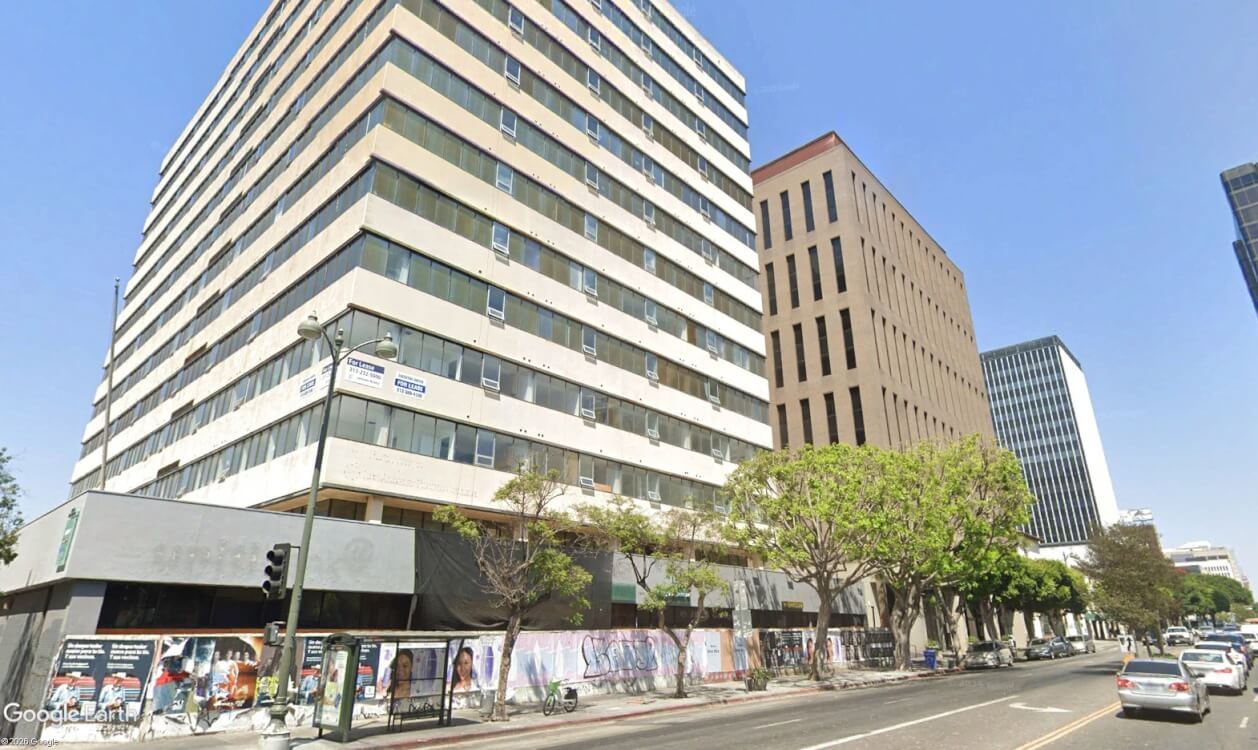
Vacant office space in Los Angeles is now eligible to become housing.
Housing development across Los Angeles is expected to accelerate this month as a new citywide adaptive reuse ordinance takes effect.
The Citywide Adaptive Reuse Ordinance, approved by the Los Angeles City Council last month, expands developers’ ability to convert vacant commercial buildings into residential units, as reported by The Real Deal. The measure repeals the city’s previous Adaptive Reuse Incentive Areas Specific Plan, which restricted conversions to designated neighborhoods such as downtown, Chinatown, Hollywood, and Koreatown.
Under the new law, commercial properties throughout the city are eligible for potential residential reuse.
Eligibility requirements have also been broadened. Previously, only buildings constructed before 1975 could qualify for adaptive reuse. The updated ordinance lowers that threshold to structures at least 15 years old. In addition, more projects will be eligible for by-right approval, allowing them to proceed without discretionary review if they comply with existing zoning, building, and land-use regulations.
City officials say the changes could unlock thousands of underutilized properties at a time when Los Angeles faces a persistent housing shortage. More than 50 million square feet of office space in the city remains vacant, according to reporting by the Los Angeles Times.
Ken Bernstein, a principal city planner with the Los Angeles Department of City Planning, told the newspaper the ordinance has the potential to significantly expand the city’s adaptive reuse pipeline.
Office-to-residential conversions have already become a growing segment of Los Angeles’ housing production. Jamison Properties, based in Koreatown, has led several of the city’s largest such projects.
Los Angeles currently ranks second nationwide in adaptive reuse housing development, with 5,640 apartment units in progress, according to the Times. Manhattan leads with approximately 11,000 units. In Los Angeles, office-to-residential projects account for about half of the adaptive reuse pipeline, totaling 2,843 units.