
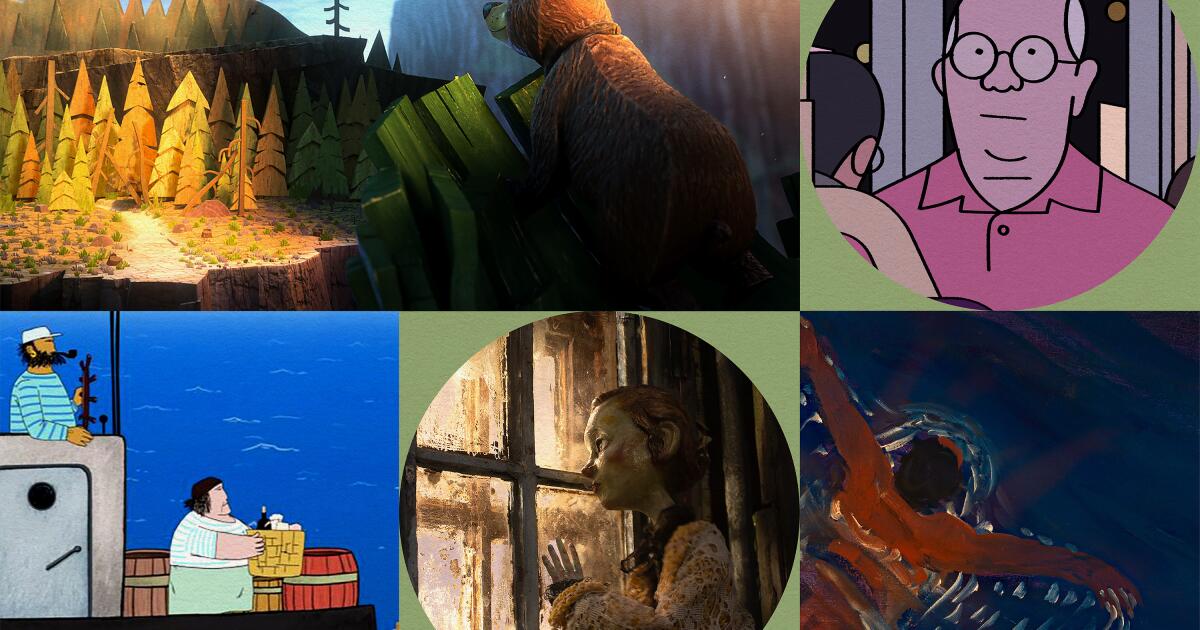
The 2026 Oscar-nominated animated shorts mix the past and the present, fable and nonfiction. Some even look into the future, whether we like what they see or not.
‘Butterfly’ 
Florence Miailhe’s oil-painted memory play tells of Alfred Nakache, a French swimmer of Algerian Jewish descent who finished ahead of Nazi competitors at the 1936 Olympics in Berlin, joined the Resistance and survived Auschwitz.
“When I first thought about the film, I thought about this old man swimming in the sea and then diving and there were bubbles of memories coming back to him,” says the César-winning Miailhe of the fluidity of time in her subject’s mind.
She’s not surprised the film’s themes — the rise of authoritarianism, the persecution of minorities — feel contemporary now: “When I started this, in 2015, there were the first signs that these types of things would come again in the near future,” she says. “What is really surprising is how fast it goes and how it feels like we are in a bad movie.”
Producer Ron Dyens says, though the film is primarily meant to honor Nakache, “Often, we do a movie to alert, to prevent. The National Front is growing in France.”
Still, says Dyens, we should remember Nakache’s last words in the movie, sending young pupils off to swim: “Go, little fish. We are not afraid.”
‘Forevergreen’ 
(Nathan Engelhardt and Jeremy Spears)
In Nathan Engelhardt and Jeremy Spears’ film, a bear cub is cared for by a benevolent tree on a cliffside. The cub’s selfish decisions lead to the tree laying itself across a chasm to save its surrogate child. If that sounds metaphorical, it’s meant to be.
Engelhardt says, “In 2017, I had just dealt with, I would say, a spiritual depression, a season of seeking after God. Then I came across a book called ‘The Tale of the Three Trees.’ ”
“Three Trees” is a Christian folktale in which trees with lofty aspirations end up with very different uses than they had dreamed of, finding fulfillment instead in God’s plans for them. “If God could use these kind of broken dreams, broken vessels, and turn ’em into something really great,” says Engelhardt, “well, maybe God could use me too.”
Spears says of their Prodigal Son-inspired short, “It’s our way of showing how far God would go, across the divide. Everyone can identify with the idea of forgiveness and unearned grace.”
Spears says, “It was a very personal thing on multiple levels for us. We would do anything for our kids, no matter what choices they make.”
‘The Girl Who Cried Pearls’ 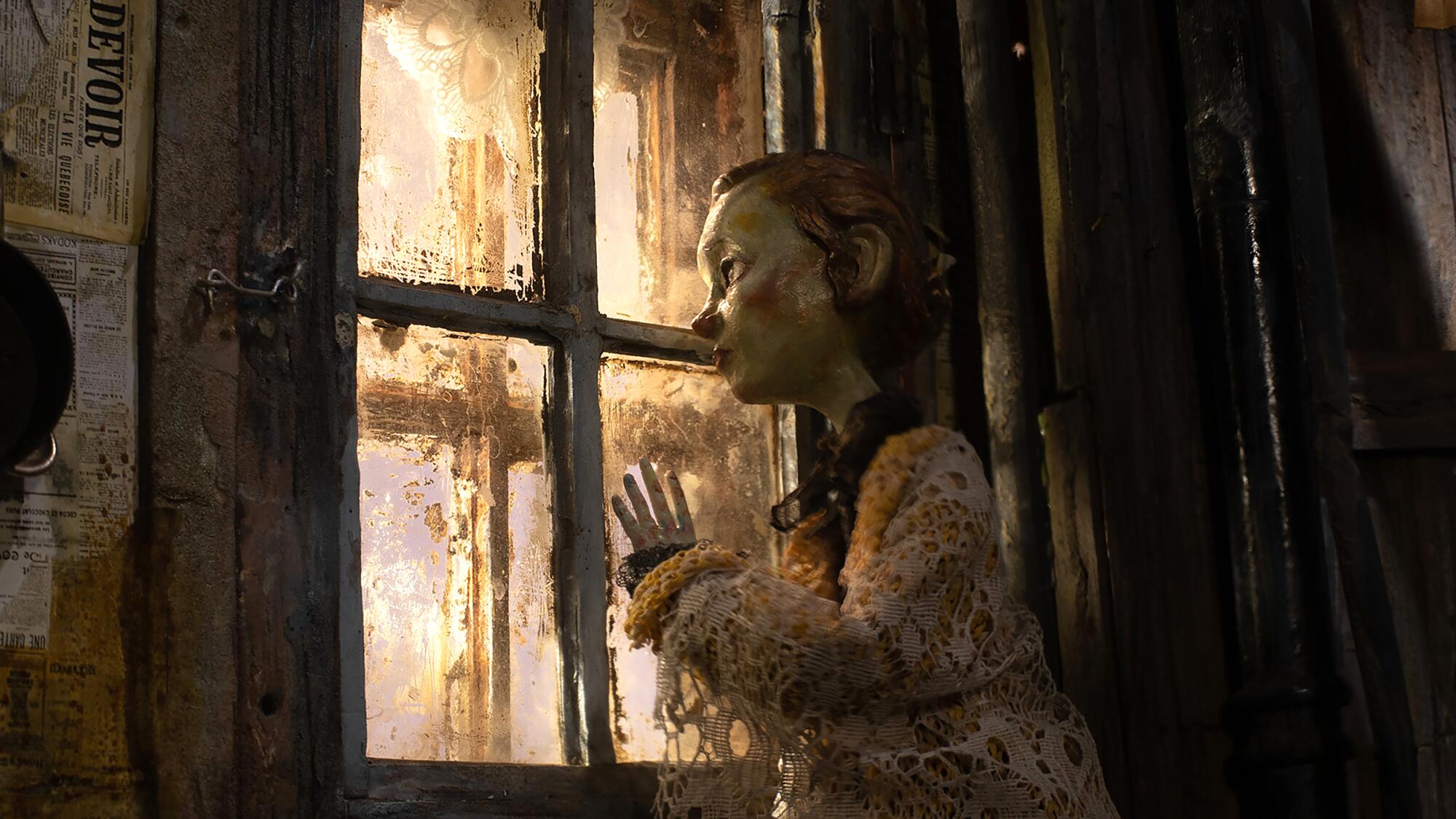
(National Film Board of Canada)
In a meticulously crafted stop-motion world of gritty dockside poverty, a starving waif discovers the neglected girl in a shabby home weeps not teardrops but pearls. A greedy pawnbroker gets involved, and the pieces are in place for a fable — a surreal one, without the customary lesson at the end.
“We felt that telling a classic, moral fable in the 21st century was absurd,” says co-auteur Chris Lavis. “So we set it in the beginning of the 20th century, when we felt that whole romantic worldview was just about to crack and fall off a cliff.”
Co-auteur Maciek Szczerbowski says in stories such as those of Hans Christian Andersen, “The moral seemed to be that the more you suffer, the more guaranteed is your entrance to heaven. We don’t believe in that.”
Of the film’s tantalizing ending, Szczerbowski says, “When you leave something open-ended enough that a viewer can infuse themselves into the story and add their own emotional maturity into it, I think that makes a story a little bit richer.”
‘Retirement Plan’ 
John Kelly and Andrew Freedman’s light, contemplative film reads as a hopeful look at retirement and beyond. In the first half, we see the retiree trying the things he’d imagined he would as a younger man; in the second, we become aware of him aging, a reminder that retirement is not a static state.
“I was inspired a little bit by my dad, who had a very active retirement,” says Kelly. “He passed away during the making of the film. We’d already storyboarded and scripted, but that compelled me to go deeper, emotionally, and search for something more truthful in the second half, when the character does undergo this sort of deterioration.”
Freedman says, “We’re all under extreme pressure today to live, to buy houses, to work. I find the whole film a refreshing reminder that we only have one go through [in] life. It is quite a universal experience, I think, whether you’re young or old, to reflect upon your own life: ‘Am I doing the right thing?’ ”
‘The Three Sisters’ 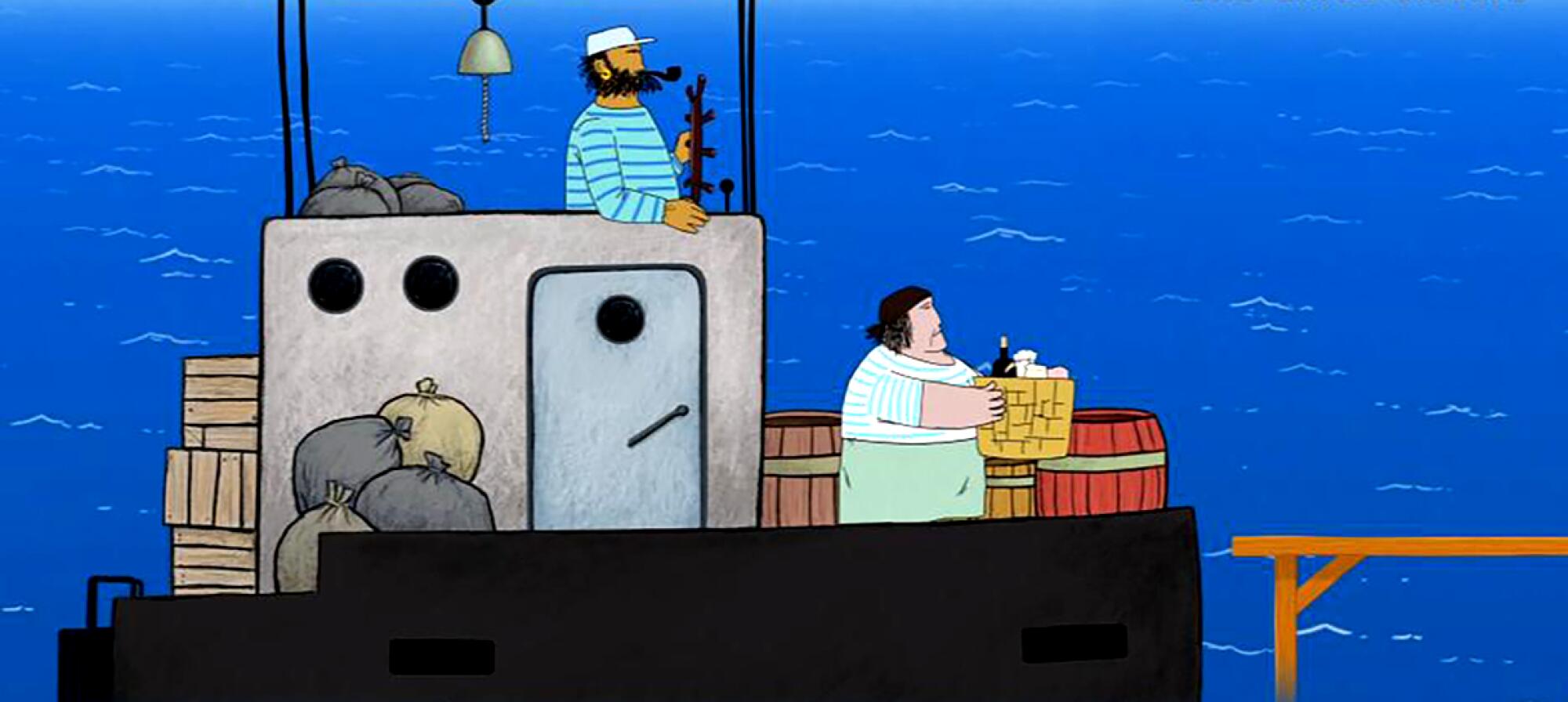
(Polydont Films / Everett Collection)
Yes, it’s Russian. Yes, it’s “The Three Sisters.” No, not that “Three Sisters.”
“A friend of mine told me a story that hooked me: Three sisters live soul-to-soul, but their peaceful existence is disrupted by a man who suddenly appears,” writes animator Konstantin Bronzit, recipient of his third Oscar nomination, via email. “I’m very glad that I’m surprising the audience with the fact that it’s not Chekhov.”
Instead, it’s a light, line-drawn tale of sisters on a tiny island forgetting themselves, then remembering.
“I wanted to make a light, life-affirming movie. I wanted to leave the viewers with the hope that, no matter what, everything would be fine. We have to believe in something.”