
✕
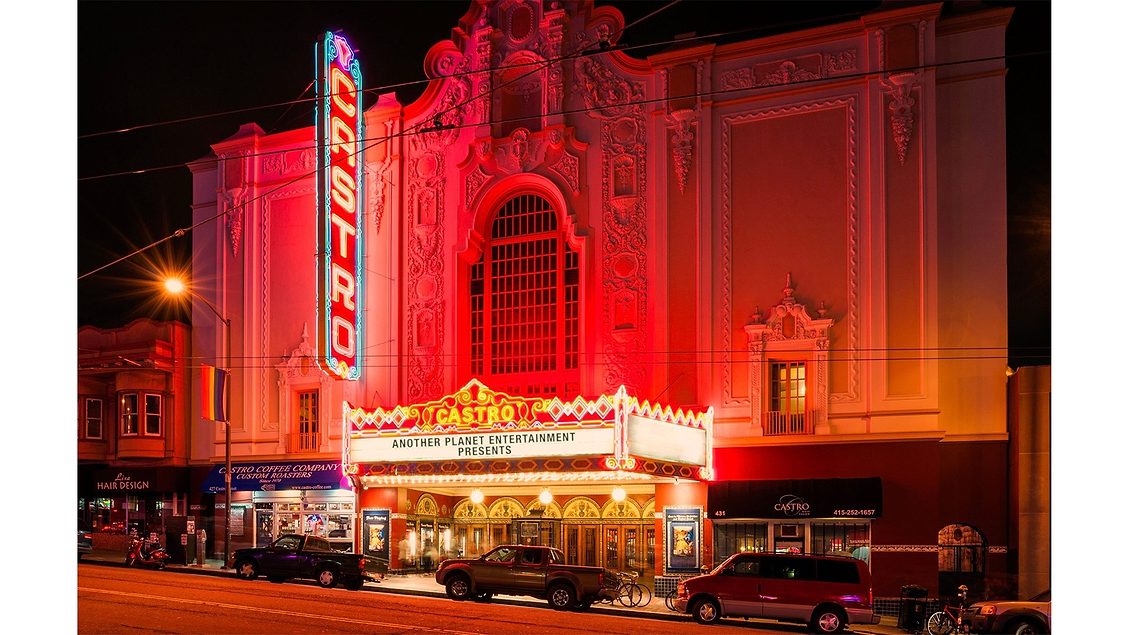
San Francisco’s Castro Theatre—a beloved landmark in the city’s LGBTQ+ epicenter— reopened earlier this month after a two-year, $41 million renovation. Local firm CAW Architects with Page & Turnbull, preservation architects, led the 24,500-square-foot project. The work includes a full building restoration; an unassuming four-story addition with restrooms, dressing rooms, and storage; and new mechanical, electrical, and theatrical systems that allow the building to transition from a historic movie palace to a contemporary performance center.
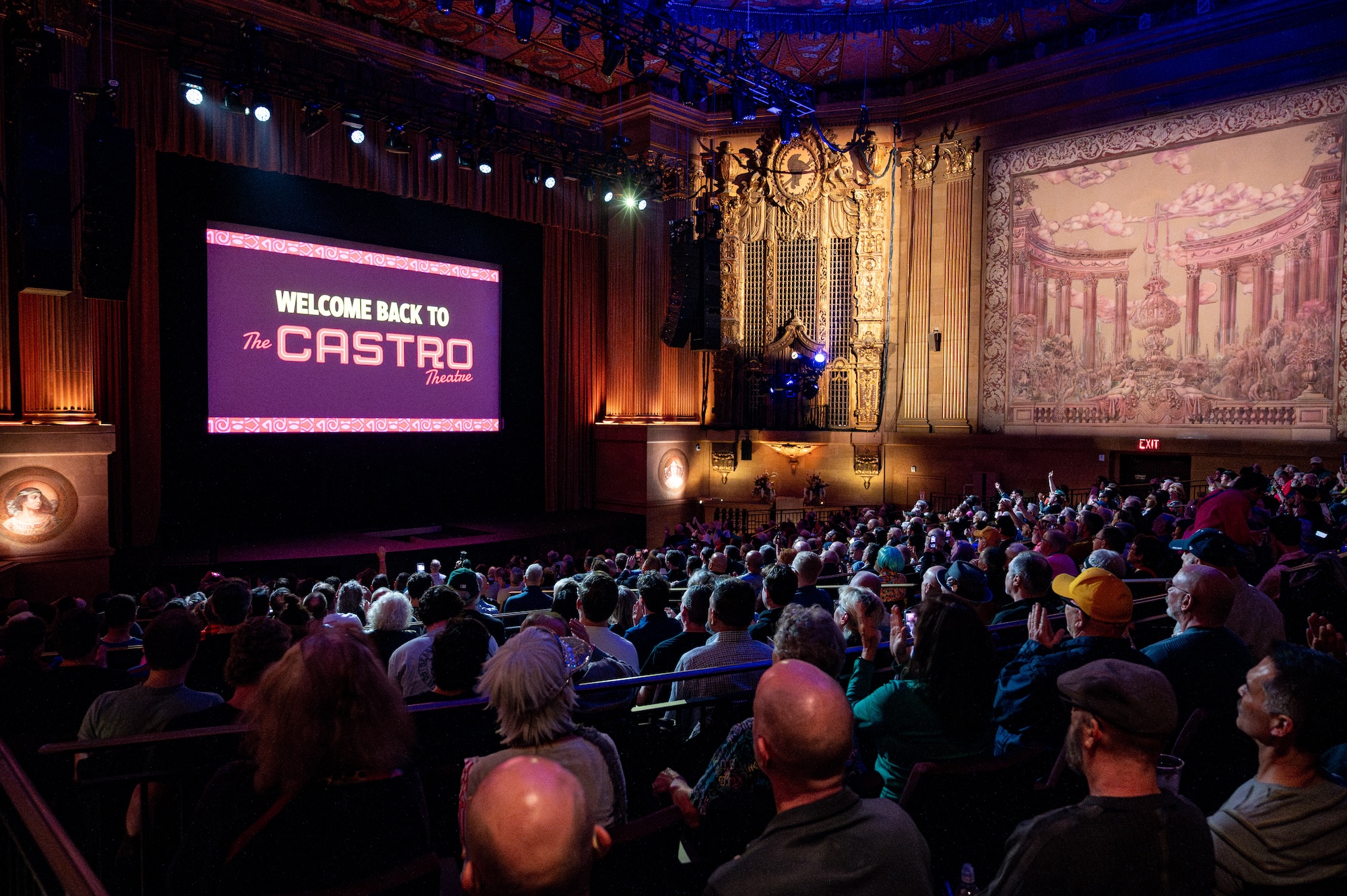
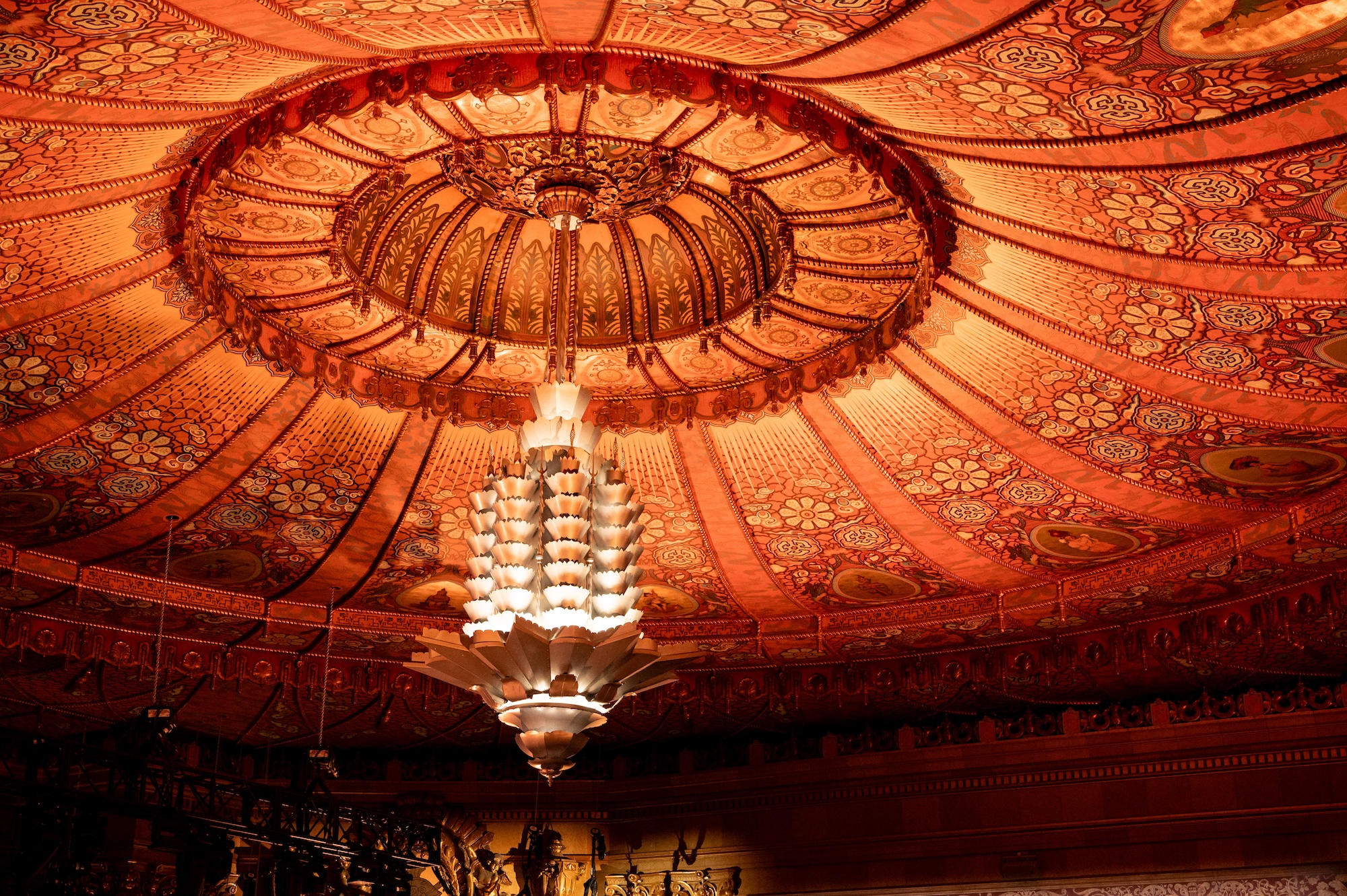
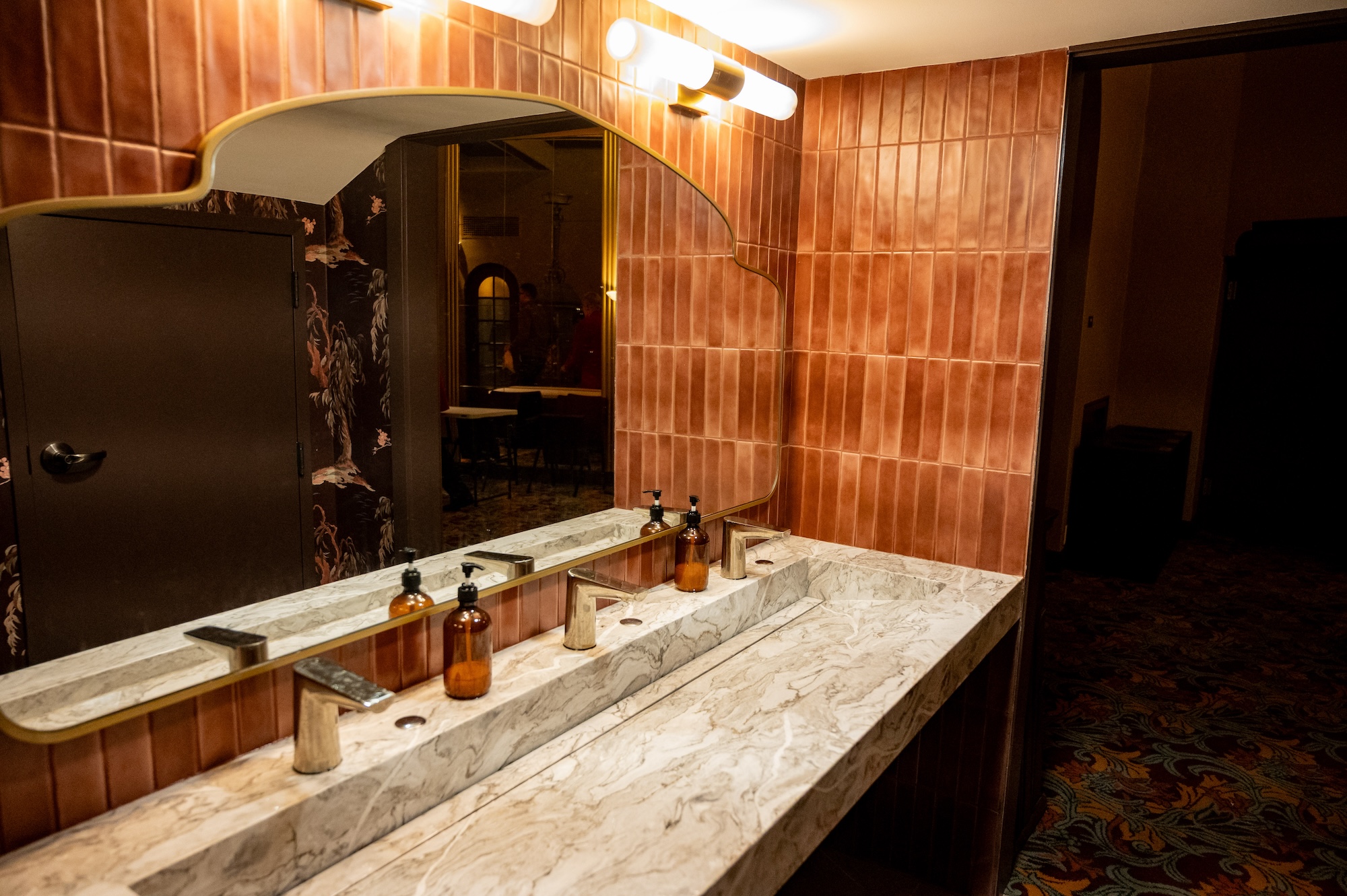
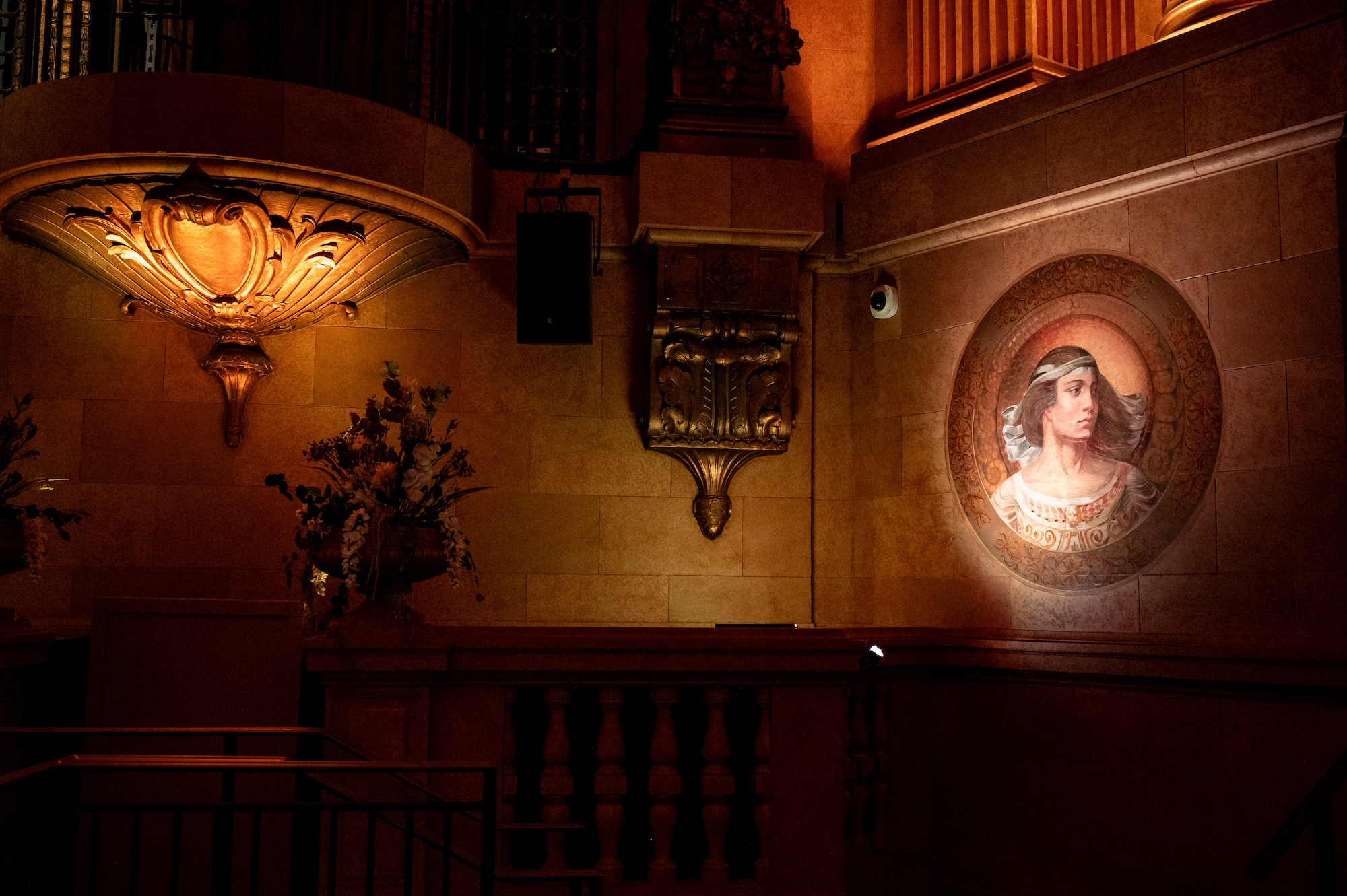
The interior of the restored Castro Theatre, which celebrated its reopening on February 6. Photos © Jason Chew, courtesy Another Planet Entertainment
The team’s main goal was to preserve the building’s history, including large swaths of the original 1922 design by prominent Bay Area architect Timothy Pflueger (1892–1946). His eclectic work includes a Spanish baroque facade, Italian Renaissance murals, and an ornate plaster ceiling whose shape evokes a Roman canopy and whose painting was, according to Pflueger, “inspired by ancient priest robes and cloths for which every oriental shop in San Francisco…was scoured.” That Eastern-influenced painting—now freed from layers of cigarette smoke—is the showstopper on entering the revitalized auditorium. The team also restored the building’s art deco chandelier, added after a 1937 fire, and its neon marquee and blade sign, enduring icons of the Castro District. The renovation work led to a surprise hidden for at least 50 years behind the movie screen. “When we started this project,” says Carolyn Kiernat, principal at Page & Turnbull, “nobody knew that a gold-painted plaster proscenium was there.” Now restored, the ornately columned frame commands center stage.
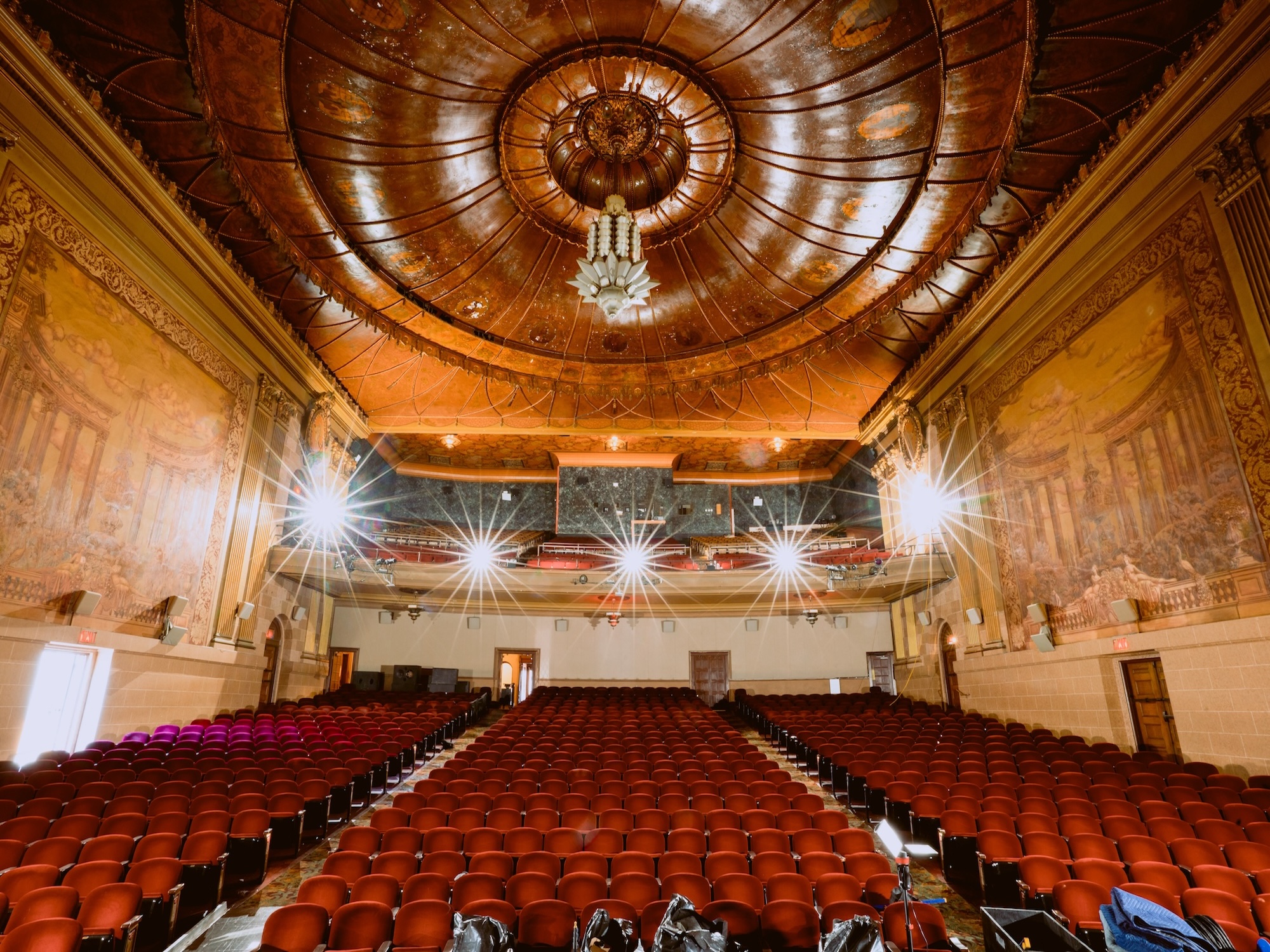
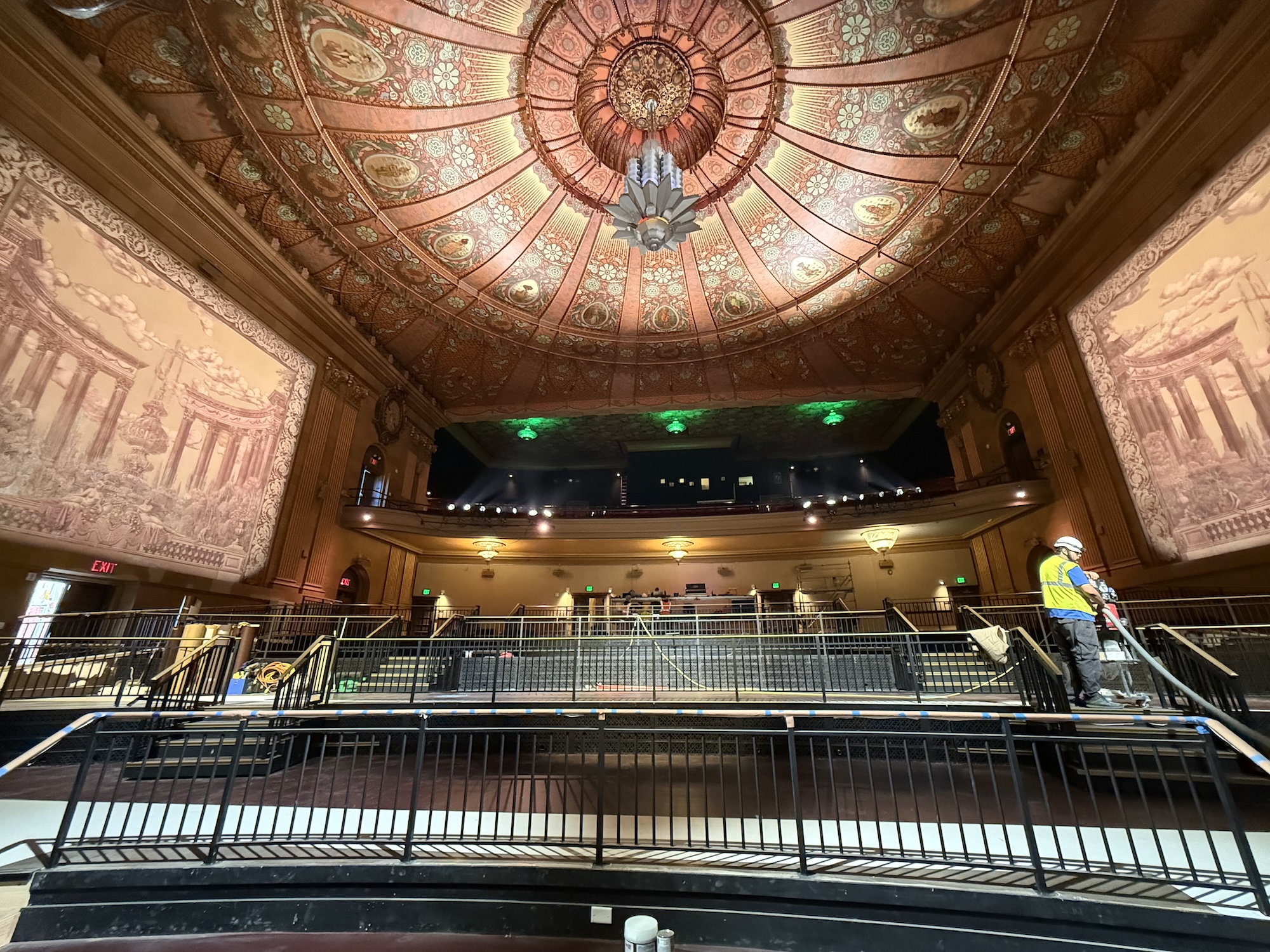
Before and after shots of the restored theater. Photos courtesy CAW Architects
Behind the scenes, the design team did not shy away from 21st-century improvements. These include comprehensive LED lighting, a forced-air HVAC system with underfloor air distribution, and new rigging, curtain, and projection screen. Multiple sound systems were put in place for various performance types. These include a dedicated system for a new digital organ that rises from a trap stage, allowing the venue to continue its tradition of holding a recital before a film rolls. The organ ascends on an elevator that replaced a hand-pulled system.
The renovation of the Castro Theatre was not without controversy. Locals who wanted the building to remain a movie-only venue petitioned the city’s Historic Preservation Commission to deny the proposal to replace raked orchestra seating and level its floor. That effort was defeated, but CAW addressed the concern by designing retractable platforms that provide tiered rows of chairs for film screenings, lectures, and other seated performances and flat surfaces for concerts, parties, and the like. CAW conceived the idea to slide these platforms under one another, in stacks of four, and worked with a company that builds movable staging to execute it. “To my knowledge, no one’s ever done this kind of a trundle system where they’re self-supported,” says Christopher Wasney, principal at CAW. “The importance of the theater demanded this level of innovation.”
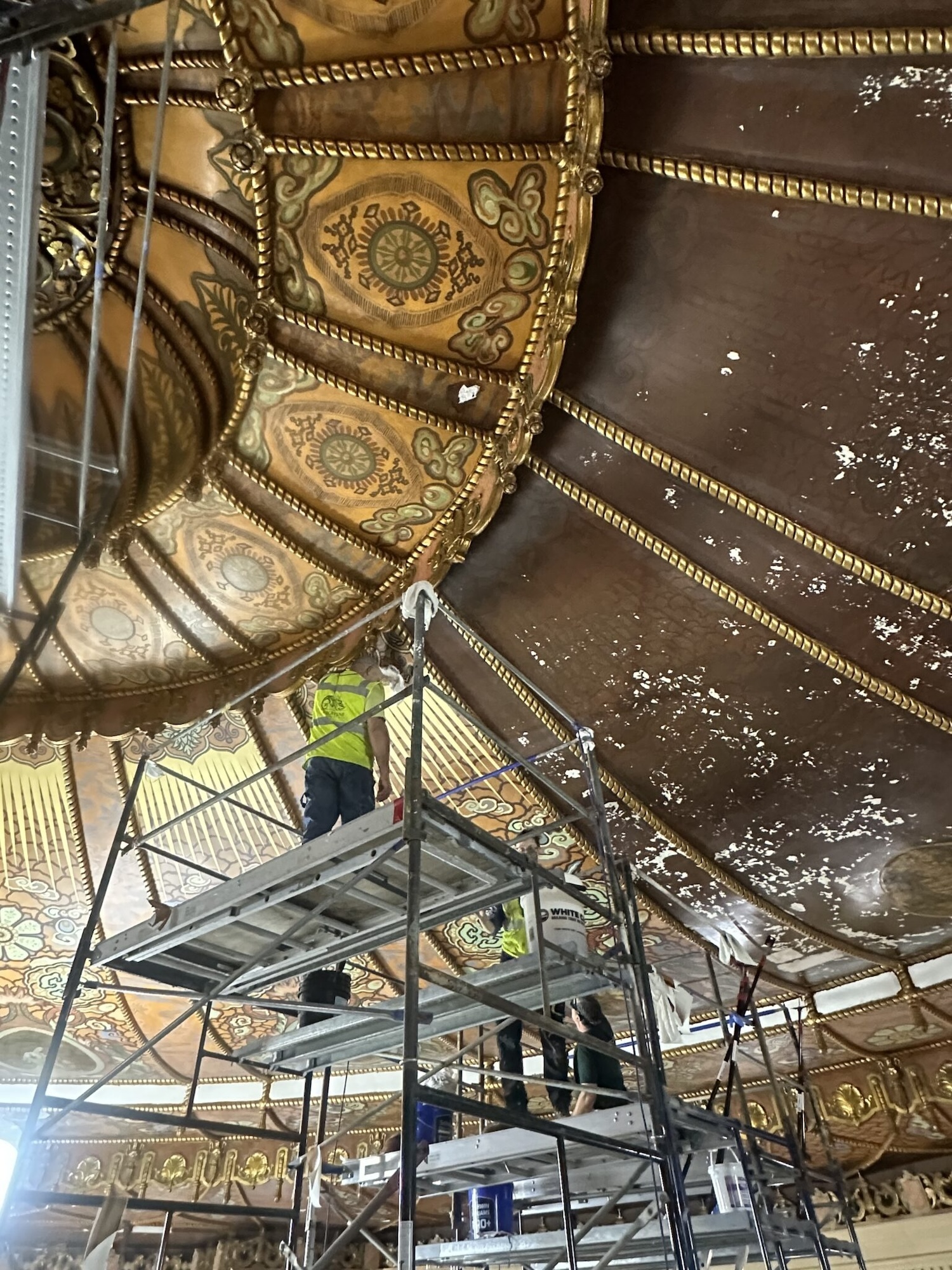
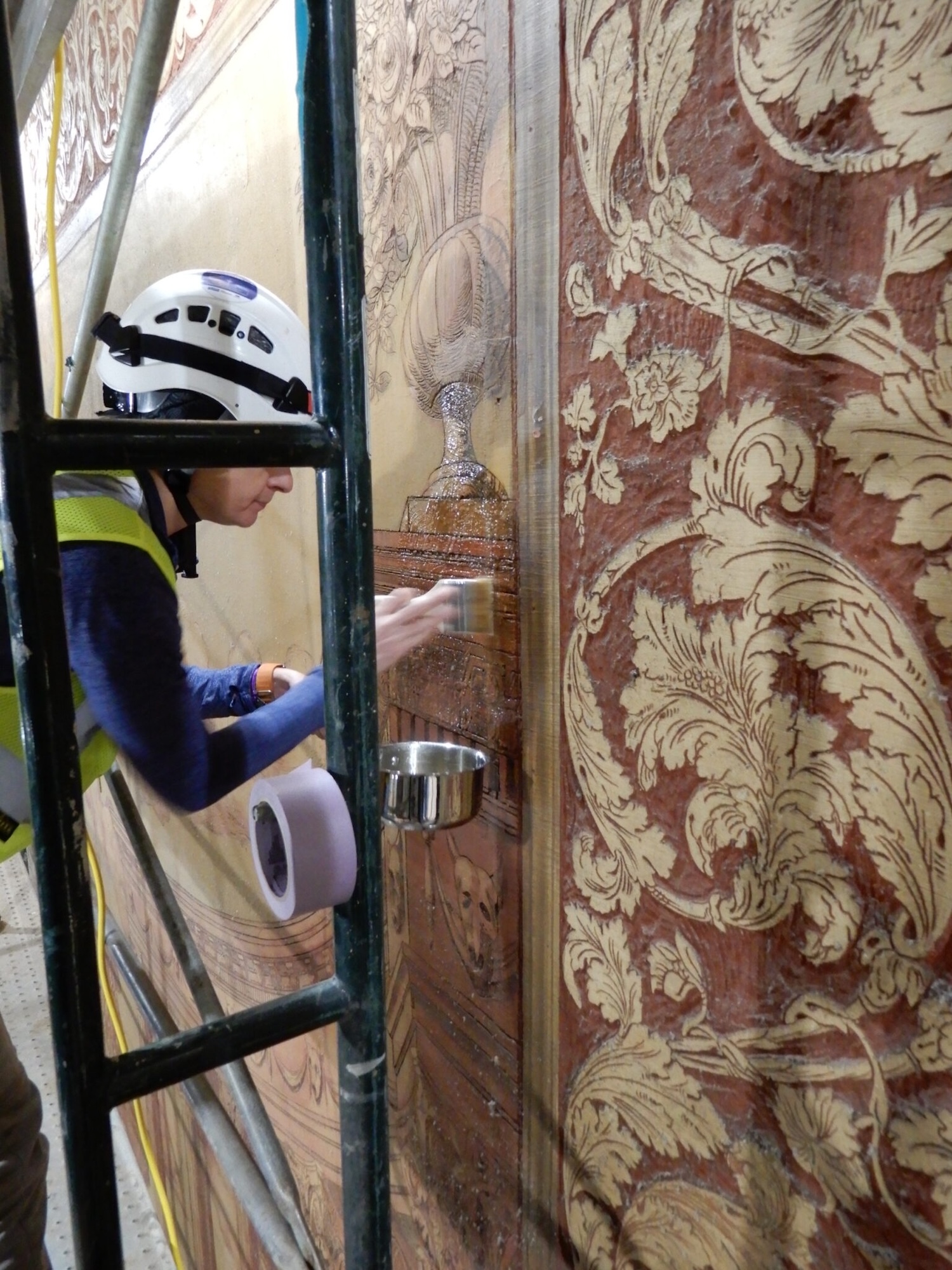
Restoration work underway. Photos courtesy Evergreene Architectural Arts
That innovation was put to the test last week. In a nod to both movie lovers and the Castro’s LGBTQ+ community, the theater’s opening night featured a sold-out screening of drag road comedy The Adventures of Priscilla, Queen of the Desert. The following night—after staff stacked the orchestra-level chairs (fixed chairs, including a small number that possibly date to 1922, fill the mezzanine) and trundled its floors—it hosted a raucous disco dance party. While some may still bemoan the alterations to Pflueger’s design, others appreciate that the building remains a performance space (unlike Pflueger’s 1925 Alhambra Theatre on Polk Street, which was converted to a fitness center). The rejuvenation of the Castro Theatre not only will help make it economically viable but also may help to reactivate the neighborhood. “I’ve never had a project,” says Wasney, “where I felt the stakes were higher for the community.”
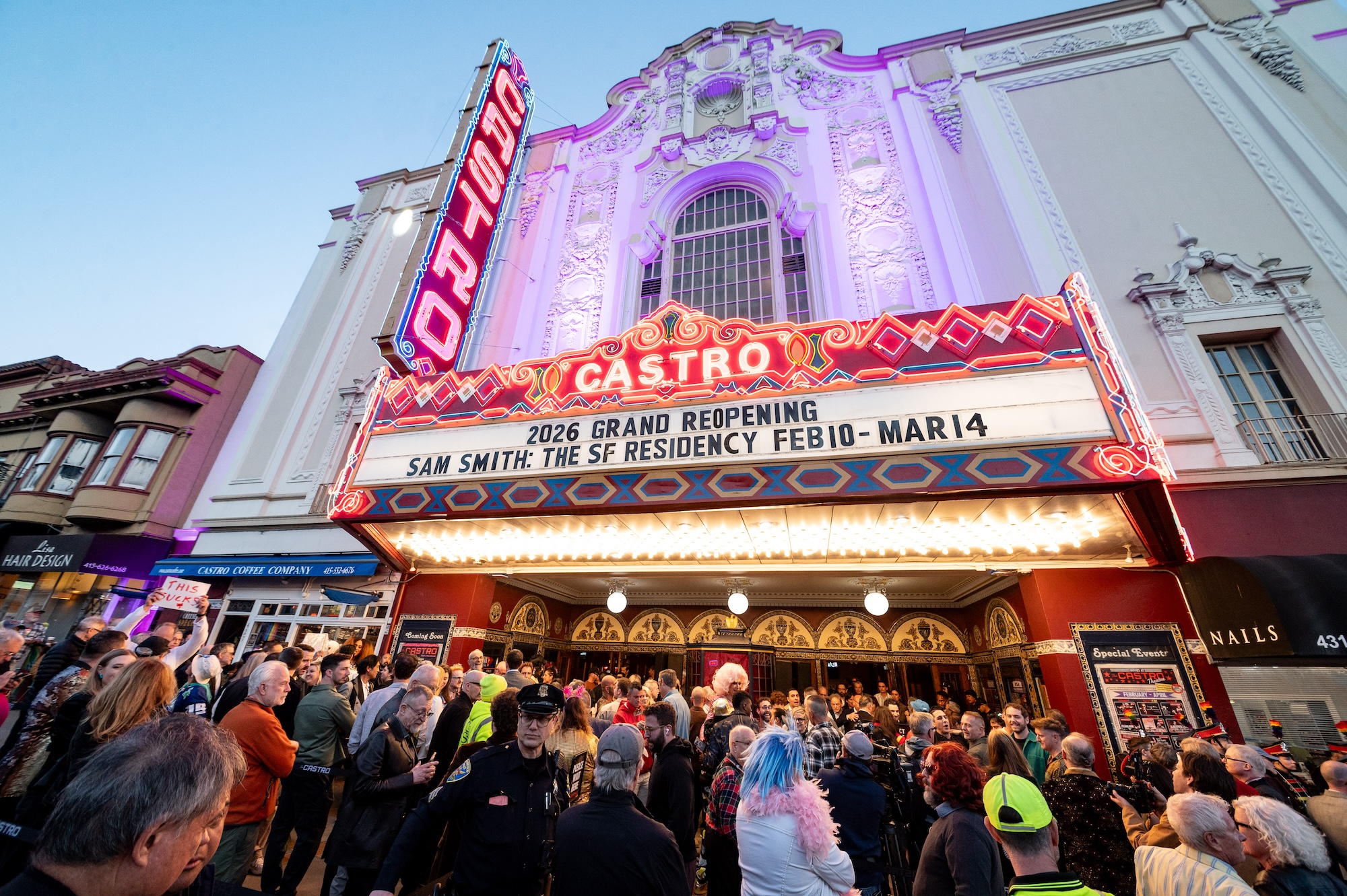
Photo © Jason Chew, courtesy Another Planet Entertainment