

Traditionally, the Super Bowl kicks off the spring home buying season. The days are growing longer, winter weather is on the wane and open houses no longer need to compete with Sunday football games. But this year, the market barely took a break for the December holidays. The rush that began last fall rolls on.
Properties are in contract within days of listing, bypassing open houses and brokers’ tours. Offers are all-cash, with no contingencies. And after years of buyers turning their noses up at anything but turnkey houses, even fixer-uppers are flying off the shelf.
There is an “egregious shortage of inventory” in San Francisco, according to Compass’ February market report, with about 20% fewer listings than January 2025. One in four active San Francisco listings went into contract last month, an absorption rate that’s 45% higher than last year. There were one-third fewer price reductions in January, year-over-year, and nearly three-quarters of single-family homes and just over one-quarter of condos sold for more than the asking price.
This is just the beginning, agents suggest, as the market moves from spring-training mode into the heart of the season, just as the anticipation over IPOs from some of AI’s biggest names is expected to reach a fevered pitch. Unlike in previous tech booms, in which the wealth was created by companies largely based in Silicon Valley, the center of AI is San Francisco, which means neighborhoods across the city — not just those like Noe Valley and Bernal Heights that offer easy commutes south — are feeling the crunch.
Despite the crazy conditions, buyers could still benefit by making moves ASAP.
“They likely will pay themselves big economic dividends from buying now,” said Alexander Lurie of City Real Estate.
The clock is ticking
Buyers must be prepared with pre-approval letters from lenders or a war chest of cash so they can jump if an opportunity strikes.
“Properties will literally show themselves, and within a day or two, they will be sold,” Lurie said.
Lurie, the half-brother of San Francisco Mayor Daniel Lurie, said renewed optimism in the city is driving the frenzy, along with return-to-office policies. VC funding, secondary-market liquidity events, and expected AI IPOs later this year are adding fuel to the fire.
“Each of them individually are powerful drivers, and all of them combined have really changed the game here for buyers and sellers,” he said.
Goldman Sachs analysts put the value of this year’s predicted IPOs at a record $160 billion, with SF-based companies Open AI, Databricks, and Anthropic leading the likely-to-go-public list. In anticipation, some of their employees are liquidating shares on the secondary market.
Getting into a home before their co-workers is a large part of the appeal to cashing in early. “They’re often worrying about their colleagues taking a home right out from under them,” said Lurie, who has worked with several such clients.
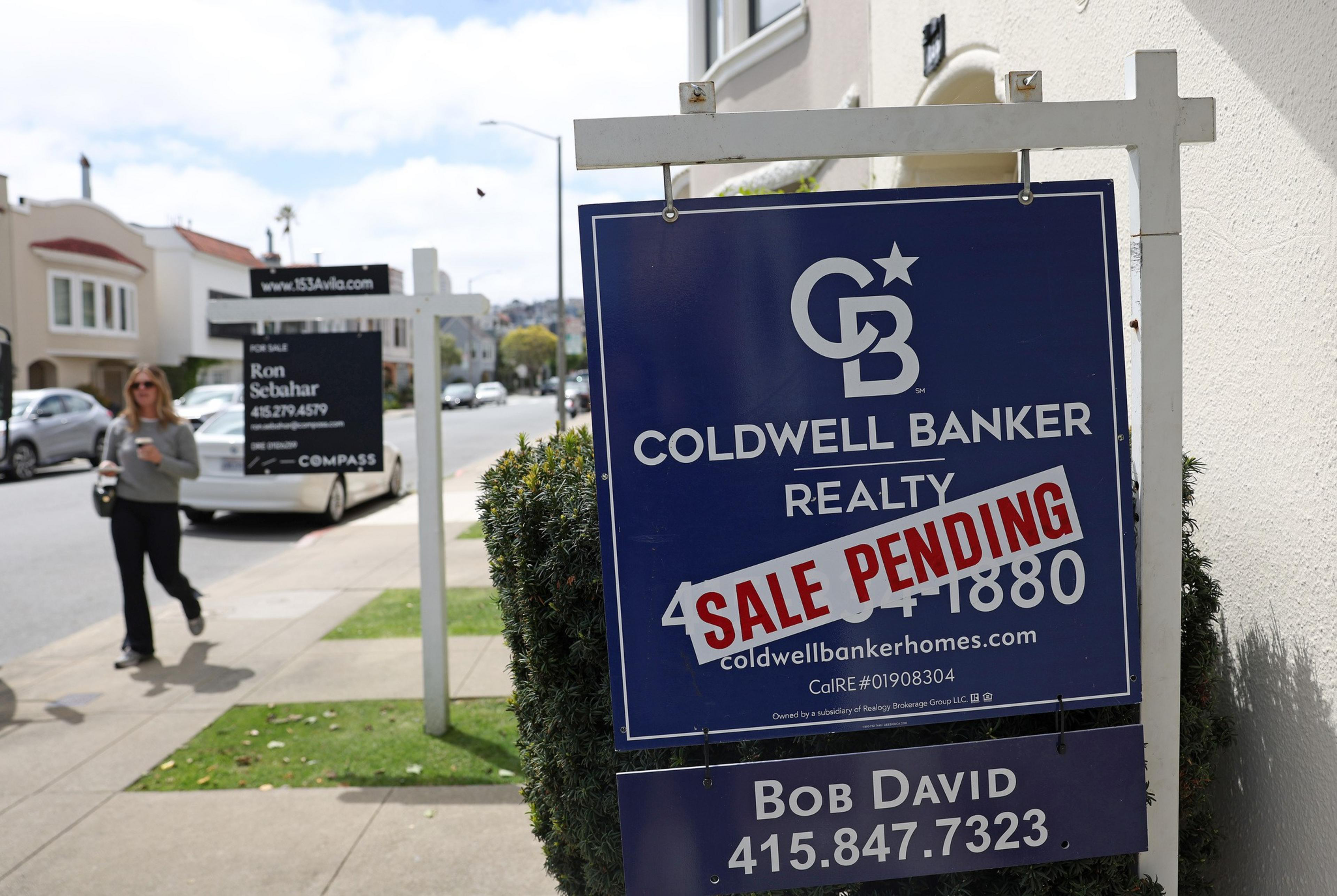 AI workers getting early access to their equity have put the market into high gear. (Photo by Justin Sullivan/Getty Images) | Source: Getty Images
Many in the tech sector don’t need to wait for an IPO. Seven-digit signing bonuses are on the table, as are company-led liquidity events like stock buy-back programs. For firms recruiting top talent, these perks are all part of the package. And those funds often go swiftly from employees’ bank accounts into real estate.
“They want to retain the talent, so they’re offering access to the funds much quicker,” said Jenn Davis, an agent with Christie’s International Sereno who has had several clients come to her with impending liquidity events. They were aware of the IPO-related time crunch and typically bought homes within a month of getting their funds, she said.
“I did have some clients that were flush with cash and bought real estate right away,” she said. “So I think that concern is real, and there absolutely are buyers now that are focused and trying to get in the market before the anticipated influx of cash.”
What if the AI bubble bursts?
The exuberance over AI IPOs is all very 2018, when the market anticipation about public offerings from Uber, Airbnb, and Zoom pushed home prices to staggering heights. At that time, some buyers were concerned that a wave of millionaires would steal their shot at homeownership, recalled Dan Risman Jones of Ascend Real Estate.
But those companies had been around for years, Jones noted, and their values were generally understood. Things are less certain and more manic this time around, leading to hand-wringing by buyers and sellers alike about a possible AI bubble.
“There’s a lot more unknowns from people on the outside looking in,” Jones said of the AI boom. “Really, in just a year or two, these companies became more mainstream and now are flexing their muscles with billion-dollar valuations, and the idea of an IPO.”
Macroeconomic and political shifts also loom large. Just as President Donald Trump’s tariff threats derailed the spring home-buying season last year, the administration’s willingness to use military might to expand American influence everywhere from South America to the Arctic Circle has the potential to bring the market to a standstill.
But assuming the bubble doesn’t pop and the U.S. doesn’t invade Greenland, more inventory is likely to trickle onto the market in the coming weeks, as it typically does post-Super Bowl. Agents hope that lower interest rates will entice sellers to make a move after years of being “locked in” to their 3% rates; additionally, those who signed five-year adjustable mortgages during the pandemic are coming due for a major reset that may push them to pull the trigger on selling. But homeowners who want to stay in SF may also be loath to enter the market themselves, given the lack of inventory, and some are fixing up or expanding their properties, rather than face the house hunt.
Even if the new inventory tracks or slightly exceeds mid-spring upticks from previous years, it would not be enough to satiate the desire from thousands of newly minted San Francisco-based millionaires.
“I don’t think that there’s a lot of sellers on the sidelines saying to themselves, ‘Oh, all these companies are going to IPO, let me put my home on the market,’” said Andy Ardila at Compass. “I think all of a sudden, the market’s going to get flooded with very qualified, high-net-worth buyers, and there’s just not going to be any inventory.”
Just look at Silicon Valley. Nvidia’s AI-fueled stock boom has turned three-quarters of its 36,000 employees into millionaires, according to a June poll of 3,000 workers at the Santa Clara-based chipmaker. Nearly half were worth more than $25 million at that time, and the stock is about 40% higher than it was then. Yet there were fewer than 1,500 properties listed in all of Santa Clara County in January, according to Compass data.
The market can’t run smoothly when the millionaires from Nvidia alone dwarf the available inventory, said Christie’s International Sereno agent John Faylor, who is based in Los Gatos.
“And that’s one company,” he said.