
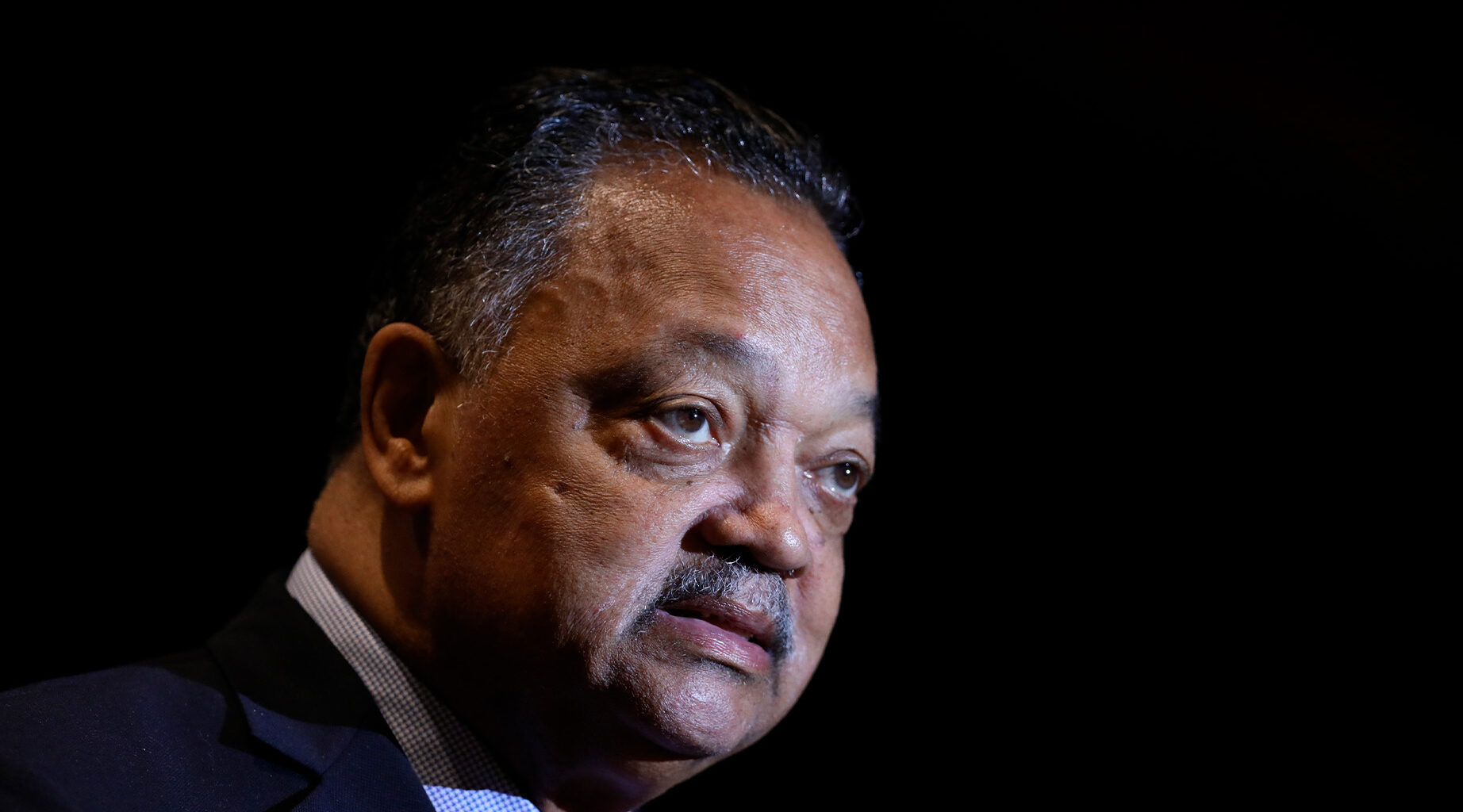
The minister and activist helped shape national civil rights efforts and was a frequent presence in Los Angeles during moments of unrest and political change
The Reverend Jesse Jackson, a civil rights leader, Baptist minister and two-time Democratic presidential candidate who rose to prominence after the assassination of the Reverend Martin Luther King Jr., died Tuesday at age 84.
Jackson died peacefully surrounded by loved ones, according to a family statement. A cause of death was not immediately released. He had lived for years with progressive supranuclear palsy and publicly disclosed a Parkinson’s diagnosis in 2017. “Our father was a servant leader- not only to our family, but to the oppressed, the voiceless, and the overlooked around the world,” the Jackson family statement read.
A close associate of King, Jackson became one of the most visible national advocates for racial and economic justice in the decades following the Civil Rights Movement. Through Operation PUSH and later the Rainbow/PUSH Coalition, he pressed corporations and elected officials to expand hiring, investment and voting access in Black communities across the country (including in Los Angeles).
Jackson maintained longstanding ties to Southern California, frequently appearing in Los Angeles during moments of civic unrest and political tension. He met with community leaders after the 1992 uprising following the Rodney King verdict and often partnered with local clergy and activists to push for police reform, economic equity and corporate accountability. He also famously worked with entertainment and business leaders in Los Angeles to promote diversity initiatives.
Jackson’s presidential campaigns in 1984 and 1988 energized Black and Latino voters in California, helping reshape Democratic politics in the state. Over the years, he remained a regular presence in Los Angeles churches, labor rallies and civil rights gatherings.
Political leaders across the spectrum, including President Donald Trump, described Jackson as a moral force who championed marginalized communities. He is survived by his wife, Jacqueline, and their children. Public memorial events are planned in Chicago, his longtime home.
Scroll to continue reading