
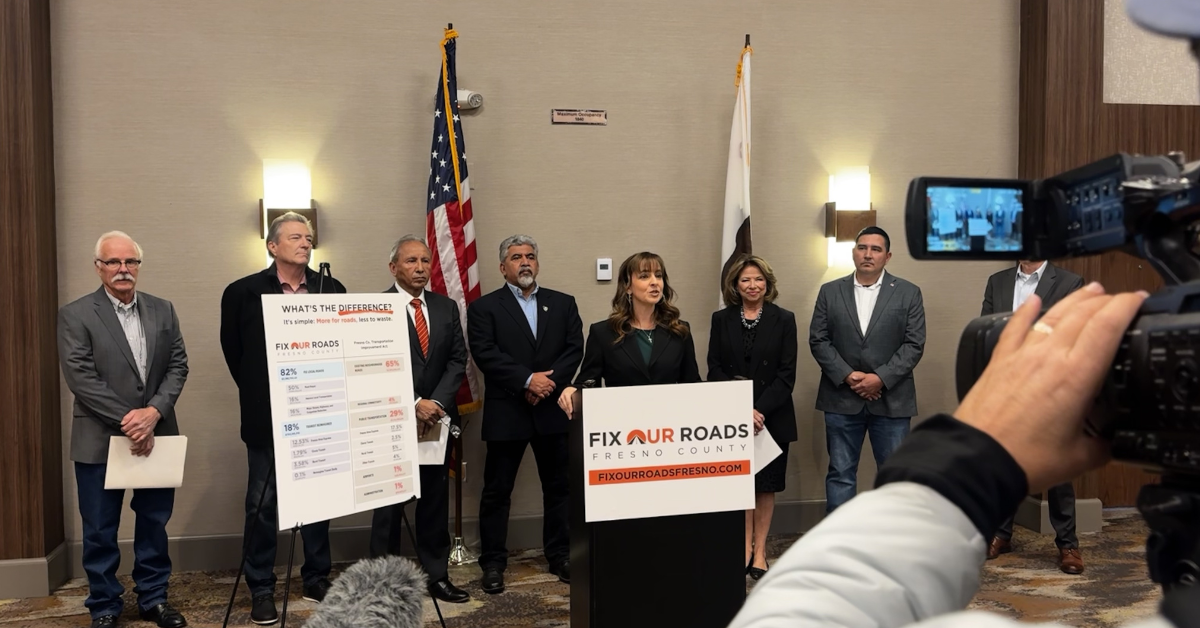
A coalition of local elected officials, labor representatives, and transportation experts unveiled the Fix Our Roads Fresno County Initiative, a new tax proposal aimed at improving road conditions across Fresno County.
The announcement, made Tuesday by Clovis Mayor Pro Tem Diane Pearce, former Fresno County Supervisor Henry Perea, Reedley Mayor Matthew Tuttle, and Fresno Building Trades Council chief Chuck Riojas, could lead to voters having two competing plans to choose from on the November ballot.
Breaking down the numbers: The new plan, which would replace the decades-old Measure C, runs the same length and maintains the tax rate as the prior measures – a 20-year, half-cent sales tax.
Backers say it would raise approximately $3.9 billion, with 82% — nearly $3.2 billion — dedicated to road repairs.
The proposal would also allocate 18%, or $702 million, to public transit services with an eye toward consolidating Fresno County’s three fragmented transit agencies for greater efficiency.
The plan was developed by some of Fresno County’s biggest names in transportation planning, including former Fresno Council of Governments chief Tony Boren, former Fresno County Transportation Authority chief Mike Leonardo, former statewide Caltrans director Malcolm Dougherty, and former Caltrans District 6 director Diana Gomez.
Comparison shopping: Perea, who helped develop the proposal, touted its flexibility compared to the rival Fresno County Transportation Improvement Act, introduced by social justice activists and the Central Valley Community Foundation.
The Fresno County Transportation Improvement Act also lasts 30 years, rather than 20. For Clovis’ Mayor Pro Tem Pearce, that extra 10 years was the difference between success and failure when Fresno County unsuccessfully tried renewing Measure C in 2022.
“Clovis voters did not pass that measure by nearly 10 points,” said Pearce.
Perea described the activist-backed measure as being overly prescriptive, dictating spending to cities small and large rather than allowing municipalities to decide their priorities.
Among the objectionable provisions, Fix Our Roads supporters pointed to one mandate barring from municipalities from expanding roadways unless they were to build a bus or bike lane.
Another provision in the activist-backed measure explicitly banned measure funds from paying for recreational trails.
Fix Our Roads funding breakdown:
82% to road repair (50% direct road repair, 16% flexible city funding, 16% major streets/highways/congestion relief)
18% to public transportation
Fresno County Transportation Improvement Act funding breakdown:
25% to public transportation
4% to public transportation innovation
Measure P hangover effect: Fix Our Roads supporters were quick to note that the Fresno County Transportation Improvement Act was drafted by the same nonprofits who architected Fresno’s 30-year parks tax, Measure P.
The measure came under heavy scrutiny in the past two weeks after City of Fresno officials discovered $1.5 million in arts funding was embezzled by an employee of the Fresno Arts Council.
Fix Our Roads backers noted that their competition eliminates an added check-and-balance in the form of the Fresno County Transportation Authority, opting instead to consolidate all funding power within the Fresno Council of Governments.
“If you’re looking for a red flag, you’ll find it when you take away a key financial guardrail,” Perea said in a statement to The Sun.