
Before Londi Gamedze was diagnosed with ADHD during the first year of her Ph.D. program, she remembers feeling overwhelmed by the workload, and wondering to herself: “How are we supposed to do this?”
Then she was prescribed Ritalin, a stimulant that helps treat ADHD symptoms.
“It was a complete revelation,” Gamedze said. “It improved the quality of my life and my capacity to actually be a student.”
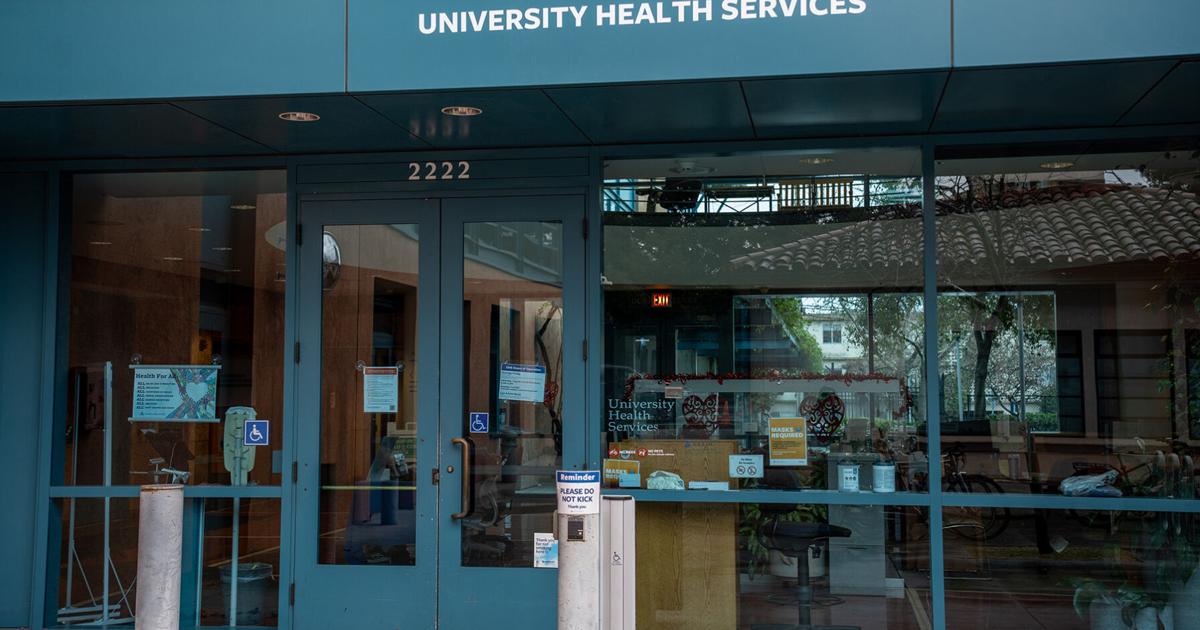
But on Oct. 31, 2025, Gamedze received a notification from the University Health Services Pharmacy that it could not provide her with her Ritalin prescription due to “ordering and stock issues.”
Gamedze is not the only one. Numerous students told The Daily Californian that they have been unable to obtain their prescribed ADHD medications from the UHS Pharmacy — even after the UHS said it had absolved the initial issue.
Instead, students say that they have gone without their medication for months, while access to pharmacies near campus remains an ongoing issue.
According to Lindsey Michels, critical communications manager of Student Affairs Communications, UHS Pharmacy was unable to order new controlled medications, including ADHD stimulants such as Ritalin, “due to the departure of personnel with access to the (Drug Enforcement Administration) ordering system.”
Michels said access to the DEA ordering system has since been resolved, and that campus has been doing outreach to let students know that they can refill their prescriptions again. Additionally, Michels said the pharmacy contacted students who had ADHD prescriptions to inform them of the disruption and to encourage them to work with prescribers to send subsequent prescriptions to an alternative pharmacy.
“Separately, as has been the case nationally for several years, intermittent supply chain shortages of certain stimulant ADHD medications can unpredictably affect pharmacies across the country, including UHS,” Michels added in an email.
Gamedze said she has repeatedly tried and failed to obtain her medication at other pharmacies.
“They didn’t have stock or they wouldn’t accept my prescription because of the type of psychiatrist I see,” Gamezde said. “I don’t have a car, so I was not calling pharmacies all over the Bay. So that’s where I’m at. I’m very frustrated.”
In addition, Gamedze said she has not yet been notified by the UHS as to when it would be able to fill her prescription again.
Campus sophomore Victoria Hernandez Padillawas similarly notified by the UHS that her medication would be unavailable. She has also been without medication for several months, and says she has not received any communications from the UHS that her medication is available again.
Hernandez Padilla said being without medication has severely impacted her performance in school, and last semester — when her prescription was cut off — she received her worst grades since starting at Berkeley.
“(People are telling me) to drop a class,” Hernandez Padilla said. “But I have to take this class. I shouldn’t have to drop a class to be able to manage it.”
Stephen Hinshaw, a campus professor of psychology who has studied ADHD extensively, said in an email that regularity in medication use is crucial for those who take prescribed ADHD medication.
Hinshaw noted that going without medication can not only compromise a person’s organizational and time management skills, but can also increase their risk for anxiety and depression.
Gamedze said when she goes without her medication, she experiences a “crash,” and a “haze” for a few days, and that she has been struggling to rebuild routine.
ASUC Senator Jada Yang, whose platform focuses on serving the disabled community, said she believes part of the issue students are facing is that the UHS Pharmacy is one of the only places in close proximity to campus where students can access prescription medication. The Walgreens on Telegraph Avenue closed its pharmacy last summer — marking the fourth Walgreens pharmacy closure in Berkeley in five years.
Colton Beardsley, also an ASUC senator, said access to medications in Berkeley is a “wider problem.” Beardsley himself said he has to plan his entire day around picking up his ADHD medication from an off-campus pharmacy, which is a 20-30 minute bus ride away.
Beardsley added that many of his friends have been forced to ration out their medication, cutting pills in half to spread out how long they can last.
Gamedze said she wishes that the UHS had taken more “responsibility” for the “lapse” and provided more concrete alternatives for students in the meantime, such as facilitating a relationship between students who rely on the UHS and another pharmacy.
“This is an educational institution,” Gamedze said. “Students with ADHD are really harmed by this.”