
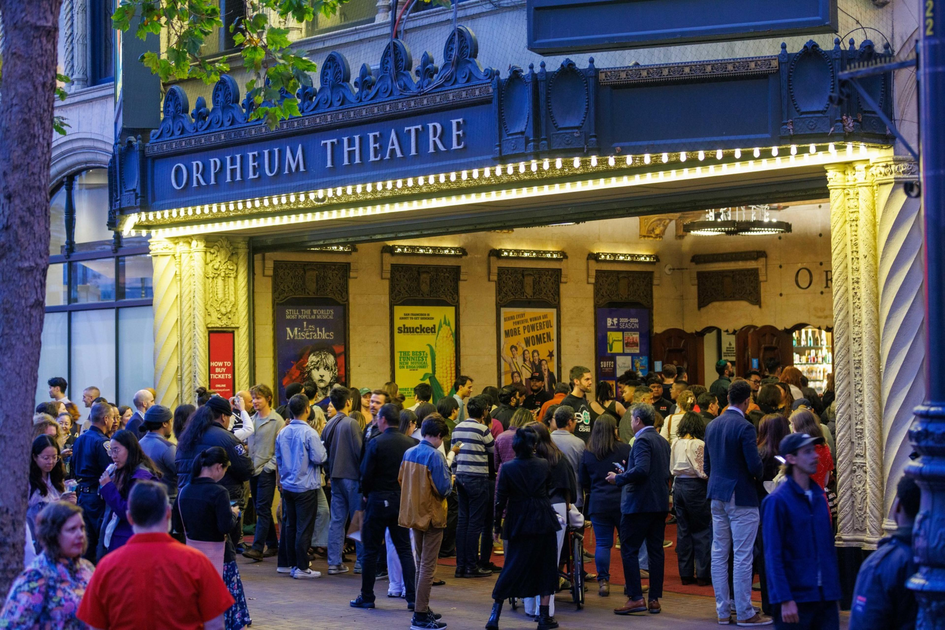
Live theater, which once dominated San Francisco’s entertainment scene, nearly went extinct during the pandemic.
Producers and theater operators saw their balance sheets devastated as theaters went dark for more than a year. Shorenstein Hays Nederlander, which operated the Orpheum, Golden Gate, and Curran theaters, sold its interests to British group ATG Entertainment in 2021. The American Conservatory Theater, which operates the city’s most prestigious acting school, transitioned to online classes and shut down its MFA program in 2022.
The big houses, which host the Broadway hits, are still struggling financially, despite reducing staff and operations, and many beloved indie venues have closed, leaving up-and-coming producers, actors, and staffers with fewer opportunities to showcase their work. A stunning 21 Bay Area theater companies have shuttered since 2020, 15 of them in San Francisco, according to Theatre Bay Area.
Three of those that closed — PianoFight, Cutting Ball Theater, and Exit Theatre — were within steps of one another on Taylor Street, where casual and professional theater nerds alike used to bar-hop and catch shows.
“We’re seeing the collapse of an ecology that used to be pretty special,” said Shafer Mazow, executive director of Z Space, (opens in new tab) a Mission theater that caters to independent creators.
What’s left is a thinning landscape in which companies and talent make due with fewer resources. San Francisco’s art scene, which is contending with museum struggles, gallery closures, music venue fade-outs (opens in new tab), and, most recently, the planned demise of the oldest art school, continues to sputter.
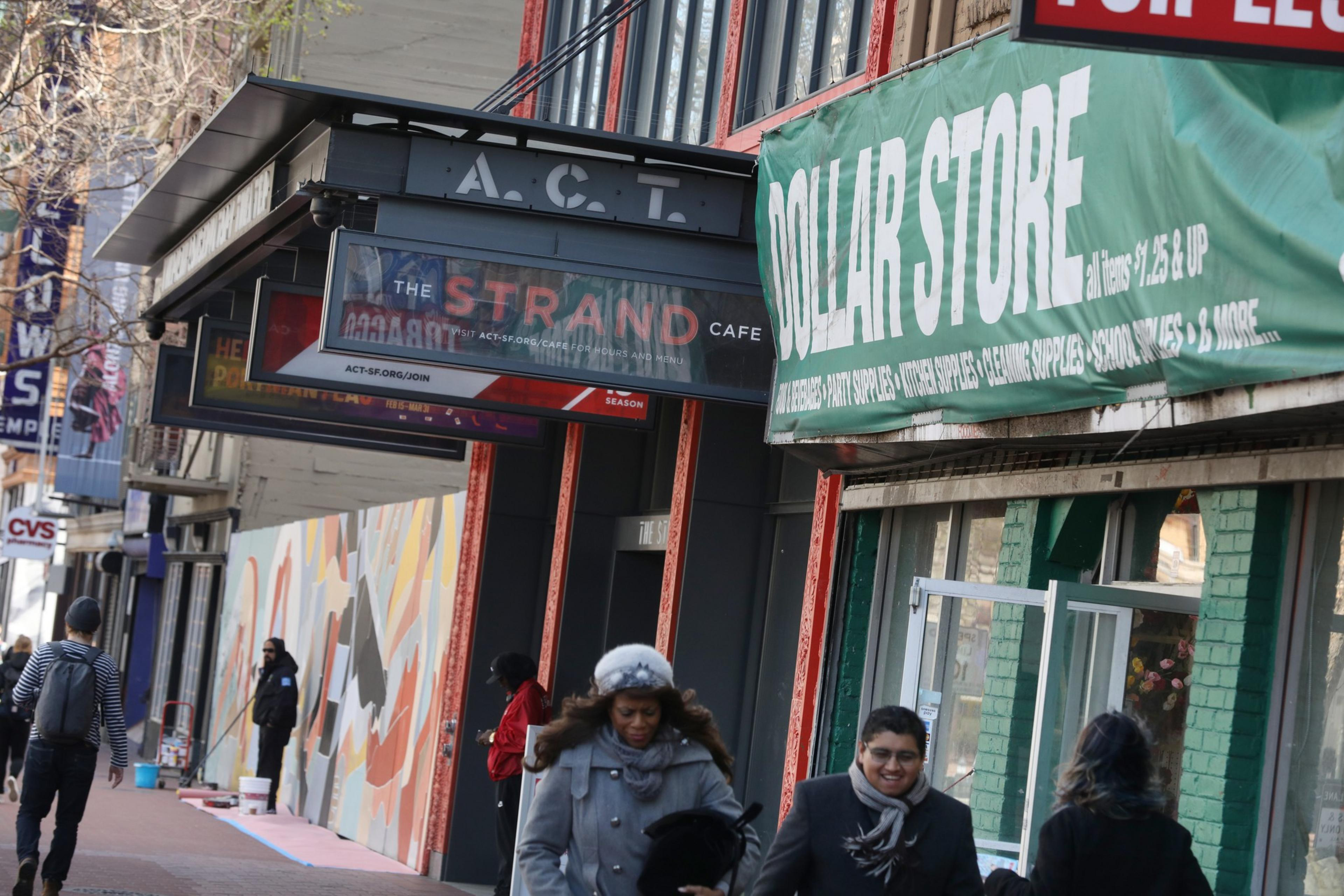 The ACT purchased and re-opened the Strand Theater in 2015. | Source: Lea Suzuki/San Francisco Chronicle via Getty Images
Interviews with more than a dozen company executives, showrunners, actors, and back-of-house workers paint a picture of an industry simultaneously grieving its former self while adapting to a new reality: Loyal audiences have shrunk, but the costs of producing shows are higher than they’ve ever been.
For decades, the local industry was kept alive primarily by baby boomer theatergoers and seniors. They tended to subscribe to entire seasons’ worth of shows and donate still more at the end of each year. But their contributions and attendance have declined in the last three years, due to age or fear of a neighborhood that became synonymous with street crime and dereliction. Attendance is rising among younger theatergoers, but not in sufficient numbers to compensate for the boomer dropoff.
“Audiences are coming back,” said Pam MacKinnon, the outgoing artistic director of the American Conservatory Theater who has been at the helm of programming the nonprofit’s two venues since 2018. “We just need them to come back the second time.”
Lean years at the box office
During the pandemic, industry leaders found themselves forced onto Zoom calls to “make hard decisions and figure out ways to operationalize them,” MacKinnon recalled.
“I am a director of plays and musicals,” she added. Cutting jobs “was not what I signed up for.”
But when the world reopened, audiences didn’t immediately reappear. The pandemic changed habits around in-person events of all kinds, making it harder to convince people to get off their couches — and devices — and into velvet seats.
In the summer of 2023, the heads of the Bay Area’s theater companies and leading arts administrators gathered at the ACT Strand Theater on Market Street to discuss the state of the industry. The event was titled “Rebuilding Our Communities,” and the atmosphere was tense, said Jenny Cohn, a consultant with TRG Arts, who presented an economic analysis.
In 2022, revenue from Bay Area theaters was less than in 2021, when patrons and donors were motivated to turn out and “save the arts,” Cohn recalled. By mid-2023, businesses that were already underwater were running out of time.
It’s clear that there has been a shift among audiences. Theater attendance since 2019 has dropped more than 20% among the biggest demographic, baby boomers, and between 50% to 67% among seniors, according to TRA Arts. During the same period, attendance by Gen X rose only 2.3% and millennials, 52%.
Char Dubinsky, a Xennial (opens in new tab) who has lived in the Bay Area for 13 years, is a “major theatre geek” who used to go to 35-plus shows a year. But in 2024 and 2025, she made it to only about 15, citing higher costs. “It’s just so expensive,” she said.
Soaring inflation has caused costs to climb for everything related to putting on a show: rent, wages, materials for building sets, even dry cleaning of costumes. Theaters experienced a nearly 20% swell in expenses (opens in new tab) between 2022 and 2023, according to the Kenneth Rainin Foundation, which conducted a study of 140 Bay Area arts organizations.
As a result, theaters operated at an average 7% budget deficit (opens in new tab) in 2023. The ACT posted net losses of $9.5 million in 2024, according to its latest tax filings. (opens in new tab)
For theater entrepreneurs like Dani Lancaster-Spinks, who took over the shuttered Stage Werx Theatre and relaunched it as Eclectic Box SF in 2023, that means she has to work harder to book their venues.
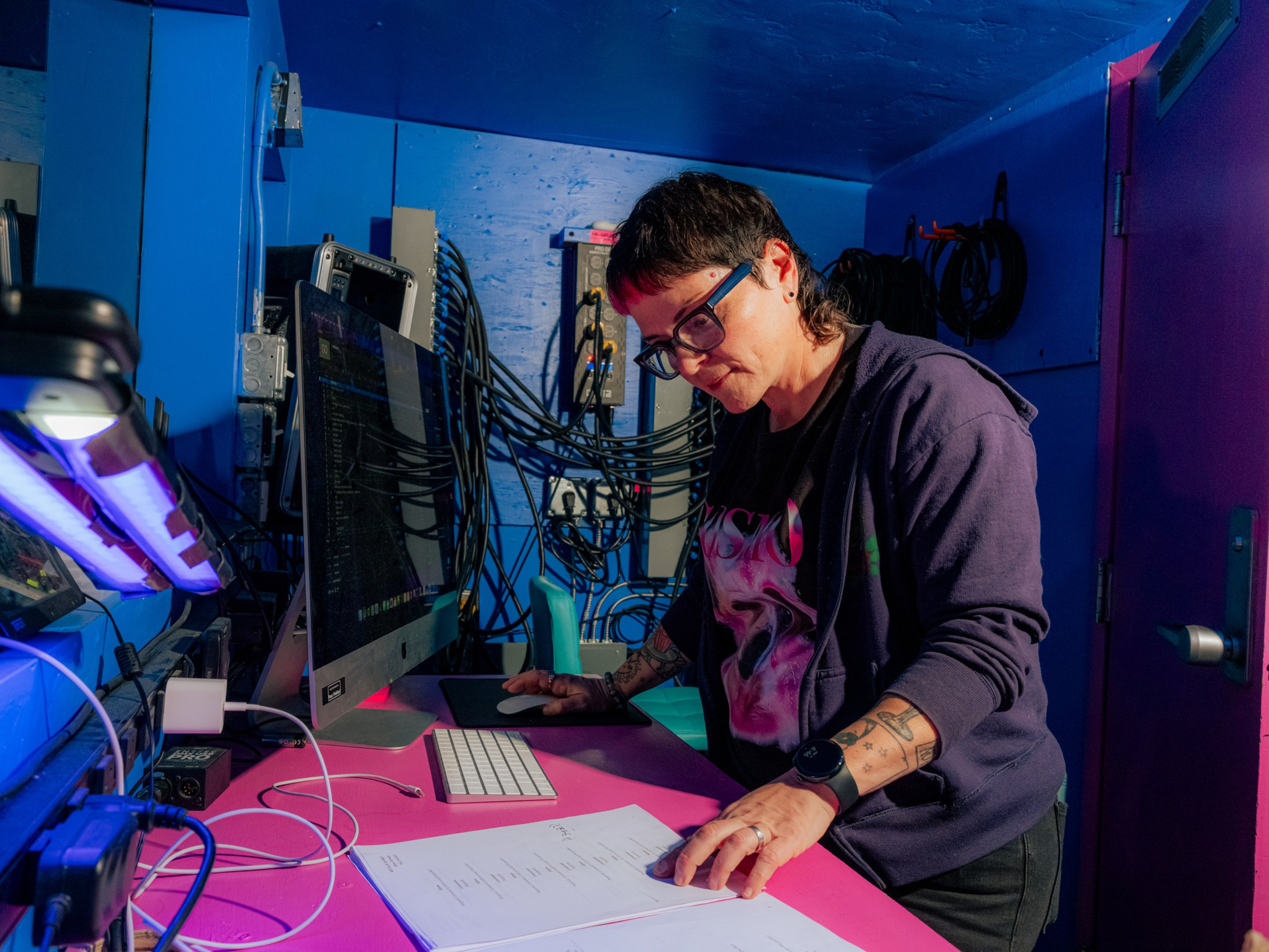 Dani Lancaster-Spinks at work in the technical room at Eclectic Box SF.
“The community is still cranking out really important and substantial art,” she said. “But if the average producer used to do two shows a year before Covid, they’re likely only doing one now.”
That falloff translates to fewer employment opportunities for actors and back-of-house workers, said Jake Rodriguez, a sound designer who has worked at the ACT and Berkeley Rep, among other theaters, for decades. “The amount of shows in my backyard that I can work on has shrunk considerably,” he said.
He has seen talented actors and other theater artists either move away or be forced to take on three jobs just to make ends meet. “Being an artist in the Bay Area is not for the faint of heart.”
Selling to newbies
To reinforce shrinking subscriber bases, many theaters are shifting their programming mix and bolstering marketing to new audiences, including first-time patrons.
That has meant less risk and experimentation and more tried-and-true classics, like “Cabaret”; or star-driven shows, like the Neil Diamond musical “A Beautiful Noise”; and adaptations of motion pictures such as “Frozen,” “Paranormal Activity,” and “School of Rock.”
Movie adaptations can be more easily described via word of mouth, according to MacKinnon, which can bring more theater first-timers on board. “We are now marketing to a predominantly single-ticket buying environment,” she said.
The same is happening at ATG, which oversees programming for nearly 5,500 seats across three venues in the city.
“The subscription model is still important, but it’s only a piece of the puzzle now,” said Jamie Budgett, general manager of ATG’s San Francisco operations. “We’re certainly finding that, in general, audiences are buying their tickets later and later and aren’t committing to as many things well in advance.”
ATG has started offering slimmed-down ticket packages, allowing buyers to select certain shows rather than commit to an entire season, which this year would have meant signing up for eight shows.
Susi Damilano, cofounder of the 22-year-old theater SF Playhouse (opens in new tab), has leaned into the mainstream. She said the 200-seat venue at 250 Post St. has been programming more popular shows than it would have pre-pandemic. In July, it will open the Broadway hit “Hairspray” for a two-month run.
“We definitely have to have things that bring joy, rather than just dramatic introspection,” she said, adding that audiences are more likely to buy tickets to shows where they can expect to have fun.
 The cast of San Francisco Playhouse’s “Dance Nation” rehearse in their studio in 2019. | Source: Liz Hafalia/San Francisco Chronicle via Getty Images
That strategy is paying off. At a time when other theaters have bled subscriptions, SF Playhouse has increased its recurring customer base by more than 45% over the past few years, from 2,524 in 2019 to 3,682 in 2025, Damilano said.
The next act
Like the downtown landscape around it, theater in San Francisco continues to change. In December, Carole Shorenstein Hays, a theatrical producer and heiress to one of the city’s most powerful real estate clans, sold the Curran Theatre to the San Francisco Giants at a loss, for $13.65 million. She had paid $16 million for the venue in 2010.
The venue, which birthed “Wicked” and recently hosted the pop-rock musical “Six” and Tony-Award winning “Stereophonic” (co-produced with ACT), is more than a 100 years old and underwent a full renovation in 2015.
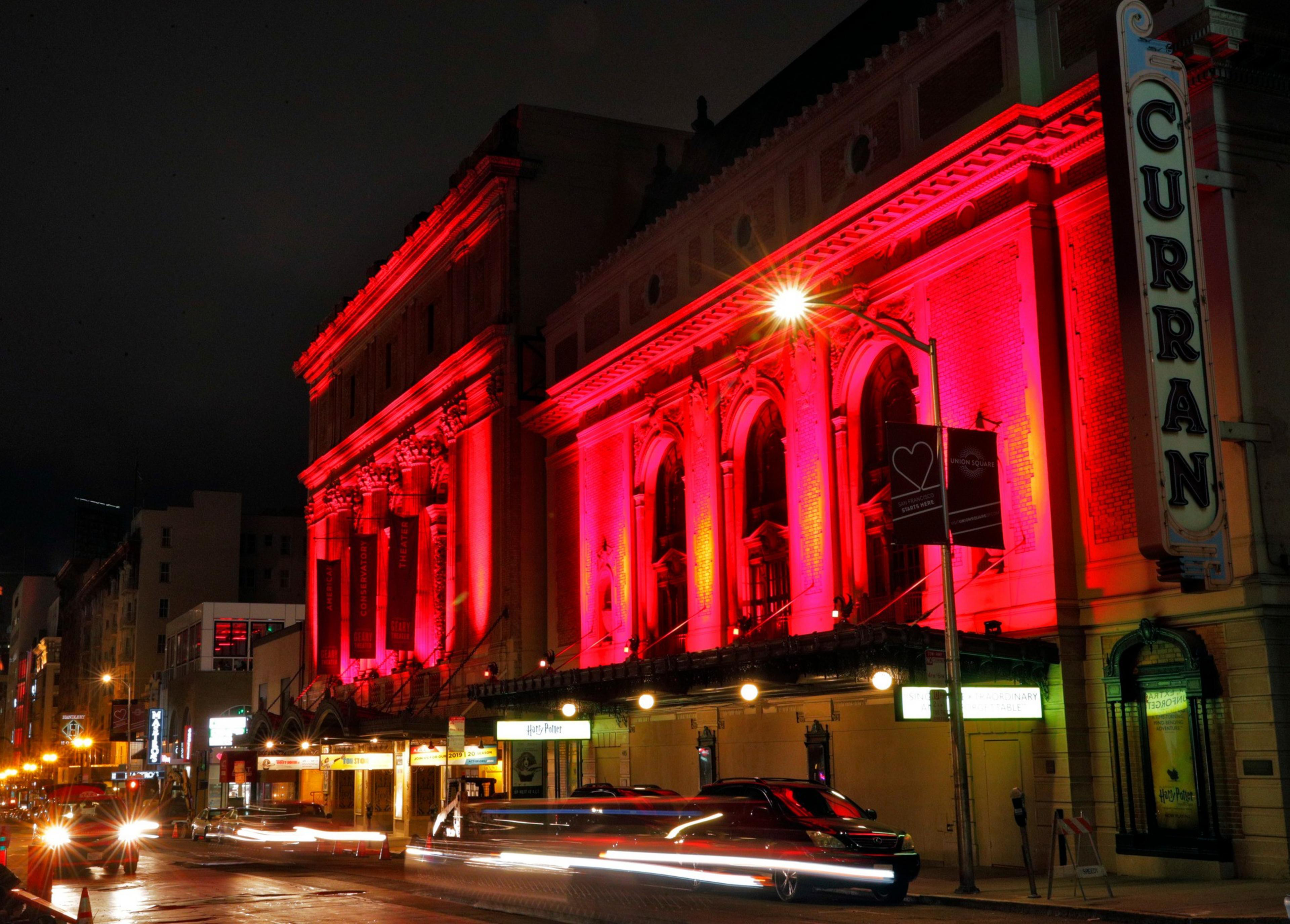 The Curran Theater, right, and American Conservatory Theater, left, lit up in red as part of nationwide campaign to bring attention to shuttered live event venues in 2020. | Source: Carlos Avila Gonzalez/San Francisco Chronicle via Getty Images
But winding down her life in the city (she now lives in Sonoma County), Shorenstein Hays, 77, made a call in late October to Larry Baer, president of the Giants, to see if the team could take the property off her hands. Her father, Walter, had helped assemble a local ownership group to keep the Giants in town in the early ’90s, when the franchise appeared destined to leave.
“It was a great back-to-the-future moment for us,” Baer said. The Shorenstein “family has been super involved with us, and we are proud to carry on what’s been an amazing run.”
The programming at the Curran, which is booked more than a year in advance, will remain in place through the calendar year. Next year, the Giants organization will choose programming. It has committed to continue booking stage plays and musicals, while leveraging its stadium concert connections to expand live music programming.
Industry leaders also point to new productions and new marketing techniques as bright spots in the city. For example, “Co-Founders (opens in new tab),” a hip-hop musical about the tech industry, sold out more than 40 consecutive shows during its six-week run last summer at ACT’s Strand Theater. Tickets on the secondary market sold for as much as $1,000, according to producer Beau Lewis.
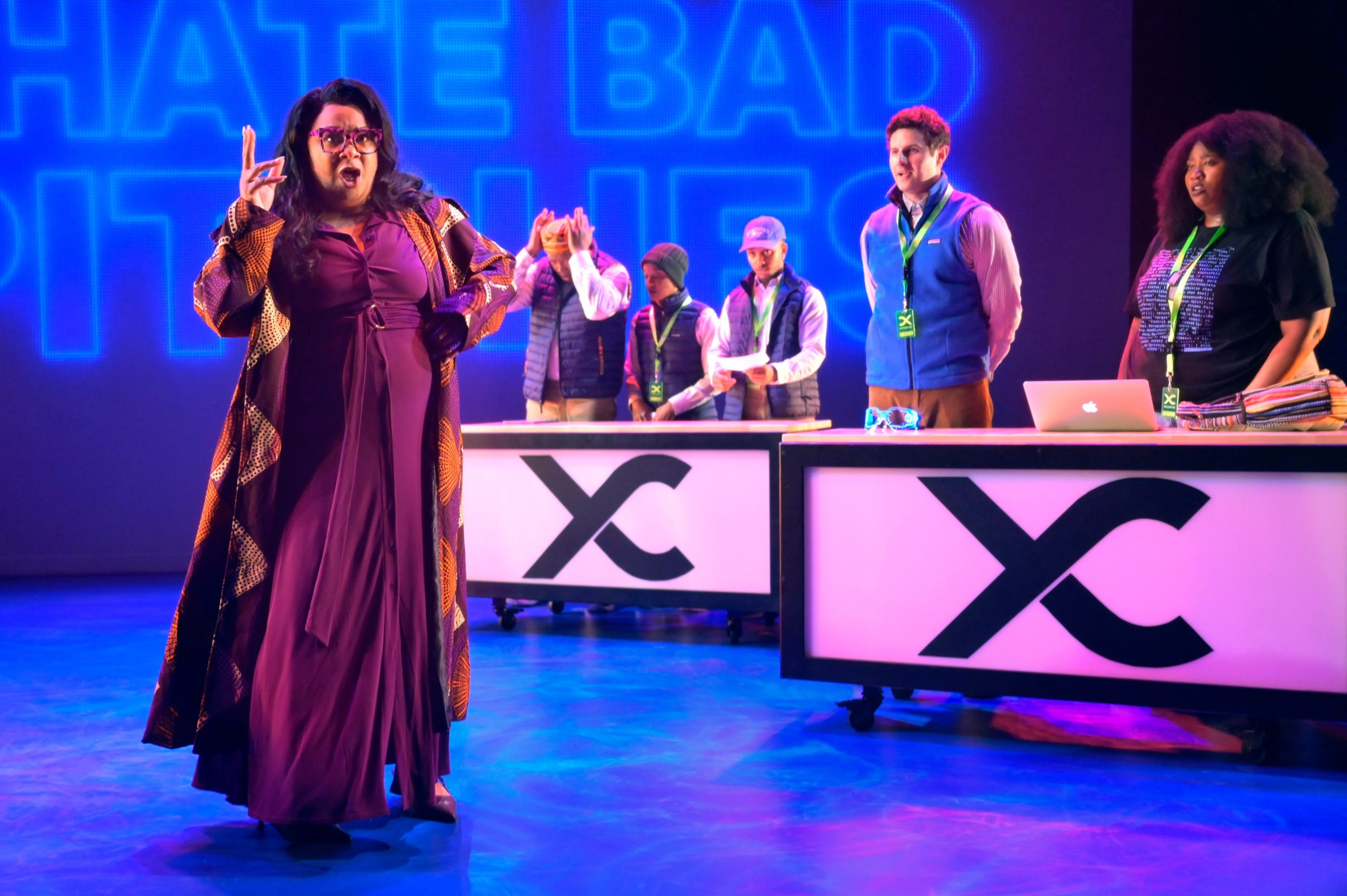 “Co-Founders” sold out more than 40 consecutive shows at ACT’s Strand Theater. | Source: Kevin Berne
Script writer Ryan Nicole Austin attributed the success of “Co-Founders” in part to its grassroots marketing strategy, which included showing early versions at tech offices in SF and community spaces in Oakland.
“We need theater that builds community, not just audiences,” she said. The “Co-Founders” team plans to shop the production in New York this year, in the hopes that it can book a run there.
While ACT slightly missed its fundraising goals for the 2025 fiscal year, it’s pacing to exceed last year’s funding and its current goal this year, according interim executive director David Schmitz, who is standing in as the organization searches for a new leader.
“ACT definitely struggled coming out of the pandemic,” he said. “But we’re starting to get our sea legs in a way that’s really powerful.”
At ATG, Budgett said his team has embraced a beginner’s mindset with sales and marketing, since the legacy subscription model is shrinking. Rather than rely solely on ticket sales, the company has added programming around each show to foster community among theatergoers.
During “The Book of Mormon” and “& Juliet” last year, ATG hosted preshow mixers for young professionals on both opening nights. For “The Notebook,” the company launched a discounted ticket program for solo attendees, with complimentary drinks and orchestra seating with other solo guests.
 ATG has embraced a beginnings mindset, according to its general manager in SF. | Source: Courtesy Kelly Keltos
“We’re treating it like starting a new run club,” Budgett said. “The goal is to break down the perception that Broadway is inaccessible. If we can just get you in the door the first time, you’re more likely to find other shows that interest you as well.”
All the hustling is hard work, notes Z Space’s Mazow. Everyone has been straining to “slow or stop or correct” the industry’s struggles, and some exhaustion has set in. “This community has gone through a couple of years of extreme, emergency fundraising campaigns that didn’t work,” he said. “There’s a deep fatigue, for sure.”
To keep smaller venues from continuing to die out, players are considering collaboration and even consolidation. In January, Mazow attended an arts summit moderated by the Hewlett Foundation, which included sessions about mergers and cooperatives, shared resources, and public-private partnerships.
“The conversations about collaboration have been happening for a long time, but this kind of organized, structural ideation is just beginning,” he said. “I don’t know where we’ll go from here, but I’m hopeful.”