
La Jolla composer Gary Eskow has spent much of his musical career less concerned with being the star of the room, but rather just being in the room.
That mindset first formed when Eskow was a first-grader in Utica, N.Y. Students weren’t allowed to take music lessons at school until third grade, but he insisted on joining a class and persuaded his mother to make a plea on his behalf.
The school agreed, but Eskow came to find he was more interested in hearing music than playing it.
“That’s why I describe myself as a fan first,” he said. “And it’s kind of an insulation against failure, because I never worry about not being good.
“I always wanted to be in the game. If I was a bench player, that was good enough for me.”
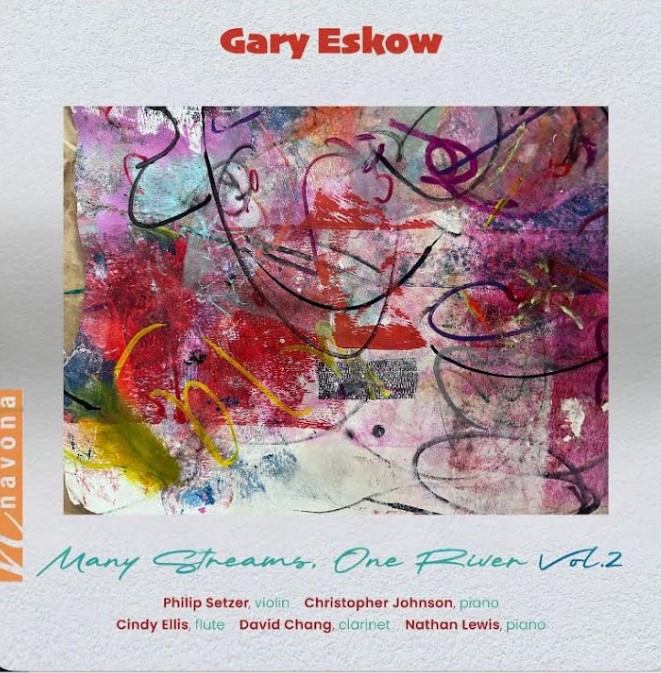
After years of learning new instruments, refining his skills and writing and recording, Eskow is readying for the release next month of “Many Streams, One River, Vol. 2,” the second part of a three-album series he composed.
The first installment of “Many Streams, One River” dropped Dec. 12, and Volume 2 is slated to be out Friday, March 20. The third and final album is in progress, Eskow said.
The series
The “Many Streams” series consists of pieces written or recorded by Eskow over the past several decades and on different coasts, as he moved from New York to San Diego in 2022 and La Jolla a year later.
In Volume 2, Eskow explores his wide-ranging musical Rolodex across six pieces titled “Storms Will Come,” “Not a Sonata!” “Sunlight Sonata,” “The Woodstock Chronicles,” “Channeling Chopin” and “UPS.”
The album weaves in and out of different reference points, from the stylings of Polish composer Frederic Chopin to multi-instrumentalist Ray Charles. The title refers to the many styles he compiled into one project.
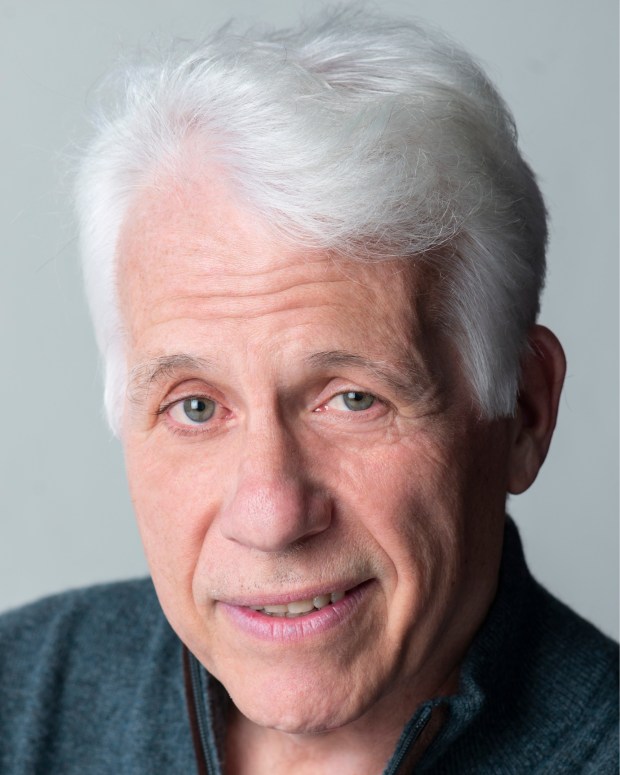 Gary Eskow’s writings and recordings are assembled, mastered and sequenced in his trio of “Many Streams, One River” albums. (Dion Ogust)
“Many Streams, One River” represents a culmination of his work.
“I’m getting better,” Eskow said. “I’m getting close to the guy I was meant to be. I used to say that if I had to write 10,000 bad notes to get three that worked, I’m going to do it.
“Now, I absolutely know immediately when something doesn’t work, and I know how to fix it. It’s a stunning place to have gotten to, because I was blessed with talent. I wasn’t blessed with genius, but indefatigable energy.”
Realizing his vision
To help bring his vision to life, Eskow enlisted several musicians. For Volume 2, they include violinist Philip Setzer, pianists Christopher Johnson and Nathan Lewis, flutist Cindy Ellis and clarinetist David Chang.
The first release consisted of an almost entirely different roster, including the Beo String Quartet and Laszlo Mező. Just one artist, Johnson, played on both albums, while Mező helped behind the scenes on both.
Much of the forthcoming record was completed in Irvine, with mastering and production from Mező, who runs Mező Records and whose resumé includes playing cello under famed composer John Williams.
Eskow praised Mező’s even-handedness in compiling recordings and re-recordings for one unified project.
“The challenging part was to do what Laszlo did brilliantly, which is to master them in a way to create an aural sheen that they all sit within. It’s a very difficult task, and he’s done an absolutely amazing job.”
Mező expressed an appreciation for Eskow’s work as a composer.
“The thing with Gary’s compositions is, the more I work with it, the more I understand and the more I enjoy [it],” he said. “[For] these pieces, I would recommend for everybody to kind of listen to them more and more, because I think every time you listen to it, you can discover something new.”
Lewis, who met Eskow through Mező, praised Eskow’s eclectic taste.
“It was really fascinating to work with somebody who composes and is familiar with such a range of different styles,” Lewis said. “I love that going in. Every piece kind of had the same philosophical voice behind it, but the style and the influences were different.”
His time?
In his youth, Eskow dabbled in piano, electric guitar and classical guitar and eventually earned a master’s degree in music theory at Queens College in New York. That experience translated into writing advertising jingles before he pivoted to a laundry business.
Still, he continued to engage his creative side. But it was just recently that he felt compelled to share it.
“A year ago, I thought the time to be recognized within my lifetime had passed,” Eskow said. “If you look at my website, you’ll see some very famous people are fans of mine [or] have nice things to say about me. But by and large, nobody listened to me.”
However, tracks released on Eskow’s Spotify account garnered attention from New Hampshire-based Parma Recordings, which reached out about distributing a remastered record through Navona Records.
“Little by little, it looks like my time may be coming,” Eskow said. “Better late than never.”
While his style has evolved, “what I’ve heard time and time again from very famous musicians and not-so-famous musicians, the thing that marks me as a really good composer is no matter what idiom I’m working in, whether it’s a jingle or the most modern string quartet, it’s always Eskow,” he said. “A certain exuberance — whether it’s joy or fear. It’s always Eskow’s energy.”
He has a simple pitch for potential audiences.
“Listen to me like I listen to everything I get my hands on,” Eskow said. “I love learning and getting turned on to somebody I didn’t know before. I love … expanding my musical universe. In that same spirit, I would ask [to] give me a shot.” ♦