
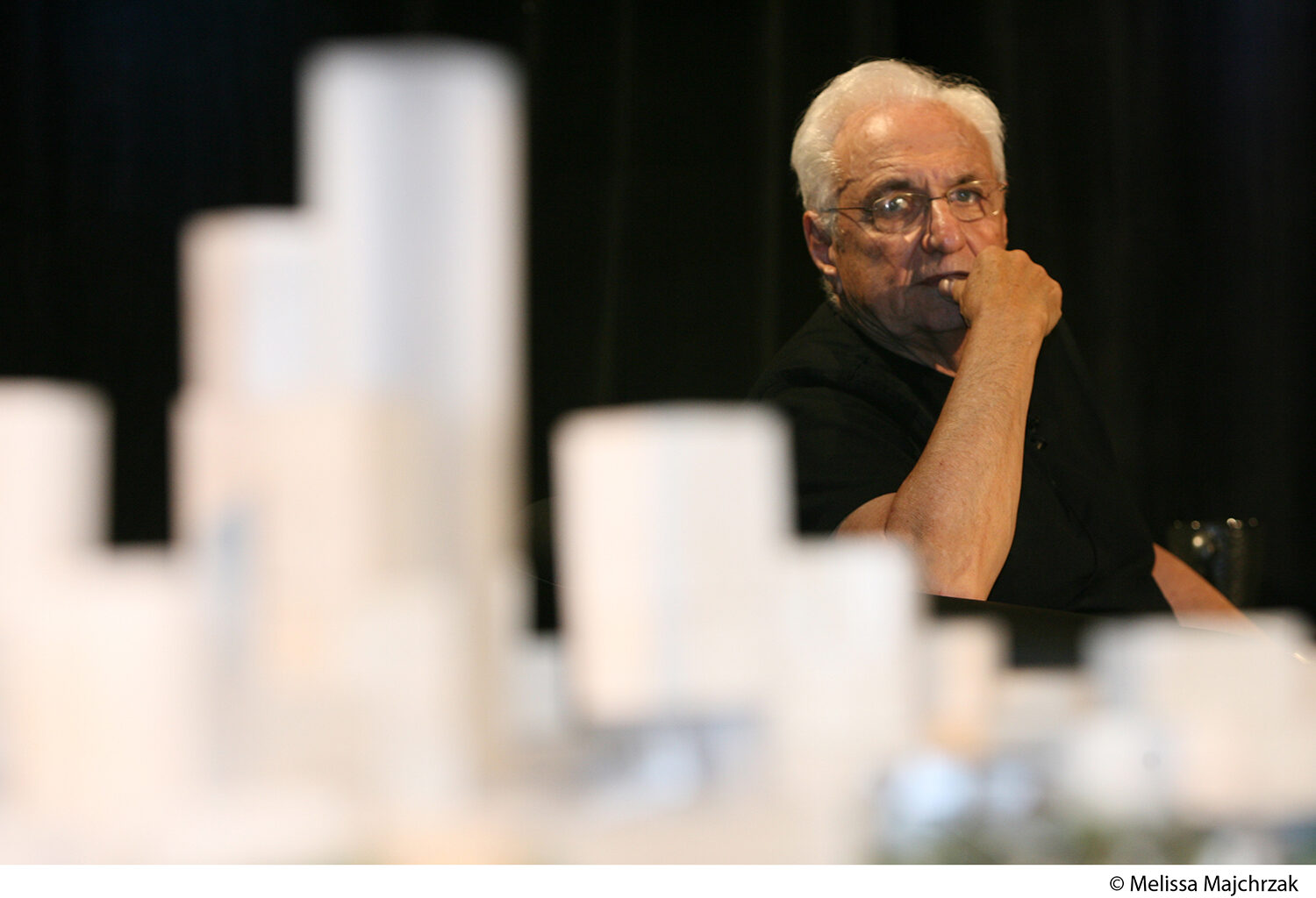
A tribute to the late, great architect who transformed Los Angeles
During a career that spanned nearly three-quarters of a century, Frank Gehry established himself as the most famous American architect since Frank Lloyd Wright. His major works, including Walt Disney Concert Hall and the Guggenheim Museum in Bilbao, Spain, were made possible in part by 3-D design software that allowed the designer to realize never-before-seen forms in steel and titanium.
Gehry’s family left Canada and migrated to Los Angeles not long after World War II. His parents, Irving and Sadie Goldberg, moved Frank and his sister Doreen into a dingy apartment a few blocks from MacArthur Park. Dad worked in a liquor store while Frank studied engineering at Los Angeles City College and made deliveries part-time. Fans say his style defies classification, but Gehry started out on a traditional path for the time.
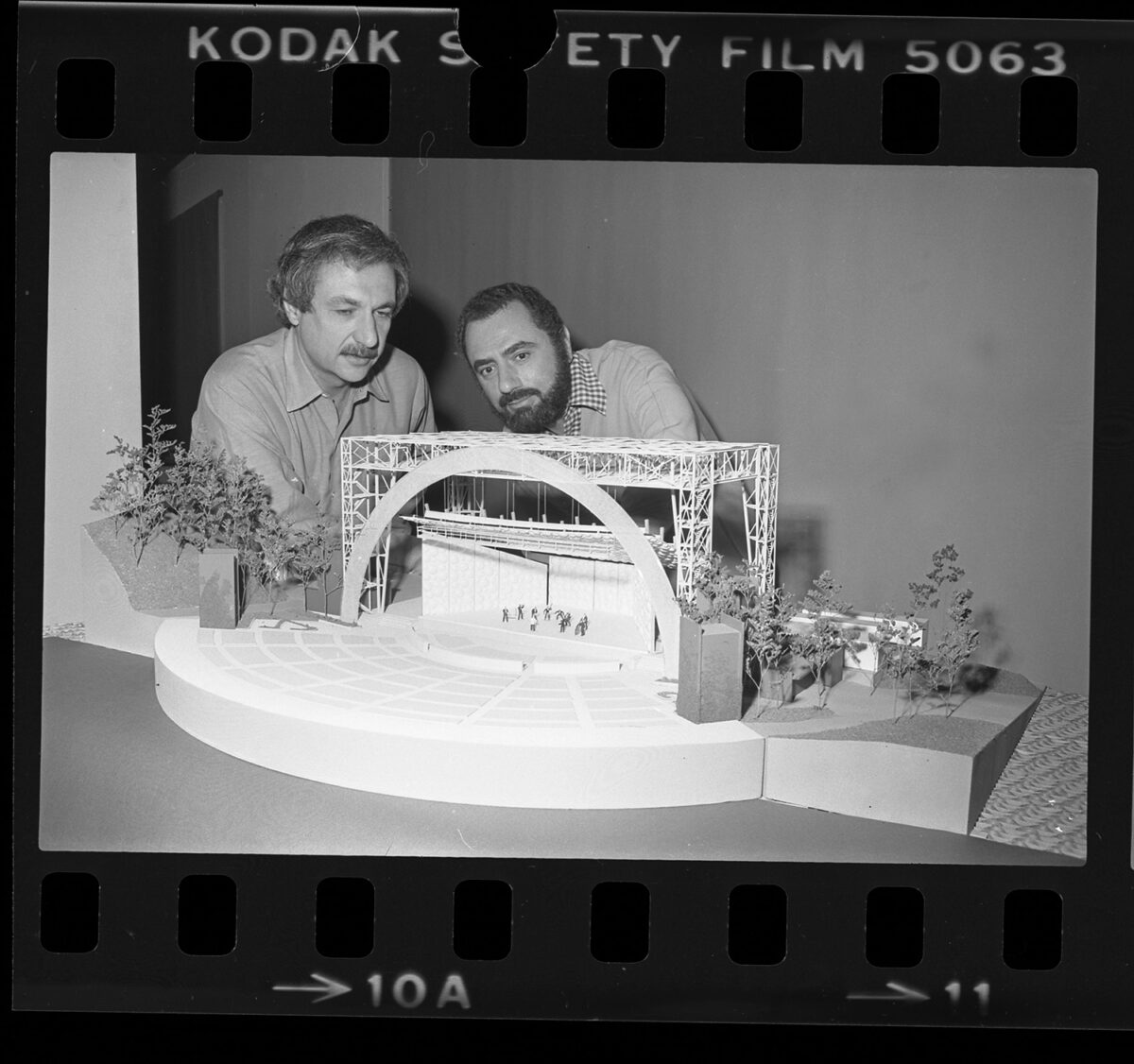 The architect examining a scheme for the Hollywood Bowl with designer Peter Wexler in 1976Credit: Kathleen Ballard/Los Angeles Times Photographic Collection/UCLA Library Special Collections
By the late 1950s, he had graduated from the USC School of Architecture, done stints in the army and at Harvard and worked at two of L.A.’s largest design firms: Pereira & Luckman and Victor Gruen and Associates, the leading designer of shopping malls. “He was always a little … crazy,” says architect and historian Alan Hess. “He was willing to try new and different things, even in that very strait-laced commercial world.”
“The only way for him to become a meaningful voice in the cultural story was to break away from that,” adds Silver Lake architect Frank Escher. “And break away he did.” Escher compares Gehry to Mozart, who threw off the shackles of patronage, allowing his personal genius to shine through.
Gehry’s transformation is reminiscent of the TV series Mad Men. That show begins in 1960 with a Brylcreemed Don Draper polishing off an Old Fashioned in a swanky cocktail bar, and ends with Jon Hamm’s character barefoot and doing yoga on a bluff in Big Sur in 1970. In the 1960s, Gehry left his wife and kids and reinvented himself. He established a place among the city’s community of artists, rather than with its best-known architects.
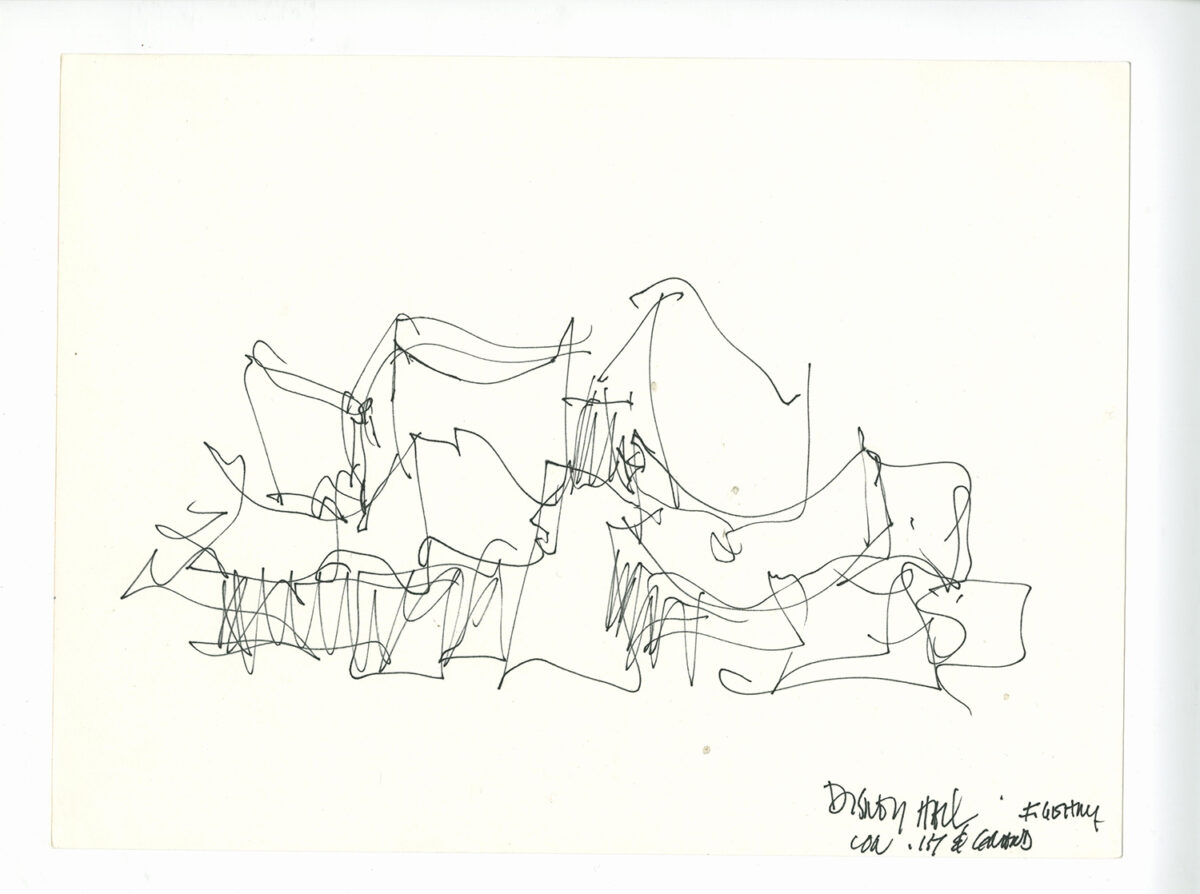 Gehry’s sketch of Disney HallCredit: Courtesy Gehry Partners
“He was very astute about how to build a public image,” Escher says. “At that moment, he was building that persona of ‘I hang out with artists, I smoke marijuana and I let my hair grow.’” In March 1968, Los Angeles photographed Gehry at LACMA alongside people like Billy Al Bengston, Judy Chicago, Ed Kienholz and Claes Oldenburg. “Putting Gehry amongst those artists of surfaces and finishes is perfect,” says historian D.J. Waldie. “He built buildings like those artists built their constructions of metal, plastic and vinyl. Buildings with the same luscious sense of the surface finish being as significant as other aspects.”
Scroll to continue reading
“It was a communal scene, and every night, we met somewhere,” Gehry told biographer Barbara Isenberg in 2009. “Once we put together a little band, and since I couldn’t play a musical instrument, I used a bicycle handlebar and a little bell to create one. Ed [Ruscha] played the kazoo. Larry Bell played the guitar.” Soon after, Gehry was experimenting with off-the-wall materials like chain link and cardboard tubes and was dubbed the “bad boy” of architecture. His work was shaped by the creative city his parents brought him to as a young man. “Living in Los Angeles with all its diversity and chaos and experiment,” says Hess, “he took those things and turned himself into Frank Gehry.”