
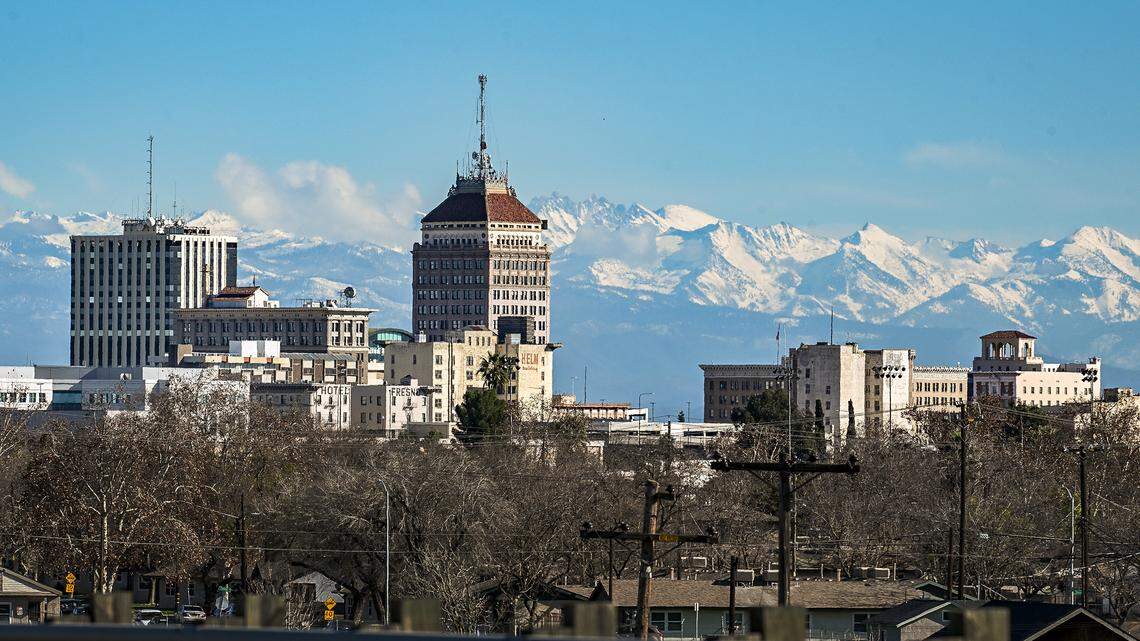
Fresh snow covers the Sierra Mountains east of downtown Fresno’s skyline on a clear day on Tuesday, Jan. 6, 2026. A wave of storms moved through Central California and the mountains over the holidays pushing the region’s precipitation numbers past normal for this time of year.
CRAIG KOHLRUSS
ckohlruss@fresnobee.com
The City of Fresno’s warming centers will be open on the evening of Thursday, February 19.
The National Weather Service in Hanford has projected temperatures to drop below 35 degrees on Thursday, triggering the city to open its three centers from 7 p.m. to 7 a.m. on Friday.
The warming center locations are:
Ted C. Wills Community Center; 770 N. San Pablo, 93728Mosqueda Community Center; 4670 E. Butler Ave., 93702Maxie L. Parks Community Center; 1802 E. California Ave., 93706
The city’s FAX bus system will provide free transportation along normal routes to the facilities during the hours operated as warming centers.
Cots, blankets, and pet cages will be available.
The city has faced criticism in the past for its strict limits on when the warming centers open.
In December, two unhoused individuals died while trying to stay warm in their tent in an encampment along a Fresno Highway. Temperatures dropped to 39 degrees the night they died of carbon monoxide poisoning, based on a preliminary investigation.
City policy directs warming centers to open from 7 p.m. to 7 a.m. when temperatures drop below 35 degrees based on NWS projections, and the city is required to provide a 72-hour notice of when the shelters will open.
When the Central Valley faced a week-long freeze warning in January 2025, over 60 homeless advocates, unhoused people, and residents urged city officials to expand it’s warming center operations through the winter.
Hypothermia can occur at temperatures above 40°F if a person becomes chilled from rain, sweat, or being in cold water, according to the Centers for Disease Control and Prevention.
Related Stories from Fresno Bee