
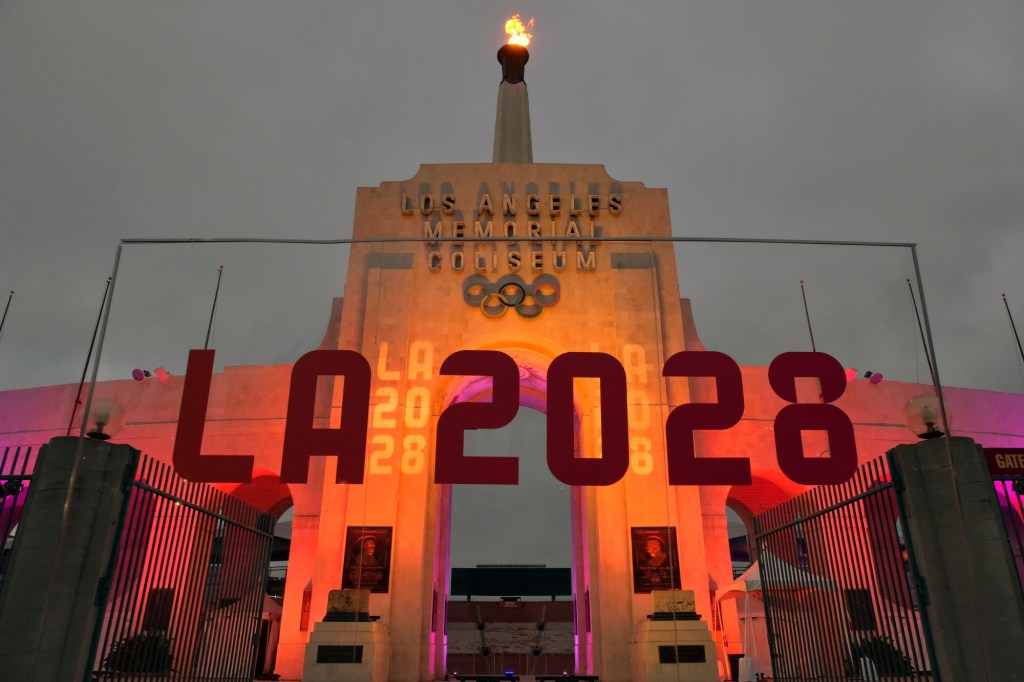
To borrow a line from “Sesame Street,” today’s edition of “Learning to Count” is brought to you by the letters “E,” “C” and “R.”
They stand for Enhanced City Resources. For taxpaying residents of the city of Los Angeles, it’s a warning label of financial catastrophe, courtesy of terrible decisions to bring the Summer Olympics to L.A. in 2028 without firmly protecting the city budget from unlimited and uncontrollable expenses.
Enhanced city resources are any city services or other resources that go beyond what the city normally provides in its day-to-day operations, services and resources that will be needed because of the Olympic Games.
Imagine this phone conversation taking place sometime in early 2029:
City of L.A.: We have your bill for the extra costs of police, sanitation, Rec & Parks vehicles, traffic control, fire department, emergency medical, street services, transportation and lighting.
LA28 Committee: I’m sorry, the number you have called has been disconnected or is no longer in service.
To prevent that from happening, the city has been negotiating with LA28 for an “Enhanced City Resources Master Agreement,” or ECRMA.
It’s not going well.
The deadline for this agreement to be signed was October 1, 2025, but it’s still in the works. The ECRMA is supposed to make clear what the LA28 committee will pay for, and when. Once that’s established, the costs will be estimated and included in “venue service agreements” for each site that will host an Olympic event.
Like many relationships, it’s complicated. The federal government will provide money for security costs, but the size and boundaries of the secure area for each venue are still to be determined. Who pays for the extra security needed in the adjacent areas? How much will other cities hosting Olympic venues, including Inglewood, have to pay for “enhanced city resources?”
The opening ceremony is scheduled for July 14, 2028, with the closing ceremony set for July 30. The Paralympic Games take place August 15-27. It’s a month-long outdoor party in Southern California. The whole known universe has been invited.
Imagine the extra costs just for sanitation services.
Granted, that’s not a very heroic or inspiring thing to contemplate, but it’s the kind of thing adults have to think about. Unfortunately, it is impossible to prove that there are any adults in elected office in Los Angeles.
The 1984 Olympics had a relatively airtight contract that protected taxpayers, but that’s not the case this time. Mayor Eric Garcetti signed the Host City contract in 2017 and left pesky details to be negotiated later.
Across the table from the city is the LA28 organization. Here’s how it describes itself on press releases: “The LA28 Games are independently operated by a privately funded, non-profit organization with revenue from corporate partners, licensing agreements, hospitality and ticketing programs and a significant contribution from the International Olympic Committee.”
That makes it perfectly clear that LA28 gets the money. What’s less clear is how much of that money will reimburse venue-hosting cities for the inevitable extra costs.
Does LA28 take the position that the city is lucky to have the Games, and all the spending from visitors will fill up the city treasury with hotel taxes and sales tax revenue?
Does the city respond that the extra costs associated with hosting the Olympics far exceed the marginal increase in tax collections?
In the middle of this negotiation, something unexpected happened. LA28 Chair Casey Wasserman’s name turned up in the Epstein files. L.A. Mayor Karen Bass initially declined to criticize him. Then the board of LA28 said its investigation found nothing to cause them to ask Wasserman to step down. And then Bass called on him to resign.
What does it mean? Who knows. The only thing that’s certain is that Los Angeles taxpayers are on the hook for an open-ended tab. The state has protected itself with a limit on what it will pay. The federal government has approved $1 billion for security. The city of Los Angeles is still trying to negotiate its “Enhanced City Resources Master Agreement” and doesn’t even have cost estimates.
Some City Council members have asked questions – about sustainability, social justice and local small business contracting opportunities.
Good luck, L.A.!
Write Susan@SusanShelley.com and follow her on X @Susan_Shelley