

 NBC Bay Area
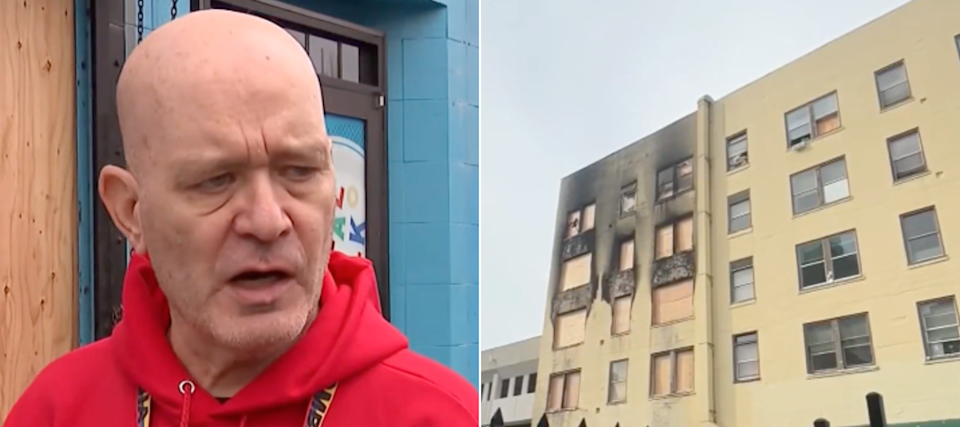
In downtown Oakland, residents of a Broadway apartment complex were still reeling from the impact of a three-alarm fire when their landlord delivered devastating news.
Just hours after crews extinguished the blaze and red-tagged the building in late January, some residents received abrupt notices from the building’s management informing them that their leases were terminated — effective immediately (1).
According to tenants, this letter offered no clear timeline for repairs or assurances about their right to return once the building is fixed.
A neighbor by the name of Wenzel, who lives across the street, told CBS News that the whole situation is “so inhumane and shameful, I don’t even have words for it.” John Gulino, one of the displaced residents (2), said he wasn’t sure about the legality of this recent notice and that he’s “not ready to sign anything until I talk with a lawyer.”
The building’s landlord, Ted Dang, declined to provide an in-depth explanation for his actions. Dang only claimed that if he didn’t terminate the leases, residents would have to keep paying rent while the building remained uninhabitable.
However, tenant advocacy groups and city officials aren’t buying Dang’s explanation.
When city building inspectors issue a red tag, they’re making a formal declaration that a structure isn’t safe for occupancy or entry. The issue with the case in Oakland is whether this designation gives a property owner the right to terminate leases.
According to a few legal experts — like David Hall from Centro Legal De La Raza, as well as the Oakland City Attorney’s Office — a red tag is not a legal delete button for a lease. While a red tag prevents a tenant from physically staying in the building, it does not dissolve the underlying legal relationship between the landlord and the tenant.
“This is not a sufficient notice to terminate their tenancy,” Hall shared with CBS News (1). “They are still tenants there. The landlord is still required to make repairs, and when the landlord does finish the repairs and brings the building up to code and it’s habitable again, the tenants have to be offered the tenant’s first right of return.”
繼續閱讀
Under Oakland law, as long as the residency hasn’t been totally destroyed, a red tag isn’t enough to give landlords a “just cause” to terminate the tenants’ contracts (3). In the case of the Oakland fire, city officials argue that because the building is repairable, the landlord can’t claim just cause for terminating these leases.
Read More: The average net worth of Americans is a surprising $620,654. But it almost means nothing. Here’s the number that counts (and how to make it skyrocket)
Oakland tenant law protects residents with the “right to return,” meaning the landlord must offer residents the opportunity to move back into their original unit at the same rent once it’s brought back up to code (4).
California’s Disaster Legal Assistance Collaborative also states that in cases where local authorities issue a red tag, “a tenant does not have to pay rent while the property is not habitable,” which contradicts Dang’s argument for canceling these leases (5).
Oakland also offers many additional protections for tenants displaced by code violations or fire-related damage, including relocation payments and assistance with temporary housing (6). With all of these policies in place, critics claim Dang’s recent move wasn’t just unethical, it violates many rights that tenants have under state and local law.
While the Oakland case was indeed an emergency situation, that doesn’t mean the renters suddenly lose their rights. In fact, it’s exactly the opposite for many cases.
Although laws vary by state and municipality, people displaced because their unit is red tagged often qualifies them for protections, such as relocation assistance. Renters insurance can also help in these cases, along with local emergency funds or nonprofit legal organizations. Just keep in mind that these assistance programs are often a complement to a landlord’s obligations, not a replacement for them.
If tenants receive an unexpected lease termination notice, they usually have grounds to challenge it if the building is only temporarily uninhabitable, or if the landlord didn’t provide proper legal notice explaining the grounds for the termination.
As the City of Oakland advised residents, the best course of action is to avoid signing any paperwork without first consulting a lawyer. Furthermore, tenants shouldn’t just assume the lease termination is final just because a letter says so. Instead, file complaints with city housing or code enforcement agencies if a landlord isn’t complying with tenant protection laws.
It’s best practice to save all relevant documentation as potential evidence for future claims or legal disputes. These documents could include notices, photos of damage, inspection reports and any communication with management.
Although dealing with lease terminations after a fire is a heavy burden, tenants need to know they have protections that don’t disappear after a disaster. Seeking legal support early can make all the difference between permanent displacement and a lawful path back to your home.
Join 250,000+ readers and get Moneywise’s best stories and exclusive interviews first — clear insights curated and delivered weekly. Subscribe now.
We rely only on vetted sources and credible third-party reporting. For details, see our editorial ethics and guidelines.
CBS News (1); NBC Bay Area (2); City of Oakland (3, 4, 6); Disaster Legal Assistance Collaborative (5).
This article provides information only and should not be construed as advice. It is provided without warranty of any kind.